

There are no items in your cart


Suede Ankle Boots for Women
Quick Summary
The right suede ankle boots come down to three answers. Heel height decides how long you can wear them, and 1 inch to 2.5 inches is the honest all-day range. Closure decides whether the boot holds your foot. Silhouette decides how it reads on your leg. Antelope handcrafts all three, from $99 to $239, with free shipping in the US over $80.
Editor's Pick
★★★★★
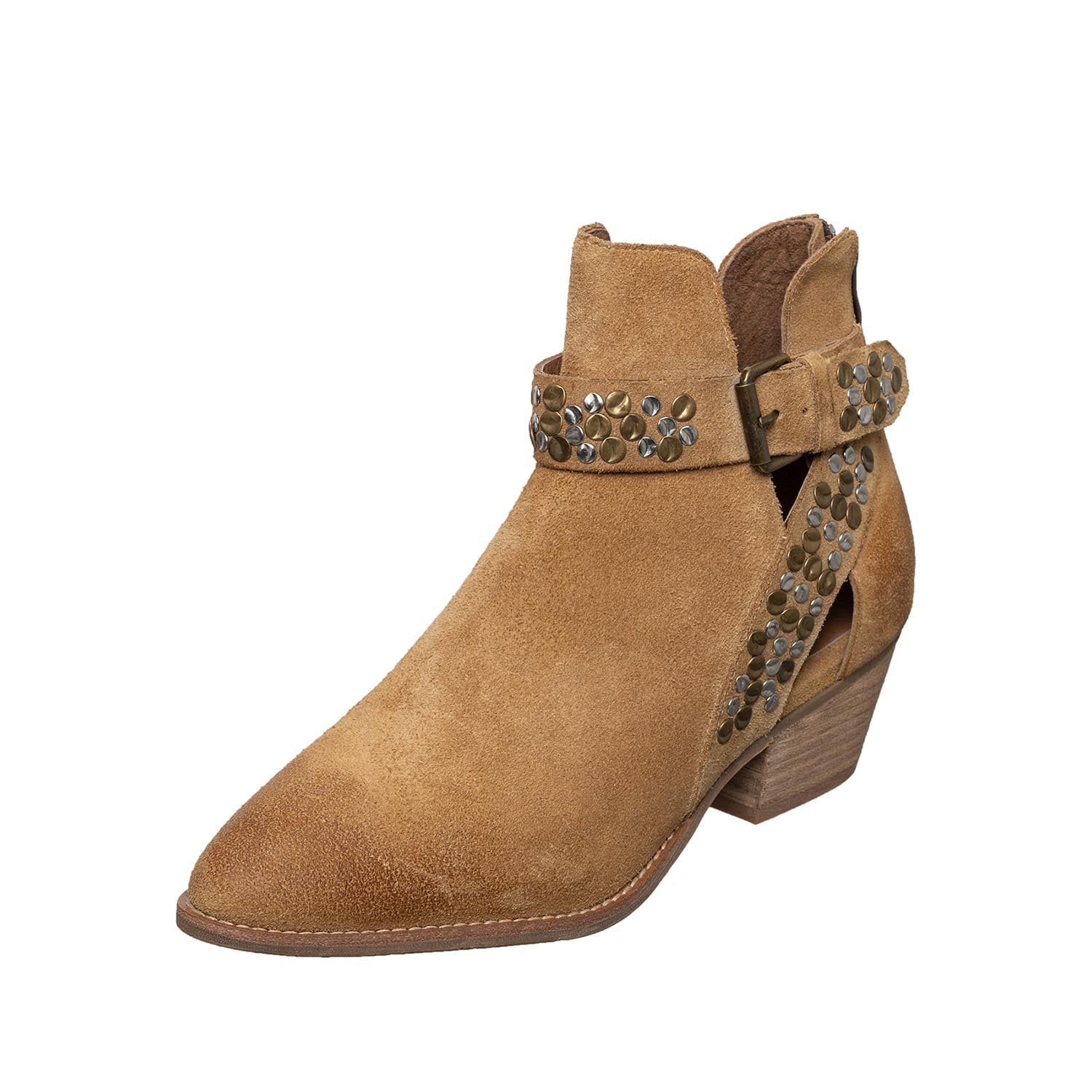
Distressed Suede, Studded Harness Strap
The middle of the heel ladder and the safest first answer. A 2 inch heel is the height most women can stay in from morning to evening, the heel itself is leather and cut wide so the weight lands on a stable base, and the sole is non-slip rubber. Cutout quarters keep the shaft from gripping the ankle and a studded harness strap gives it the character a plain bootie never has.
The Six Pairs in This Guide

In This Guide
- 01What Is Suede, and Why Do Suede Ankle Boots Wear Differently?
- 02Heel Height, the Decision That Settles the Rest
- 03Closure, or What Actually Holds Your Foot
- 04Shaft and Silhouette, Clean, Slouched or Platform
- 05Colour, and the One Shade That Works Hardest
- 06Suede in Wet Weather, the Honest Answer
- 07Sizing, Break-In and What to Expect
- 08Six Suede Ankle Boots, One for Each Answer
- 09Frequently Asked Questions
Suede ankle boots, or suede booties as most people search for them, are the pair most women reach for first once the weather turns, and they are also the pair most often bought wrong. The reason is that almost every guide sorts them by colour or by trend, which are the two things that matter least. A boot in the perfect shade that you cannot walk in past lunchtime is a boot that lives in the closet.
The Short Answer
Choose suede ankle boots in this order. Heel height first, and 1 inch to 2.5 inches is the all-day range. Closure second, a zip sets the fit, an elastic panel holds a slim ankle, a cutout shaft suits a wider one. Silhouette third. Colour last, and taupe or cognac beats black.
That order is not arbitrary. Heel height is the only one of the four that you cannot adjust after purchase, so getting it wrong is permanent. Closure can be worked around with the right sock, silhouette is a matter of taste, and colour is genuinely a preference. Work down the list in that sequence and you will not end up with a beautiful pair you never wear.
Everything below is written from the workshop side. Antelope has been handcrafting leather footwear since the collection began, and the suede in these boots is brushed, oiled and waxed by hand before it is cut, which is why two pairs in the same colourway never look identical. That is a feature of real suede, not a flaw.
What Is Suede, and Why Do Suede Ankle Boots Wear Differently?
Suede is leather turned inside out, cut from the soft underside of the hide, so a suede ankle boot wears matte and supple, never glossy.
The underside is called the split, where the fibres are loose and open rather than tight and sealed. That open surface is the nap, and it is the whole reason the boot reads soft instead of shiny.
Light catches the raised fibres and scatters, which is why brushing suede in one direction makes the colour shift, and why the same boot looks lighter from one angle and deeper from another. If you want the full technical background, the reference entry on suede covers how the split is produced.
Three practical consequences follow from that structure, and they explain almost every question women ask about suede boots.
The first is that suede breaks in faster than smooth leather. Loose fibres flex sooner, so a suede ankle boot usually feels comfortable within two or three wears rather than two or three weeks. The second is that suede moulds rather than stretches. It will take the shape of your foot at the widest point, but it will not gain a size, so buying tight in the hope it gives is a mistake. The third is that suede is porous. Water and oil pass into the nap instead of sitting on the surface, which is the honest reason suede needs protecting before its first outing rather than after its first accident.
None of that makes suede fragile. A well made suede upper on a proper rubber outsole outlives most smooth leather fashion boots, because the nap hides the small scuffs that show as bright scratches on polished leather. It simply asks for a different kind of care, and that care takes about five minutes.

Heel Height, the Decision That Settles the Rest
Ask a hundred women why a pair of boots ended up unworn and the answer is almost always the same. The heel was half an inch more than they could live with. Heel height is the single decision that determines how many hours a boot is genuinely wearable, and it is worth being honest with yourself before anything else.
There is a simple way to think about it. Every inch of heel shifts more of your body weight forward onto the ball of the foot. At 1 inch the shift is barely noticeable and the boot walks almost like a flat. By 2 inches you feel it after several hours of standing. By 3 inches the boot is a statement piece for an evening rather than a work-to-dinner shoe, and that is fine as long as you buy it knowing so. Podiatric guidance from bodies such as the classic Chelsea boot tradition has long favoured a broad, low heel for exactly this reason, because a wide base spreads the load instead of concentrating it.
The width of the heel matters as much as its height. A 2 inch block or stacked heel is far steadier than a 2 inch slim heel, because the contact patch with the ground is bigger and your ankle does less correcting with every step. This is why every boot in this guide uses a block, stacked, wedge or platform heel rather than a stiletto profile.
The heel ladder, in stock right now
| Boot | Heel | Best for | Price |
|---|---|---|---|
| L68 Char | 1 inch | Full days on your feet, travel, standing work | $219 |
| M03 Demi | 1.5 inches | Everyday wear with a little lift | $99 |
| M33 Meli | 2 inches | Morning to evening, the safe default | $119 |
| O45 Tarah | 2.5 inches | Office days that end out | $139 |
| O60 Jordan | 3 inch stacked | Evenings, events, shorter wear | $239 |
If you are unsure, 2 inches is the answer more often than any other number. It is enough lift to lengthen the leg and clear a hem, and low enough that a full day does not become an endurance test. That is why the 2 inch Meli sits at the top of this guide.

Featured Style
★★★★★
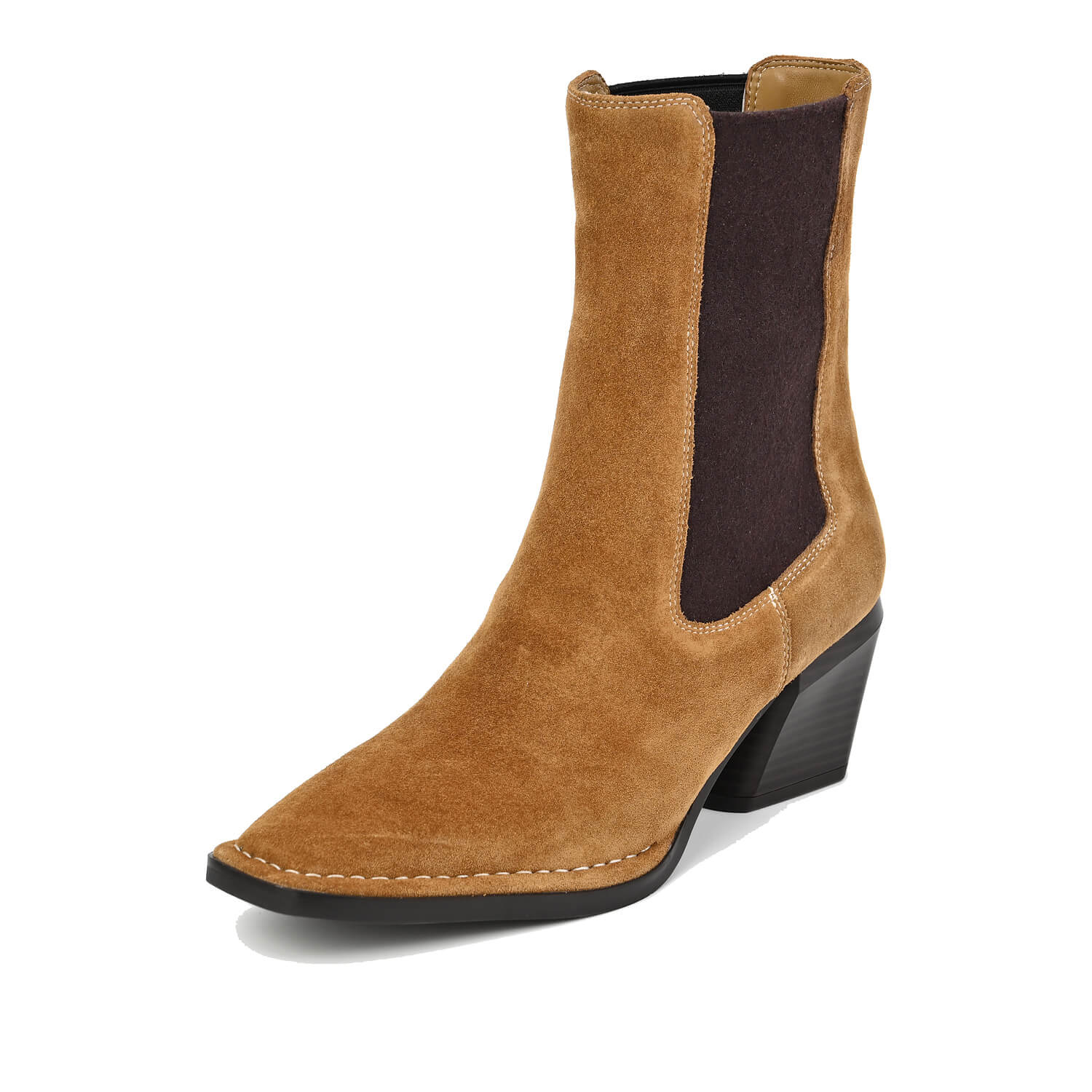
Suede Booties, Front Zip, 1 Inch Heel
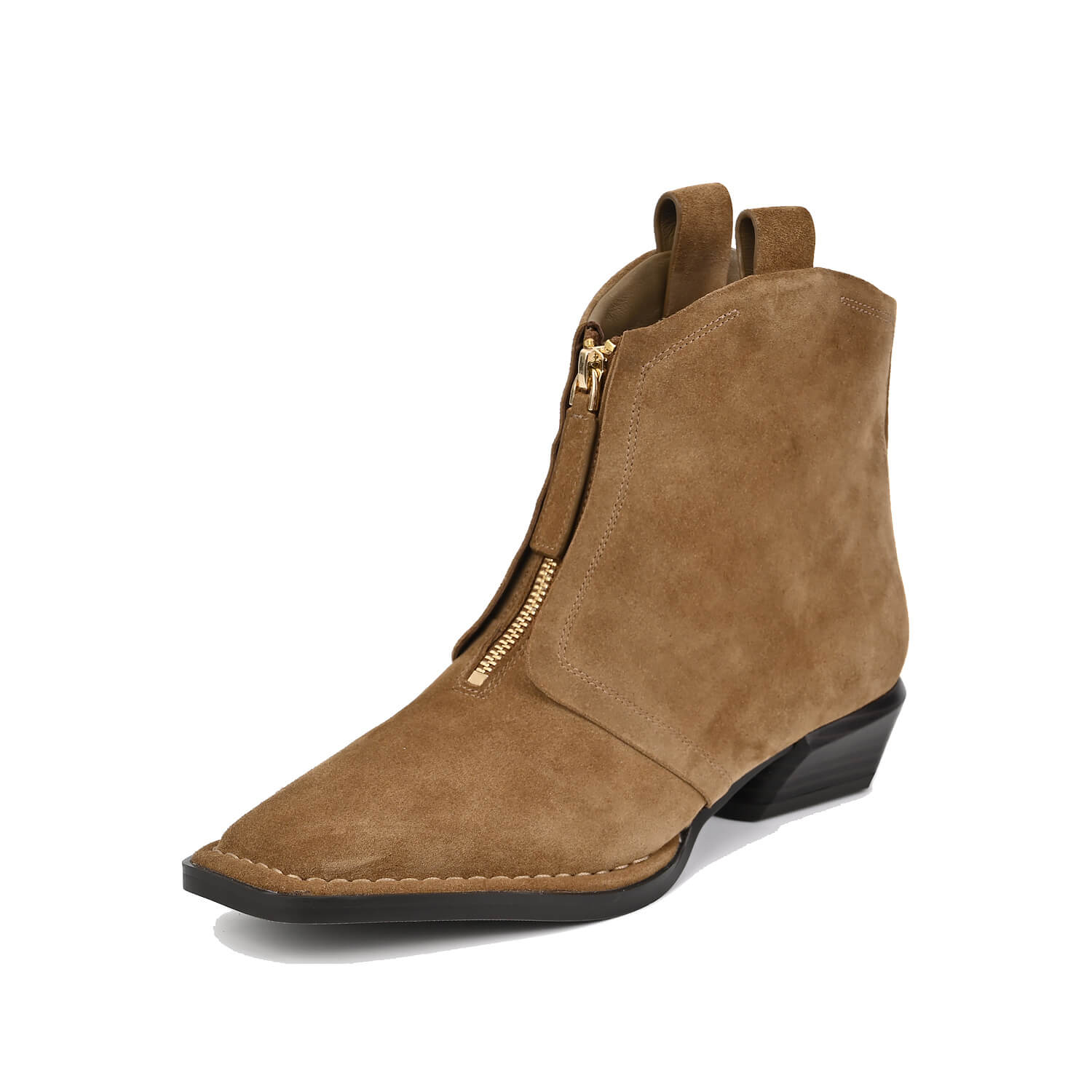
The lowest heel in the collection and the pair to choose if you are on your feet all day. A gold zip runs down the centre front, the toe is cut to a long western point, and two pull tabs at the back make it quick to get into. Padded insole, durable rubber outsole, in a warm Mocha suede.
$219
Shop L68 Char
Closure, or What Actually Holds Your Foot
Closure is the decision nobody thinks about until a boot rubs. It determines how the boot grips the ankle, how easy it is to get on, and whether it works with a fuller instep or a slim leg. There are four types worth knowing, and each solves a different problem.
Front zip
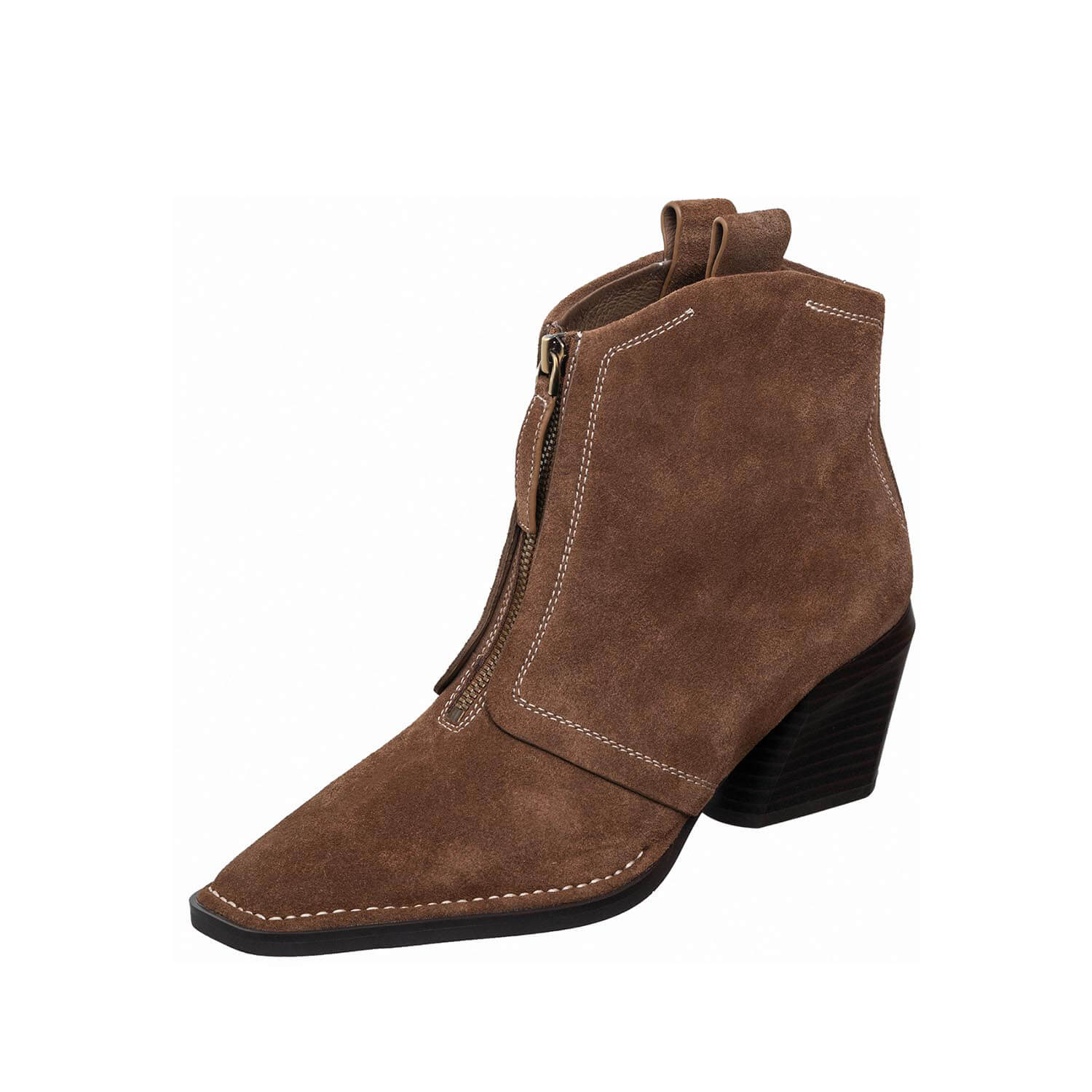
A zip running down the centre front is the most adjustable closure there is, because you can set the tension exactly where your foot needs it and release it at the top of the instep if the boot feels snug over the arch. It also draws a vertical line down the foot, which lengthens the look of the leg. The 1 inch L68 Char uses it and the O60 Jordan uses it at 3 inches, so the same closure is available at both ends of the ladder.
Side zip
The most common closure, and the most discreet, because the seam disappears against the inside of the leg. A side zip keeps the outer face of the boot unbroken, which suits a clean silhouette, and it is the easiest to operate one-handed. Both the M03 Demi and the O45 Tarah use one.
Elastic side panels
This is the Chelsea boot, and it is the closure to choose if zips have ever dug into your ankle bone. Two elastic gussets let the boot pull on and then close back around the leg under gentle, even tension rather than a fixed line. It holds a slim ankle beautifully and it never pinches. The O65 Jane pairs it with a sharply pointed toe and a shaft that rises above the ankle.
Open or cutout shaft
Some boots solve the problem by removing material instead of adding a fastening. The Meli suede ankle booties take this route with cutout quarters, so the shaft never grips a wider ankle, and a studded harness strap holds the whole thing together visually. If closed shafts have felt tight on you before, this is the shape to try.
Know your heel and closure already?
The full suede ankle boot range is in stock now in US sizes 5 to 10, with free shipping in the United States on orders over $80.
Shaft and Silhouette, Clean, Slouched or Platform
Once heel and closure are settled, silhouette is what makes the boot yours. There are three families, and each one changes the proportion of your leg in a different direction.
The clean shaft
A structured shaft that finishes just at or above the ankle bone and holds its shape. It is the most versatile silhouette in the collection because it works under a trouser hem, over a slim jean and with a midi skirt without any styling effort. The O65 Jane and the square-toe O60 Jordan both sit here. These are the suede ankle booties that need the least styling thought.
Slouchy suede ankle boots
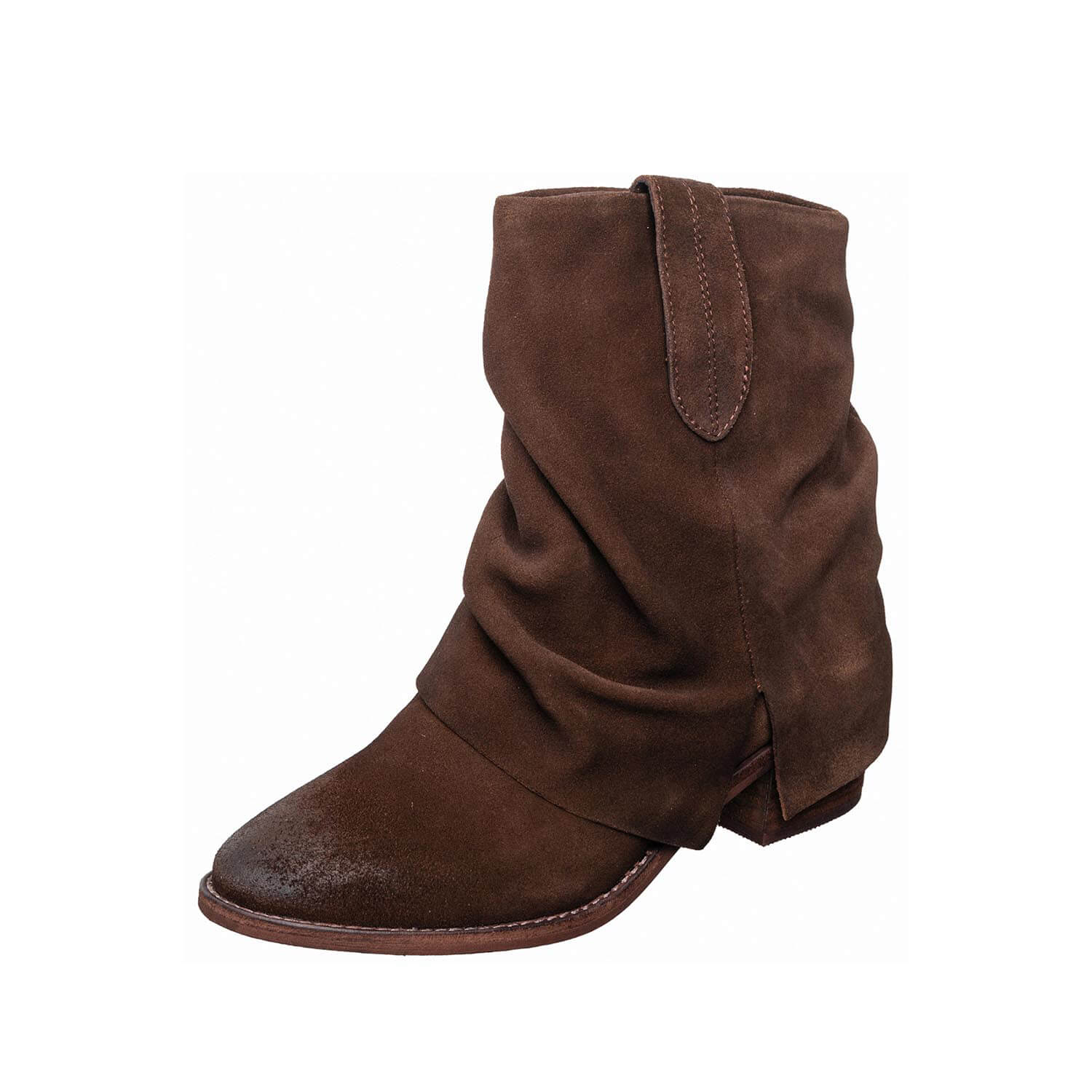
Slouchy suede ankle boots use a shaft cut deliberately longer than it needs to be, so it drapes and folds around the ankle while the foot section stays structured. Slouch adds softness and visual width at the ankle, which balances a longer leg line, and it looks best with a narrower trouser or a bare leg. The O45 Tarah in Chocolate is the cleanest example, drawn in hand-brushed suede in Chocolate.

Suede platform boots
Suede platform boots lift the whole footbed rather than only the heel, which means you gain height without gaining pitch. That is the trick worth knowing. A boot on a 2 inch platform and a 3 inch heel walks like a boot with a 1 inch heel, because what your foot feels is the difference between the two, not the total. This is the family to look at if you want height and comfort at the same time, and it is why suede platform boots suit long days better than their height suggests.

A tall platform sole carrying the lift under the whole footbed, with the shaft finishing just above the ankle. Cushioned insole and a rubber outsole. In Black and Cognac.
$199

The everyday platform. A side zip keeps the outer line clean, the cushioned footbed takes the shape of the foot, and the platform base stays stable. In Black and Chocolate.
$129
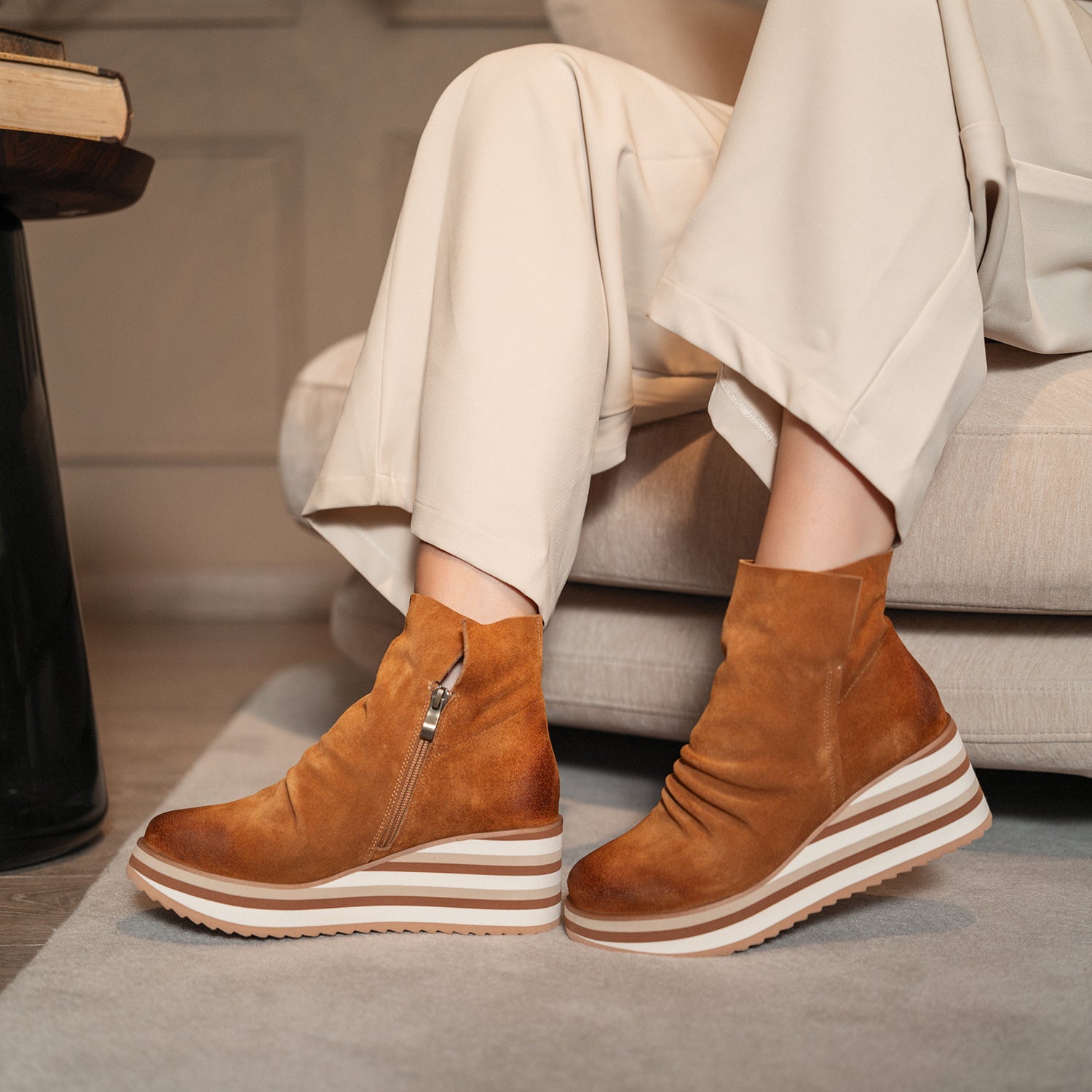
Slouch and platform together. A striped platform wedge under a relaxed suede shaft, which is the pair to reach for when a plain boot feels too quiet. In Cognac and Cream.
$129
Two more platform options are worth knowing. The M53 Jojo at $119 puts a 2 inch platform wedge under a simple suede upper with a latex cushioned insole coated in breathable leather, and the X02 Penny at $99 wraps a plush fur collar around the opening for the coldest weeks, on a low, closed profile that is easy to step into.
Colour, and the One Shade That Works Hardest
Colour comes last because it is the only decision on this list with no wrong answer. That said, there is a shade that earns its place faster than the others, and it is not black.
Black suede is the instinct, and it is genuinely useful, but on a boot it can read heavy against the leg and it shows dust more than people expect. A mid brown, taupe or cognac does more work. It bridges navy and grey as easily as camel and cream, it disappears into a denim hem rather than cutting it off, and it looks considered rather than default. If you are buying a single pair of suede ankle boots and want them to carry the most outfits, that is the shade to buy.
For every brown from tan to chocolate, in suede and in leather, see our guide to brown suede ankle boots and how to wear them.

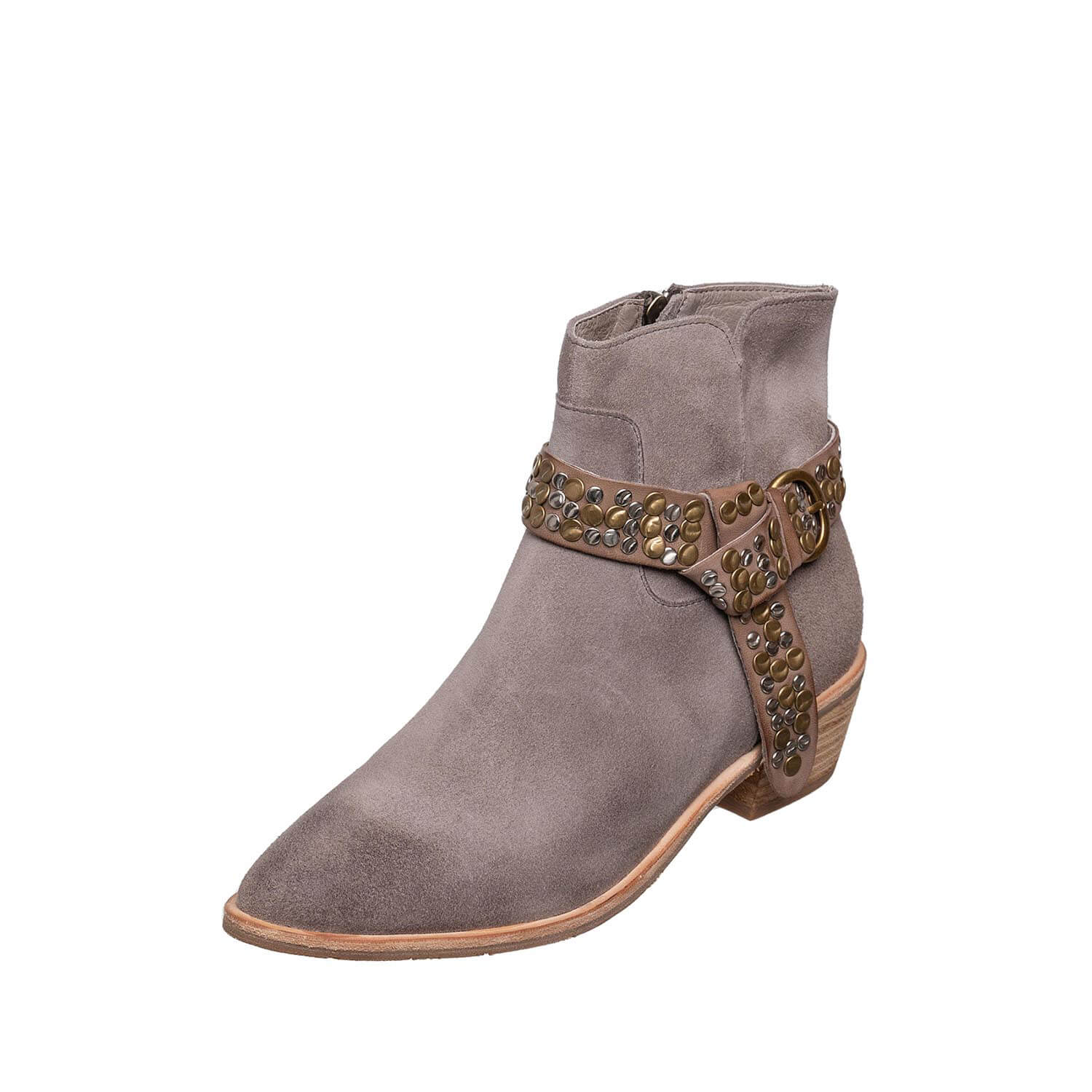
Grey suede is the quiet specialist. It is softer than black against pale skin, it works with the whole cool half of the wardrobe, and it looks expensive in a way that is hard to explain. The M03 Demi in Grey also comes in Taupe and Blush, which between them cover almost every direction a fall wardrobe goes.
Suede in Wet Weather, the Honest Answer
This is the question that stops most purchases, so here is the straight version. Suede is not waterproof and no treatment makes it waterproof. What a protector spray does is make the nap water repellent, so light rain beads and rolls off instead of soaking in, and that covers the great majority of real situations. A downpour and a puddle are still a problem, exactly as they are for smooth leather.
What matters is what you do in the first five minutes and the first hour.
Before the first wear
Spray a suede protector evenly over the whole boot from about eight inches away, let it dry completely, then repeat. Two light coats work better than one heavy one, which can flatten the nap. Do this before the boots ever leave the house, not after the first wet day, because the treatment works by coating dry fibres.
If they do get wet
Blot, never rub. Press a clean dry cloth against the wet area to lift the water out, then stuff the boots with paper to hold their shape and leave them to dry at room temperature, away from radiators and direct heat. Heat is what actually ruins suede, because it dries the fibres hard and flat. Once they are completely dry, brush the nap back up with a suede brush in one direction and the boots will look as they did before.
Ongoing
Brush after every few wears to lift the nap and keep dust from settling into it. Re-apply protector every few weeks in a wet season. Salt marks lift with a damp cloth and a little white vinegar, applied lightly and dried naturally. Our full guide on how to care for suede shoes covers the same routine in more detail.
Fall suede, freshly landed
The newest suede ankle boots in the collection, handcrafted and cut in small runs. Sizes go quickly once a colourway starts moving.
Sizing, Break-In and What to Expect
Antelope suede ankle boots run in US sizes 5 to 10. The fit is true to size for most feet, and the guidance is simple. If you are between sizes, take the larger one. Suede moulds to the widest part of the foot within a few wears, but it does not gain a size, so a boot that is genuinely tight on day one will still be tight in a month.
Break-in is short. Expect the upper to soften noticeably by the second or third wear, and the insole to take the impression of your foot in about the same time. Wearing them for an hour or two at home first is worth doing, because it lets the suede start moulding before you commit to a full day out.
If you are building a whole season around the boot, our guide to fall boots for women sets ankle, Chelsea and mid-calf styles side by side.
A note on socks. A thin sock changes nothing, but a thick sock in a boot fitted to a bare foot will feel a half size tight. If you know you wear these with heavier socks through the coldest weeks, factor that in at the point of purchase rather than after.
5 to 10
US sizes in stock
$99
Where suede boots start
$80
Free US shipping above
Shoe Finder Quiz
Your Suede Ankle Boot
Question 1 of 3
How much heel can you actually wear?
Six Suede Ankle Boots, One for Each Answer
These six cover the whole decision space described above. Each one is the clearest expression of a single answer, so between them there is a pair for every combination of heel, closure and silhouette.
L68 Char, the lowest heel
The pair for anyone who has given up on heels but not on suede booties. One inch of lift, a gold zip down the centre front, a long western point at the toe and two pull tabs at the back that make it quick to get into. A padded insole and a durable rubber outsole underneath mean it grips on wet pavement and polished floors alike. In a warm Mocha suede at $219, and the toughest of the six to keep in stock.
M03 Demi, the everyday one
At $99 this is where suede ankle boots start, and it does not feel like an entry price. The heel is 1.5 inches, high enough to register and low enough to ignore, the shaft is closed with a discreet side zipper, and a studded harness strap with a buckle runs across the vamp so it never reads plain. The suede is brushed, oiled and waxed by hand, and the insole is latex cushioned and coated in smooth breathable leather. In Grey, Taupe and Blush.
Featured Style
★★★★★
Distressed Suede, 2 Inch Leather Heel
The most requested suede ankle boot in the collection, and the one to buy if you only buy one. Two inches on a wide leather heel over a non-slip rubber sole, a latex cushioned insole coated in breathable leather, cutout quarters that never grip the ankle, and a studded harness strap. In Black and Taupe.
$119
Shop M33 Meli
M33 Meli, the safe default
If the whole decision feels like too much, buy this one. The 2 inch height is the sweet spot of the ladder, and the heel is leather, wide and comfortable rather than slim, which is what makes it wearable for a full day rather than an evening. The sole is non-slip rubber. What sets it apart visually is the pair of cutouts in the quarters and the studded harness strap across the vamp, which together give it presence without the boot ever gripping a wider ankle. In Black and Taupe at $119.
O45 Tarah, the slouch
Relaxed elegance is the phrase, and of all our slouchy suede ankle boots this one earns it most. Premium hand-brushed suede is cut deliberately long so it drapes and folds at the ankle, while the foot section stays structured for proper support. The 2.5 inch heel gives real elevation without losing stability, and a side zipper keeps access easy while preserving the slouched line. In Chocolate at $139, and the pair that looks best with a narrow trouser.
O65 Jane, the Chelsea
The pair to buy if zips have ever hurt. Elastic side panels let the boot pull on cleanly and then close back around the leg under even tension, so there is no fixed line to press on the ankle bone. The shaft rises above the ankle, the toe is sharply pointed, the heel is a block, and the insole is padded so it stays wearable for hours rather than an hour. In Black and Cognac at $239, and the most polished of the six.

O60 Jordan, the tallest
The most striking of the six, and the one built for an evening. A 3 inch stacked heel sits under soft distressed suede, and the front zipper is the whole point of the design, running down the vamp as a bold vertical that elongates the foot. The toe is a modern square. Cushioned insoles keep it wearable well beyond the length of a dinner. In Black and Mocha at $239.
Frequently Asked Questions
Are suede ankle boots comfortable enough to wear all day?
Yes, provided the heel is in the right range and the construction is right. A heel between 1 inch and 2.5 inches on a block, stacked or platform base is comfortable for a full day for most women. What matters as much as the number is the width of the heel and what is inside the boot. A latex cushioned insole coated in breathable leather, as used in the M33 Meli and M03 Demi, does more for all-day comfort than half an inch of heel height either way.
What heel height is best for suede ankle boots?
Two inches is the answer for most women, because it lifts the leg line and clears a hem while still being wearable from morning to evening. Go to 1 inch or 1.5 inches if you are on your feet all day or standing for work. Go to 3 inches only if the boots are for evenings and shorter wear. A platform sole is the exception to all of this, because it raises the whole footbed and so gives height without the forward pitch your foot actually feels.
Can you wear suede ankle boots in the rain?
In light rain, yes, if you have treated them with a suede protector spray beforehand. The spray makes the nap water repellent so light rain beads and rolls off. It does not make suede waterproof, and no treatment does. Heavy rain, puddles and deep snow will soak through, so keep a different pair for those days. If they do get wet, blot with a dry cloth, stuff with paper, and dry at room temperature away from any heat source.
Do suede ankle boots stretch out over time?
They mould rather than stretch. Suede fibres are looser than smooth leather, so the upper takes the shape of the widest part of your foot within a few wears and then stays there. What it will not do is gain a size. A boot that feels genuinely tight when you first put it on will still be tight in a month, so buy the size that fits on day one.
Should you size up or down in suede ankle boots?
Antelope suede ankle boots run true to size in US 5 to 10. If you fall between sizes, take the larger one, because the suede will mould in to meet your foot but will not open up if it is short. If you know you will wear thicker socks through the coldest weeks, factor that in when you order rather than afterwards.
What is the difference between suede and leather ankle boots?
Suede comes from the underside of the hide, where the fibres are loose and open, which is what creates the soft matte nap. Smooth leather is the tight outer grain. In practice suede breaks in faster, feels softer against the foot, and hides small scuffs that would show as bright scratches on polished leather. In exchange it is porous, so it needs a protector spray before the first wear and a brush every few wears.
Which closure holds the foot best in an ankle boot?
It depends on your ankle. A front or side zip is the most adjustable, so it suits a fuller instep or anyone who wants to set the tension themselves. Elastic side panels, as on a Chelsea boot, hold a slim ankle under even pressure with nothing to dig in, which is the answer if zips have rubbed you before. A cutout or open shaft removes the problem entirely and suits a wider ankle.
What colour suede ankle boot goes with the most outfits?
A mid brown, taupe or cognac, rather than black. It bridges navy and grey as easily as camel and cream, and it blends into a denim hem instead of cutting the leg line. Black suede is useful but reads heavier on a boot and shows dust more than people expect. Grey is the quiet specialist that works across the whole cool half of a wardrobe.
How do you clean suede ankle boots at home?
Start dry. Brush the nap with a suede brush in one direction to lift dust out of the fibres. For a mark, use a suede eraser or rub gently with a clean pencil eraser, then brush again. Salt stains lift with a cloth dampened with a little white vinegar, applied lightly and left to dry naturally. Never soak the boot, never use heat to dry it, and re-apply protector spray afterwards.
Are platform suede boots comfortable to walk in?
Often more comfortable than a heeled boot of the same total height. A platform raises the front of the foot as well as the heel, so the angle your foot actually sits at is the difference between the two rather than the full height. A boot on a 2 inch platform with a 3 inch heel walks roughly like a 1 inch heel. That is why the Q83 Prue and U64 Urban suit women who want height and a full day of wear at once.
About the Author
Antelope Editorial
Antelope is an American footwear house based in Stamford, Connecticut, handcrafting leather and suede shoes, boots, sandals, clogs and mules for women. Every guide we publish is written against the collection we actually make, with heel heights, closures and materials taken from the shoes themselves rather than from a catalogue. More about Antelope.
Handcrafted Suede
Find your pair
Suede ankle boots from $99 to $239, in US sizes 5 to 10. Handcrafted uppers, cushioned insoles and rubber outsoles, with free shipping in the United States on orders over $80.
Further Reading
Prices, colourways and sizes described here reflect the collection at the time of writing and are subject to change. Heel heights are approximate and measured at the back of the heel. Suede care advice is general guidance, and any treatment product should be tested on a small hidden area first.
