

There are no items in your cart


Short Wedge Sandals for all Ages
Short Wedge Sandals
Short wedge sandals, and the two inch rule
Podiatrists keep naming the same ceiling. Here is where that number comes from, what happens to your foot above it, and seven short wedges described from their own photographs. Leather, from $69.
In Short
A short wedge sandal is one whose sole rises roughly 1.5 to 2.5 inches at the heel in a single continuous piece, with no gap under the arch. Podiatrists name two inches as the practical ceiling because that is where measured forefoot pressure and plantar fascia strain start climbing sharply rather than gradually.
Antelope currently has seven short wedges in stock, from $69 to $139. What separates them is not the height, which is nearly identical, but what holds the foot on: a zip, an ankle strap, a band behind the heel, or nothing at all.
In This Guide
12 chapters, about a 10 minute read
- 01What counts as a short wedge sandal
- 02Where the two inch number comes from
- 03Why a wedge is easier than a heel of the same height
- 04Fastened, or slip on
- 05A short wedge in motion
- 06The seven short wedges in the collection
- 07How to measure a heel you already own
- 08Getting the fit right
- 09Styling short wedges without looking dated
- 10All seven compared at a glance
- 11Which pair is right for you
- 12Questions people ask before buying
Almost every guide to short wedge sandals opens by telling you they are comfortable, then shows you a grid of them. That is a description, not a reason. The reason is measurable, it has a number attached, and the number is two inches.
This guide starts with that measurement and what happens on either side of it, because once you understand it you stop shopping by picture and start shopping by height and fastening. Then it goes through the seven short wedges Antelope has in stock right now, describing each one from its own photographs rather than its catalogue copy. Where the two disagreed, which happened twice, the photograph wins and the guide says so.
The short answer. A wedge is a sandal whose sole and heel are one continuous piece of material, so the ground contact runs unbroken from toe to heel. It counts as short when that rise measures about 2.5 inches or less at the back. The defining feature is not the height, it is the absence of a gap under the arch.
What counts as a short wedge sandal
That unbroken sole is the whole point. On a court shoe or a stiletto, the heel is a separate column and the middle of your foot is suspended over air. On a wedge, the material fills that space, so the arch is supported along its length and your weight has somewhere to go other than straight down through the ball of the foot.
The silhouette is older than most people assume. Salvatore Ferragamo introduced the wedge to the Italian market, and in a period when steel for shank reinforcement was unavailable he built the soles from Sardinian cork instead. A wartime shortage produced the shape we now buy for comfort. You can read the full history of the wedge sole if the origin interests you.
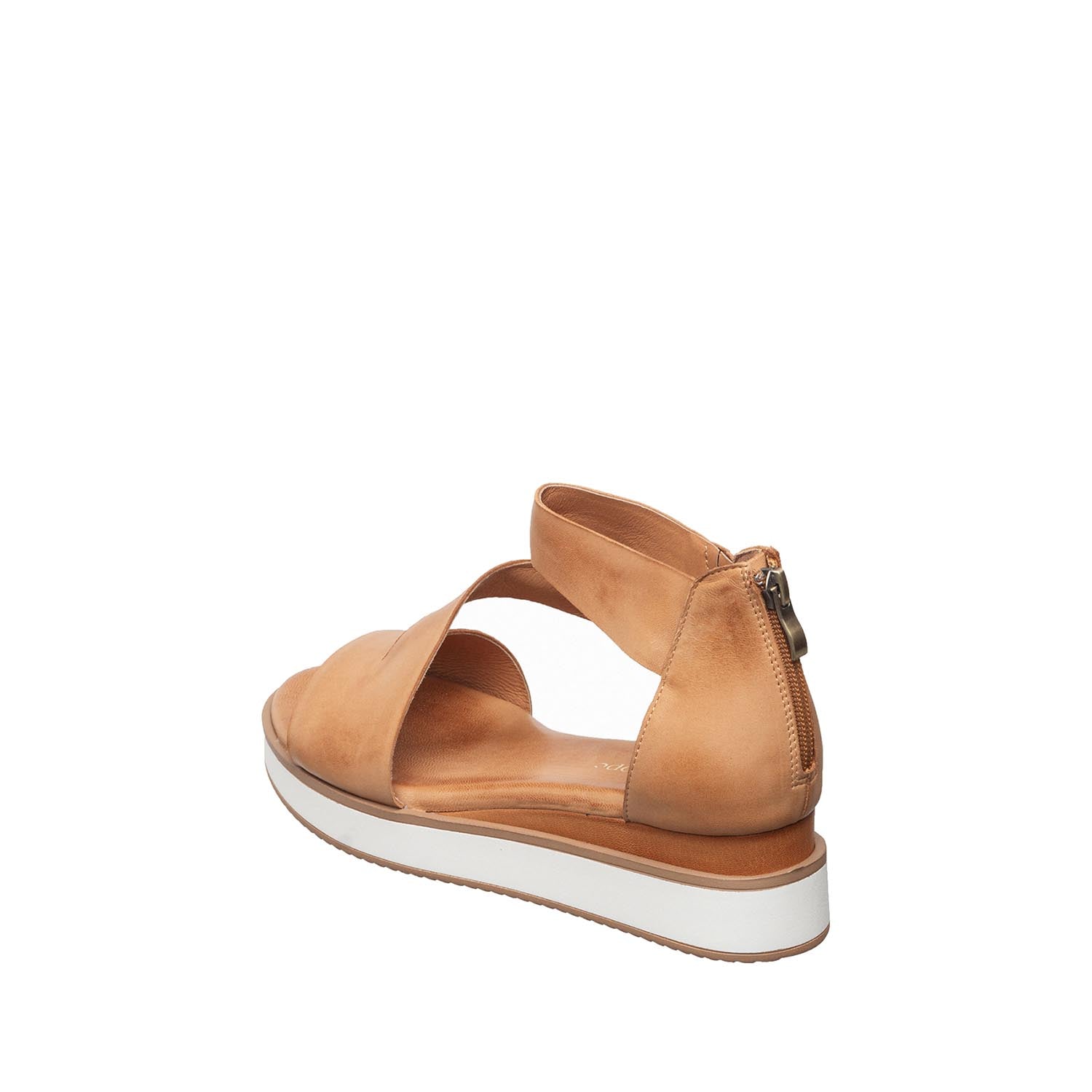
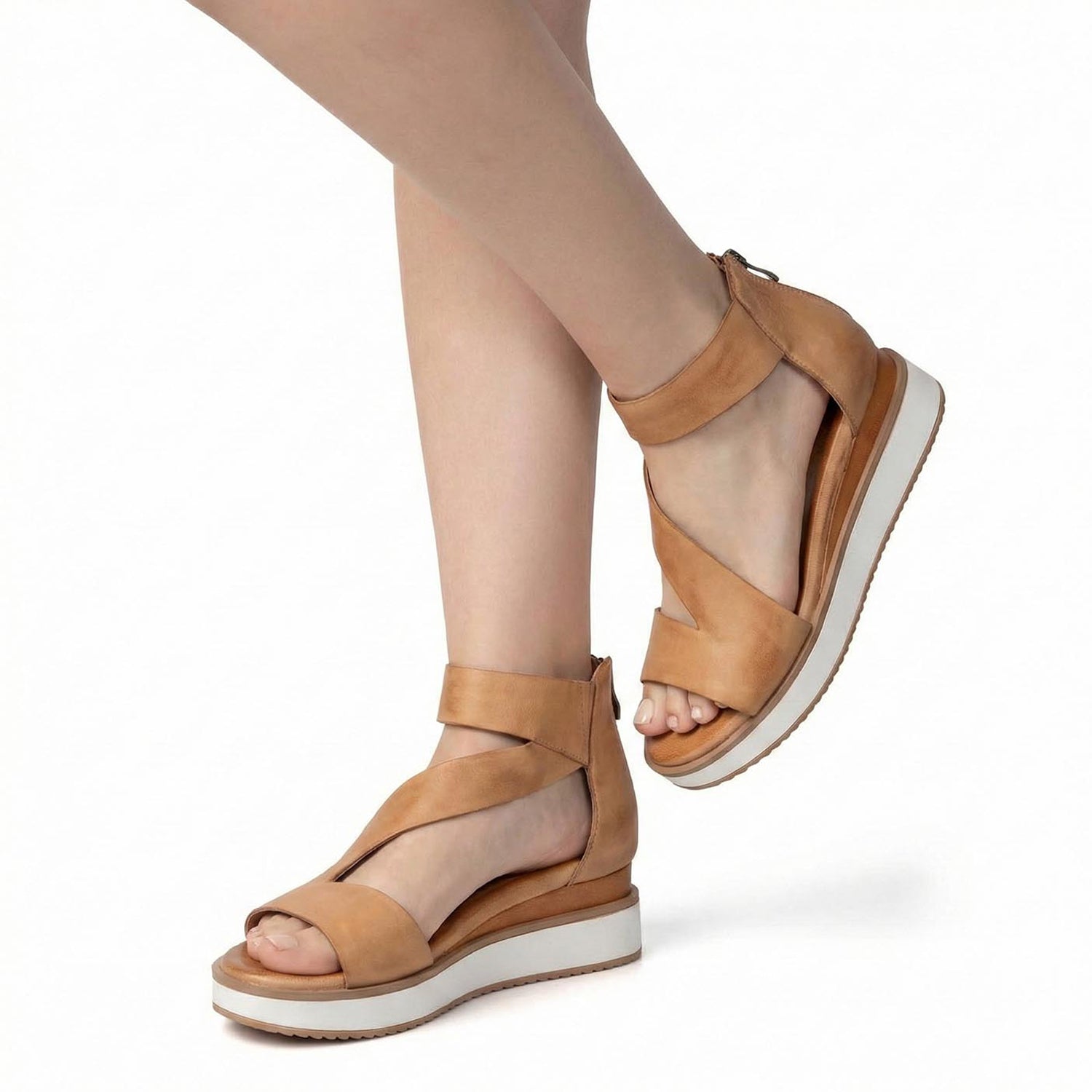
Look at the profile above and you can see why the category behaves differently from other raised shoes. That is what you are buying when you buy short wedge sandals, and it is why the same height feels so different from a two inch stiletto.
Where the two inch number comes from
Ask several podiatrists what heel height they consider safe for regular wear and you will hear the same figure back: two inches or less. It sounds like a round number chosen for convenience. It is not. It sits at a genuine inflection point in how load moves through the foot.
Raising the heel tips your body weight forward onto the forefoot. Measured against standing flat, the increase in pressure under the ball of the foot runs roughly like this.
+22%
At a 1 inch heel
+57%
At a 2 inch heel
+76%
At a 3 inch heel
Read the gaps rather than the numbers. Going from flat to one inch adds 22 points. The next inch adds 35 more. The inch after that adds 19 on top of an already high figure, on a foot that is by then poorly positioned to absorb it. The curve is not a straight line, and two inches is roughly where it starts to bend.
Laboratory work on the plantar fascia, the band of tissue running along the underside of the foot, shows the same shape. A study in Frontiers in Bioengineering and Biotechnology modelled heel heights of 3, 5 and 7 centimetres and measured peak strain in that tissue. Moving from 3 to 5 centimetres raised it by 26.1 percent. Moving from 5 to 7 raised it by a further 60.3 percent, for a total increase of about 102 percent across the range.
Five centimetres is 1.97 inches. The point where the strain curve turns steep in the laboratory is the same point the clinicians name in the consulting room, which is why the advice is so consistent. You can read the full study on heel height and plantar fascia strain in the open archive.
Six of the seven wedges below sit at or under that mark. The seventh, at 2.5 inches, sits just above it. That is worth knowing rather than hiding, and the entry for that pair says so plainly.
Why a wedge is easier than a heel of the same height
Height is only half the story. The other half is how much floor the shoe gives you to stand on, and this is where short wedge sandals separate from every other raised shoe at the identical measurement.
A stiletto concentrates your load onto a base of a few square centimetres. Every small correction your ankle makes has to happen through that narrow column, and the smaller the base, the further your centre of pressure wanders as you walk. A wedge spreads the same load across the entire footprint of the shoe. The ankle does less continuous correcting, and there is far less opportunity for the foot to roll sideways off the edge.
There is a second, quieter advantage. Because the sole is continuous, the arch is in contact with material rather than hanging in air, so the load is shared along the foot instead of concentrating at two ends. This is the practical reason a two inch wedge can be worn through a working day while a two inch stiletto often cannot.
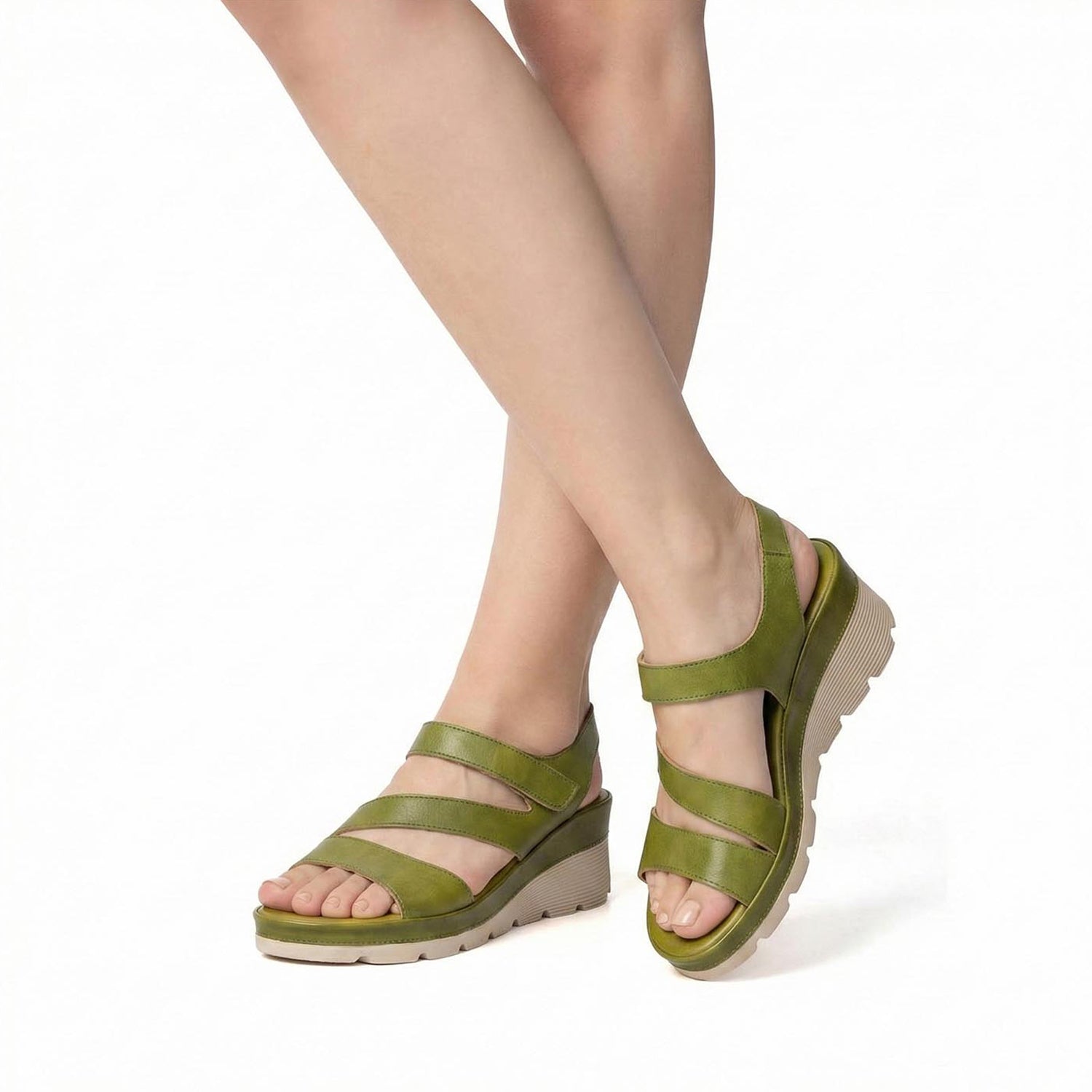
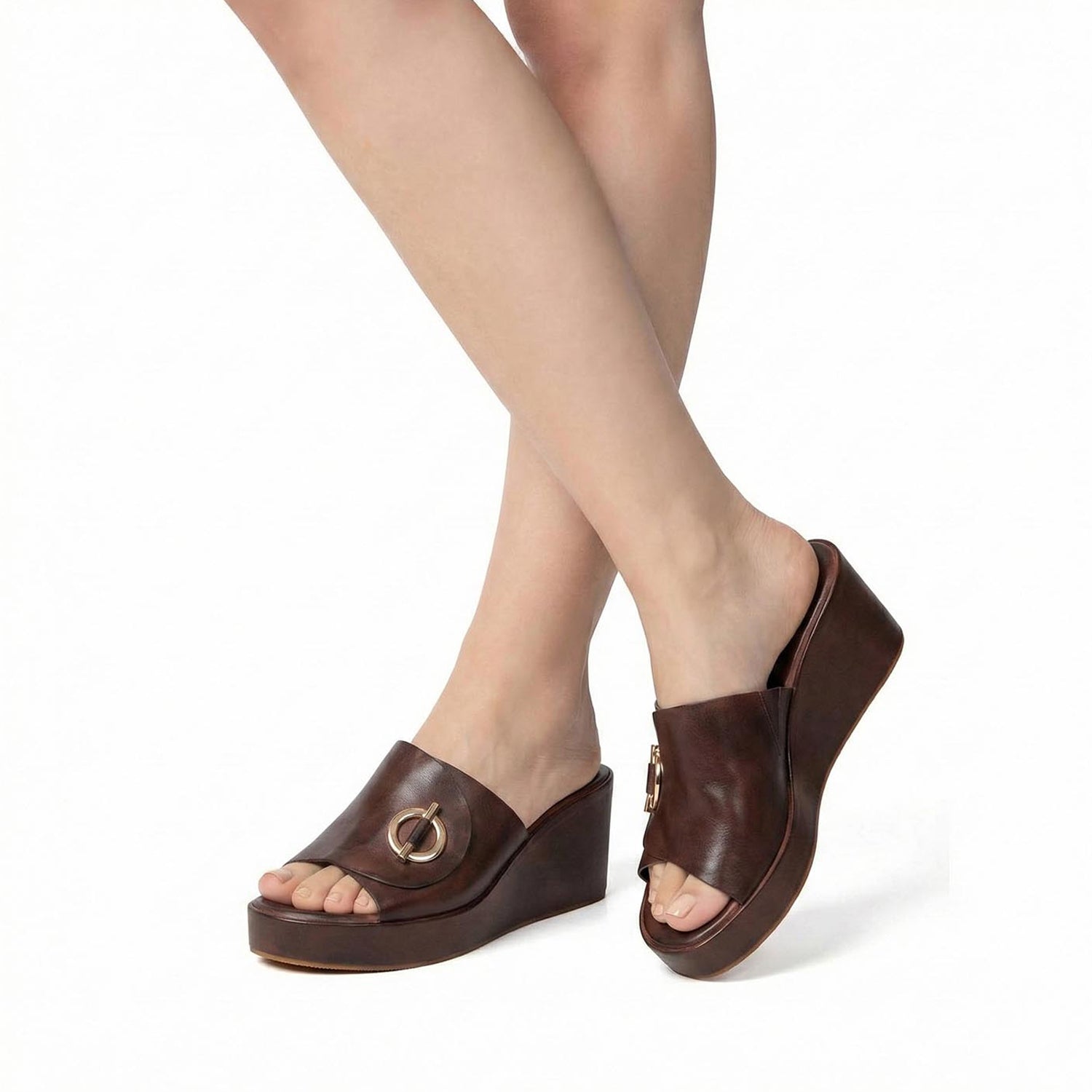
Those two are the same family and behave differently on the foot, which brings us to the decision that actually matters once you have settled on the height.
Start Here
Sandals, sorted by what holds your foot
Straps, slides and mules across the current season, all on cushioned leather footbeds in US sizes 5 through 11.
Fastened, or slip on
At this height the seven styles are within an inch of each other, so height is not the thing to choose on. What separates them is whether something holds the foot to the shoe, and that decision has more effect on how the sandal feels after four hours than any other single feature.
If something holds the foot
A fastened sandal, whether that is an ankle strap, a strap behind the heel or a zipped cuff, keeps the foot from sliding forward as you walk. That matters more the longer you are on your feet, because a foot that creeps forward pushes the toes into the front edge and quietly undoes the pressure advantage the low wedge gave you. If you are walking a distance, standing at an event, or know your heel tends to slip out of shoes, choose something fastened.
If nothing does
A slip on wedge, meaning a slide or a mule with an open back, gives you speed instead. Nothing to fasten, nothing to adjust, and the foot can leave the shoe as easily as it entered. That suits errands, warm evenings and anything where the shoe comes on and off repeatedly. It suits a long day of walking less well, and it is worth being honest about that trade rather than pretending both do the same job.

If you want the slip on silhouette in a closed shoe rather than a sandal, the same reasoning applies to wedge clogs and mules, which trade the open toe for more coverage without changing the sole geometry.
A short wedge in motion
Photographs show a shoe standing still, which is the one thing a sandal never does when you are wearing it. The clip below is eighteen seconds of a low leather wedge with an ankle strap on the foot, so you can see how the sole meets the ground through a step rather than in a static profile shot.
Watch the sole meet the ground
Eighteen seconds of a low leather wedge with an ankle strap, worn on the foot. The thing to watch is the back of the shoe: the heel stays seated against the footbed through the whole step, which is exactly what the ankle strap is for.
That single detail, the heel staying put, is the difference between a sandal you forget about and one you keep stopping to adjust.
The seven short wedges in the collection
Every description below is written from that style's own photographs. Where the catalogue text and the photograph disagreed, the photograph is what you see here, and the disagreement is named. Two of the seven do not have a published heel height, and rather than estimate one, those entries say so.
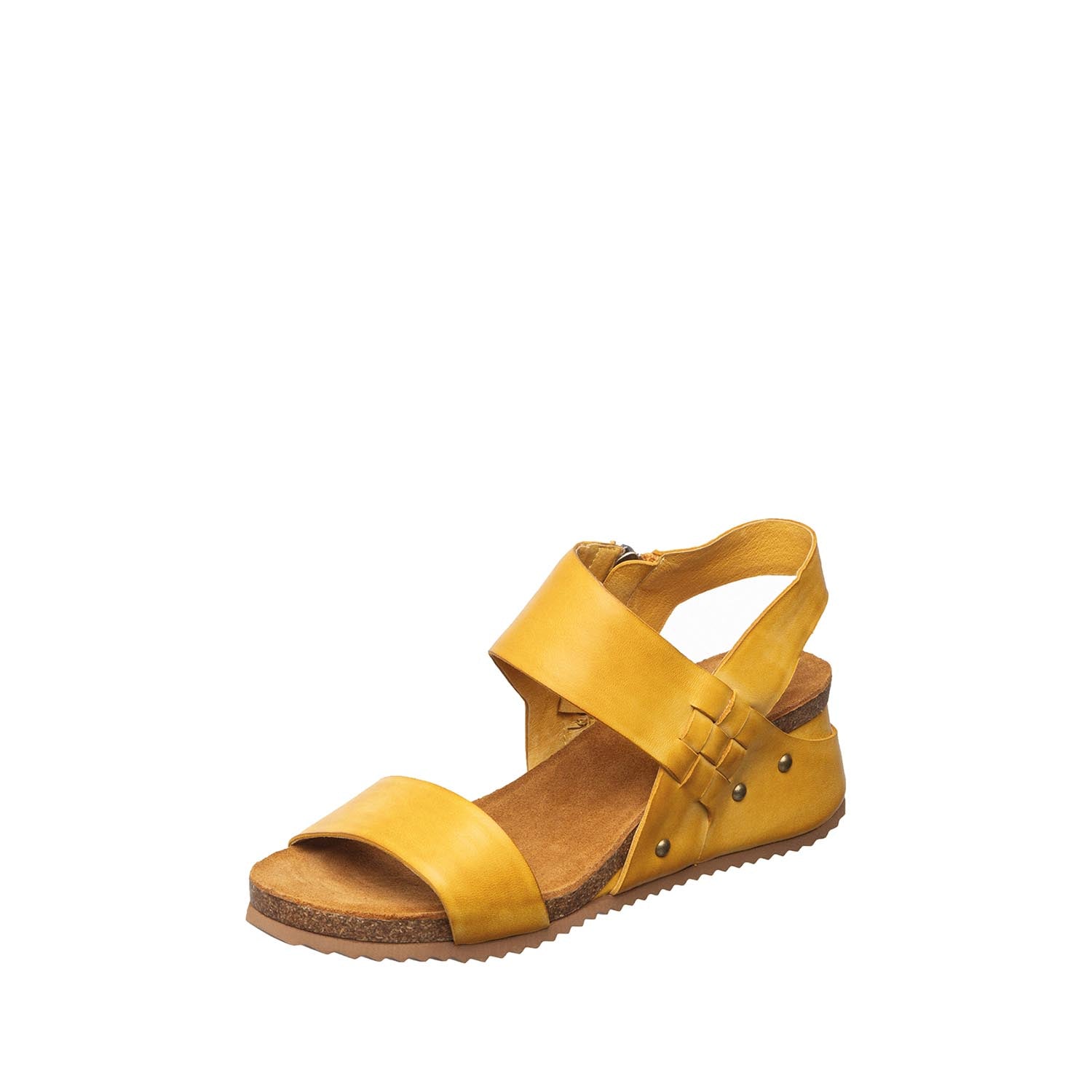
Featured Style
★★★★★Leather Wedge Sandal, 1.5 in, Back Zip
The lowest wedge here. A band crosses the instep and a wide cuff wraps the ankle, closing with a zip at the back rather than a buckle, so there is nothing to adjust once you have the size right. The sportiest shape of the seven.
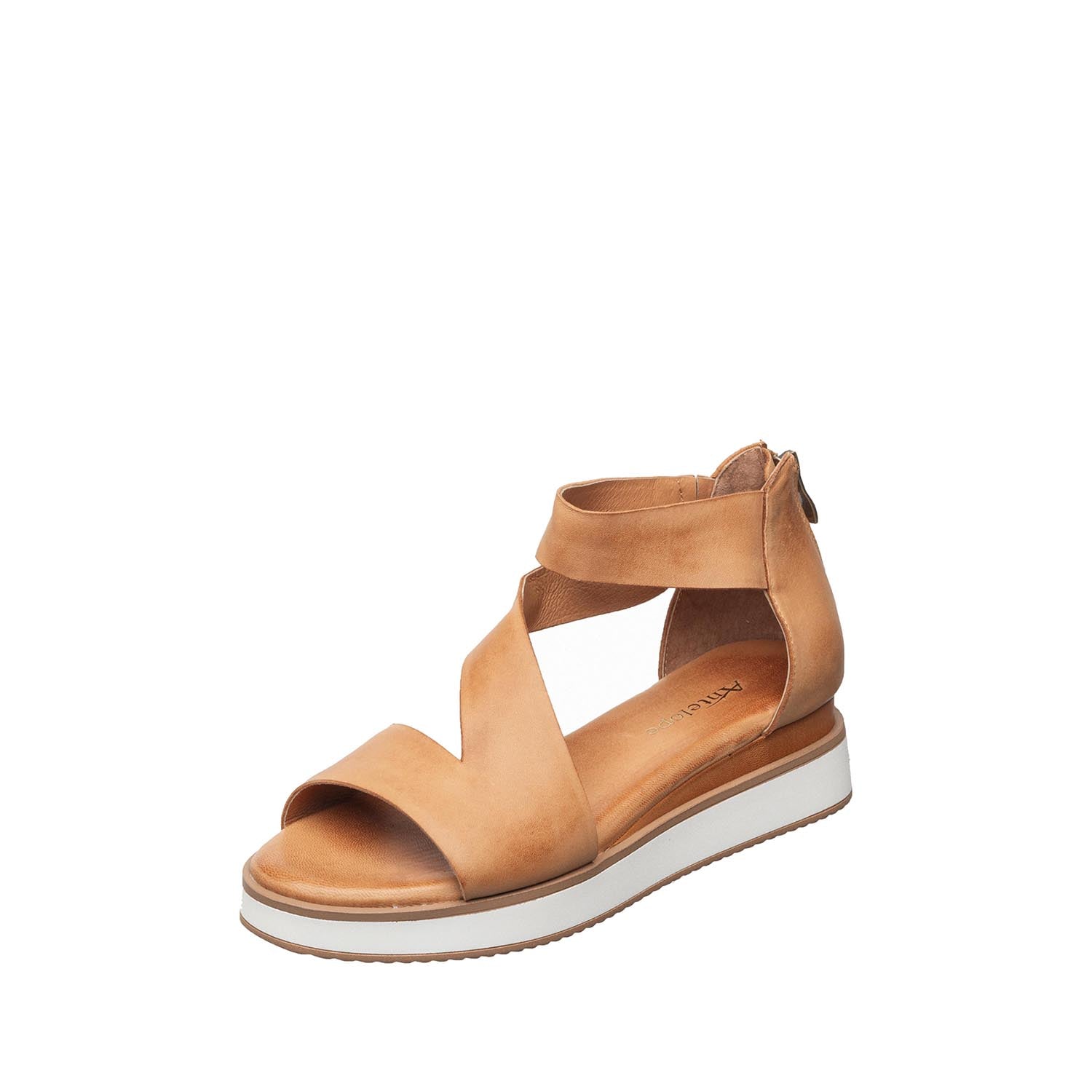
Featured Style
★★★★★Leather Wedge Sandal, 2.0 in, Ankle Strap
Two bands across the foot and a strap at the ankle, in olive leather. The catalogue calls the ankle fastening a buckle, but no buckle is visible in the photographs, so treat the strap as the feature and check the closure on arrival.
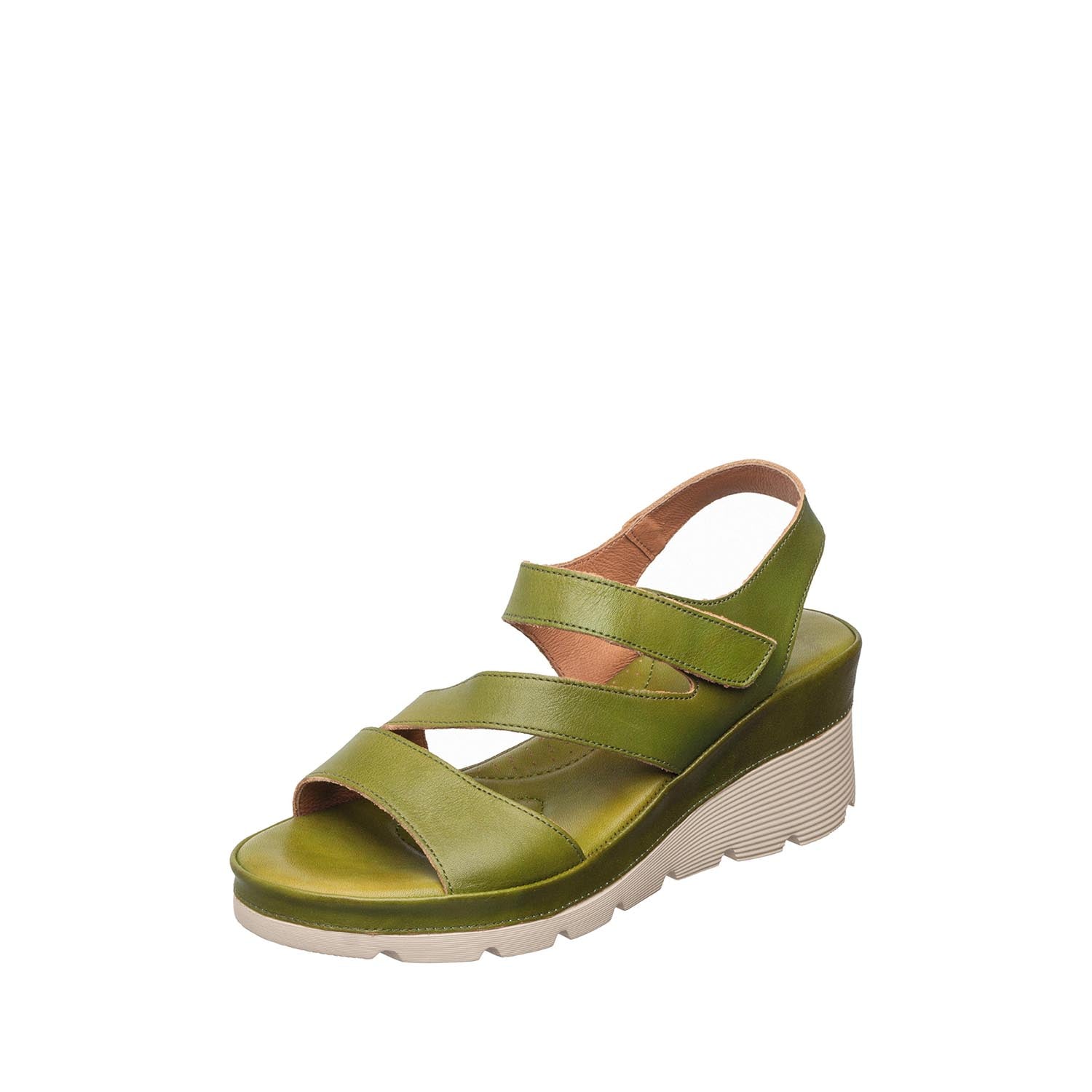
Featured Style
★★★★★Leather Wedge Slingback, Height Not Stated
A braided band over the toes with a strap behind the heel. The catalogue describes it as a simple slide, but the photographs clearly show that back strap, which makes it a slingback and a more secure shoe than the description suggests.
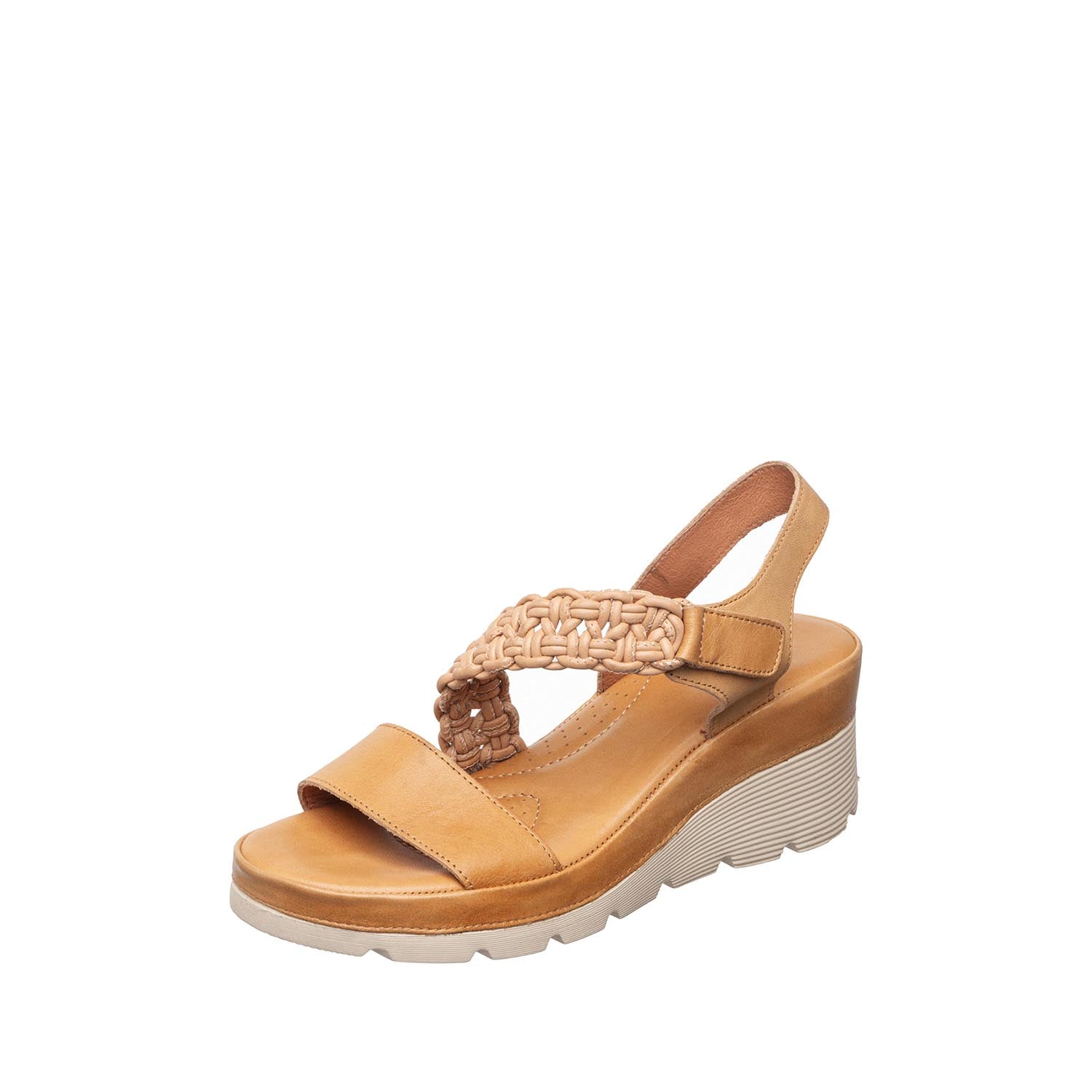
Featured Style
★★★★★Leather Wedge Slide, 2.0 in, Slip-On
A true slide. The back is open and there is nothing behind the heel, so the foot is held by the band across the front alone. The easiest of the seven to get on and off, and the one that asks the most of your toes on a long walk.
Featured Style
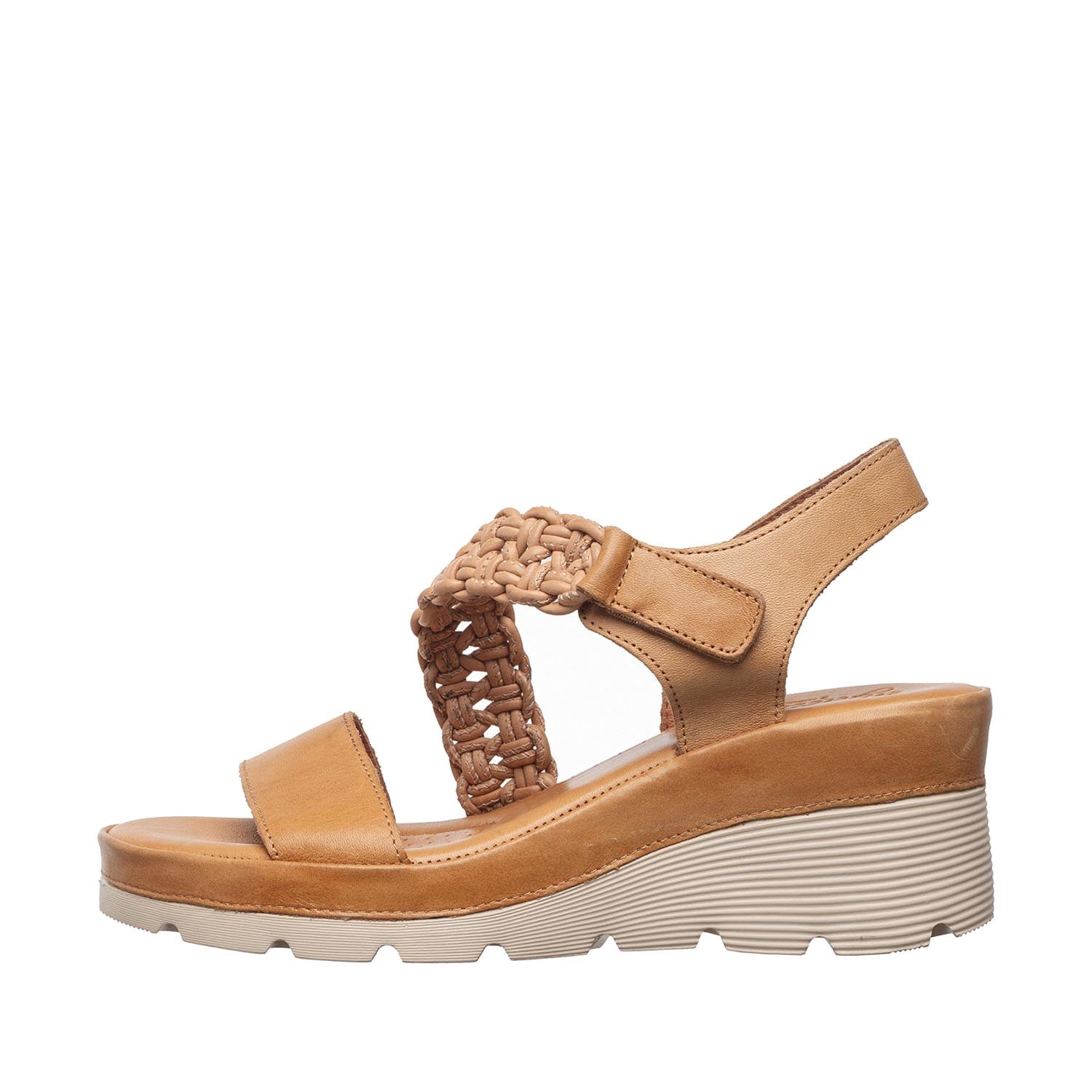
★★★★★Leather Wedge Sandal, 2.0 in, Ankle Strap
Three points of contact: a band over the toes, a woven band across the middle of the foot, and a strap at the ankle. The footbed has a cork look to it. The most held of the open styles, and the one to pick for distance.
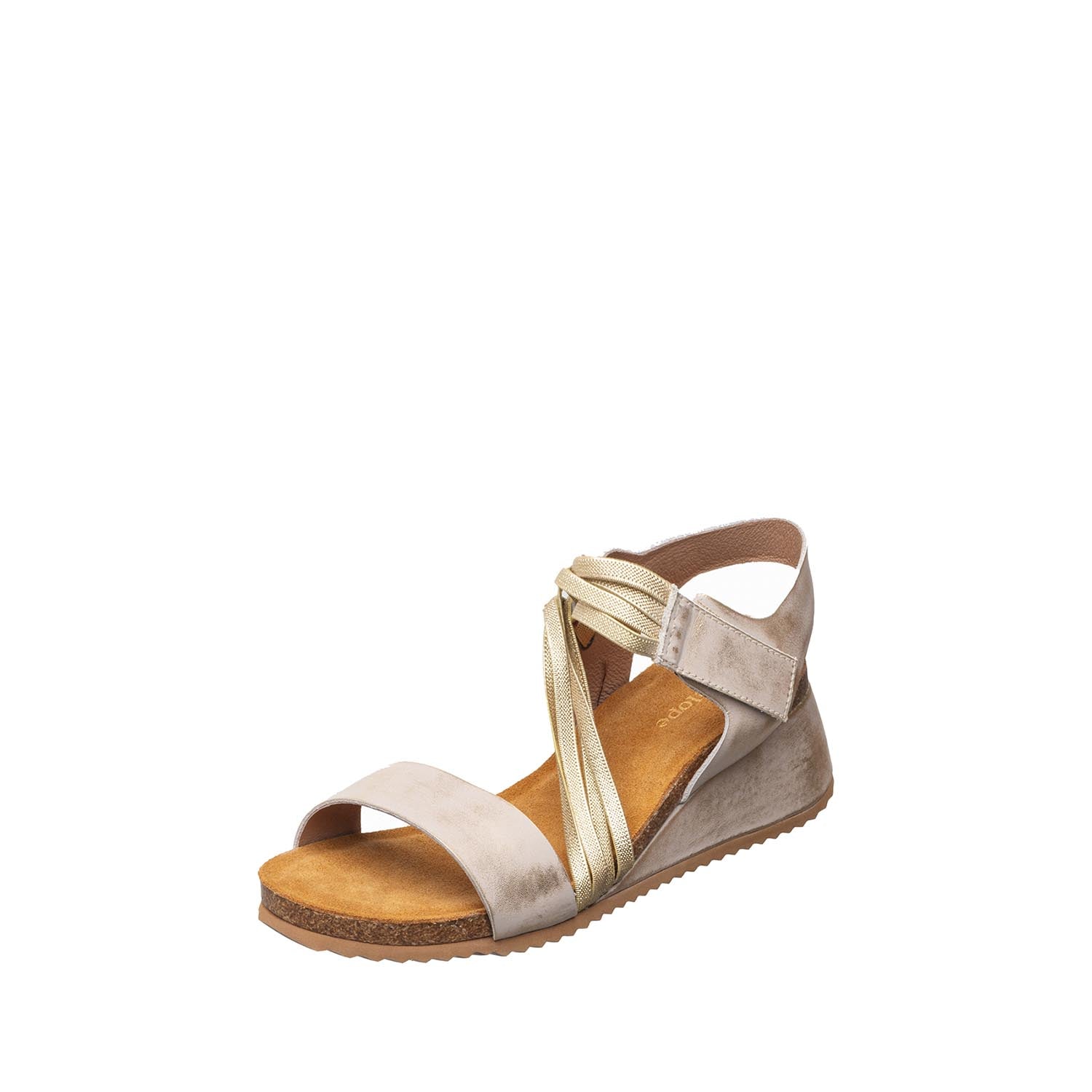
Featured Style
★★★★★Metallic Wedge Sandal, Height Not Stated
Thin gold straps run over the foot and a wide strap wraps the ankle. The dressiest shape of the seven, and the only one with a metallic upper. The photographs do not show what the ankle strap fastens with, so the closure is not described here.

Featured Style
★★★★★Leather Wedge Mule, 2.5 in, Open Back
A leather mule, open at the back, with a metal toggle at the side. At 2.5 inches this is the one that sits above the two inch mark discussed earlier, so it asks a little more of the forefoot than the rest. The most striking of the seven.
$139Shop I45 Jupiter
All seven at a glance
If none of the seven is quite the shape you had in mind, the low wedge sandals guide covers the wider category, and there is a separate guide to gladiator wedges if you want more strapping up the leg.
Find Your Pair
Seven short wedges, in stock now
From $69 to $139, in leather, most sizes still available. Free US shipping over $80.
How to measure a heel you already own
Before buying anything, it is worth knowing what you have been walking in. Most people are surprised, usually upward. Measuring takes about a minute.
- Stand the shoe on a flat, hard surface. Carpet compresses and will cost you a quarter inch.
- Hold a ruler vertically against the very back of the shoe, touching the floor.
- Read the measurement at the point where the sole meets the upper at the back of the heel, not at the top of the shoe.
- If there is a platform under the toes, measure that too and subtract it. A 3 inch wedge on a 1 inch platform pitches your foot like a 2 inch heel, because what your foot actually feels is the difference between the two ends.
That last step is the one most guides leave out, and it explains why some tall looking wedges feel far easier than they look. The pitch is what matters, not the total height of the sole.
Getting the fit right
Fit decides whether the pressure advantage of a low wedge survives contact with a real day. A short wedge sandal that is slightly too large lets the foot slide forward, and the toes then take the load the sole was supposed to spread.
Try sandals at the end of the day, when feet are at their largest. Check that your heel sits on the footbed rather than overhanging the back edge, and that there is a small amount of room in front of the longest toe, which is not always the big toe. If your feet are wider than average, look for styles with more than one band across the foot, because the load is shared across several points rather than pressing through one. The wide width wedge sandals guide goes further on that.
Leather uppers give slightly with wear, so a band that is snug rather than tight on day one usually settles. A band that is genuinely tight on day one will not.
Styling short wedges without looking dated
The wedge went through a phase of being associated with one very specific look: a tall cork platform worn with a maxi dress. That silhouette dated, and the whole category got blamed for it. A short wedge is a different shape and does not carry the association.
At this height the sandal reads as a flat with a lift rather than as a heel, which means it goes where a flat goes. Wide leg trousers work particularly well, because the extra couple of inches keeps the hem off the ground without the shoe announcing itself. With a midi skirt or dress, the low rise keeps the proportion between hem and ankle intact where a taller heel would stretch it.
Colour is the other lever. A metallic or a soft neutral disappears into the leg and lengthens it. A saturated colour, like the olive or the yellow among the seven, becomes the point of the outfit, in which case keep the rest quiet. If you want a broader view of how the category is worn across the season, the most comfortable wedges guide covers closed styles as well.
All seven compared at a glance
The fastest way to narrow seven short wedge sandals down to one. Every entry lists only what is visible in that style's own photographs, and where a height is not published it says so rather than guessing.
| Style | Height | What holds the foot | Price |
|---|---|---|---|
| B40 Davi Sport | 1.5 in | Instep band, ankle cuff, back zip | $99 |
| S72 Jaycee | 2.0 in | Two foot bands, ankle strap | $69 |
| S71 Jemma | Not stated | Braided toe band, back strap | $69 |
| B80 Kaitlin Flex | 2.0 in | Front band only, open back | $99 |
| B83 Amanda Flex | 2.0 in | Toe band, woven band, ankle strap | $99 |
| B82 Bianca Flex | Not stated | Metallic straps, wide ankle strap | $99 |
| I45 Jupiter | 2.5 in | Open back mule, side toggle | $139 |
$69
Starting Price
5-11
US Size Range
Free
US Shipping Over $80
Which pair is right for you
Open the description that matches your situation. Each one names specific styles rather than a category.
I will be on my feet for hours
The B83 Amanda Flex at $99, which holds the foot at three separate points, or the B40 Davi Sport at $99, the lowest of the seven at 1.5 inches with a cuff that wraps the whole ankle.
I want something I can step into and go
The B80 Kaitlin Flex at $99 is a true slide with an open back. If you want the same ease in a slightly bolder shape, the I45 Jupiter at $139 is a mule with a toggle at the side.
My foot slides forward in open sandals
Choose the styles that hold the foot in more than one place. The B40 Davi Sport at $99 wraps the whole ankle in a cuff that opens with a zip at the back, and the B83 Amanda Flex at $99 holds it at three separate points.
I want to try the shape without spending much
The S72 Jaycee and the S71 Jemma, both at $69 and both in leather. The Jaycee is the quieter of the two in olive; the Jemma has a braided band and a strap behind the heel.
Still Deciding
Let the finder choose for you
Three questions on how long you are on your feet, what you want holding the foot, and the finish you are after.
Short Wedge Finder
Find your pair in three questions
Question 1 of 3
How long are you on your feet?
Questions people ask before buying
What height counts as a short wedge?
Roughly 2.5 inches or less at the back of the shoe, with most falling between 1.5 and 2 inches. The measurement that matters is the rise at the heel, and if the sandal has a platform under the toes you should subtract that, because your foot feels the difference between the two ends rather than the total height of the sole.
Are short wedge sandals actually better for your feet than heels?
At the same height a wedge spreads your weight over the whole footprint of the shoe instead of concentrating it on a narrow column, so the ankle does less correcting and there is less chance of rolling. The continuous sole also means the arch rests on material rather than hanging over a gap. Height still matters, which is why the two inch guidance applies to wedges as well.
Why do podiatrists keep saying two inches?
Because that is where the load curve bends. Forefoot pressure rises about 22 percent at one inch and about 57 percent at two, and laboratory work on the plantar fascia found strain rising 26.1 percent between 3 and 5 centimetres but a further 60.3 percent between 5 and 7. Five centimetres is just under two inches, so the clinical advice and the measurements point at the same place.
Can I wear short wedges all day?
Most people can, and it is one of the few raised styles where that is a reasonable expectation. Two things decide it: pick a fastened style rather than an open backed one so the foot cannot creep forward, and get the length right so your toes are not pressed into the front edge. A slide is comfortable for an hour of errands and less so for six hours of walking.
What is the difference between a slide, a mule and a slingback?
A slide has an open back and a band across the front, like the B80 Kaitlin Flex. A mule is also open at the back but usually covers more of the foot, like the I45 Jupiter. A slingback has a strap behind the heel, which is what the photographs show on the S71 Jemma even though its description calls it a slide. The slingback is the most secure of the three.
Are short wedge sandals suitable for wide feet?
The sole shape helps, because a broad footbed gives a wide foot somewhere to sit. What matters more is the upper. Styles with several bands spread the pressure across the foot instead of forcing it through one point, so the B83 Amanda Flex with its three points of contact suits a wider foot better than a single band slide would.
Do wedge sandals stretch with wear?
Leather uppers give a little as they warm and take the shape of the foot, so a band that feels snug at first usually settles within a few wears. This does not apply to length. A sandal that is too short will stay too short, and the sole itself does not change shape at all, so buy for the length you need on day one.
Is a 2.5 inch wedge still a short wedge?
It sits at the top of the category and just above the two inch mark the guidance points at. It is still a great deal easier than a 2.5 inch heel because of the continuous sole, but it does ask more of the forefoot than the 1.5 and 2 inch styles. The I45 Jupiter is the one pair here in that position, which is worth knowing before you choose it for a long day.
Which short wedge should I choose for a wedding or an event?
Standing on grass or gravel favours a wide sole and a fastened upper, which rules out the open backed styles. The B82 Bianca Flex is the dressiest of the seven, with a metallic upper and a wide ankle strap. If you want more of the foot held, the B83 Amanda Flex has three points of contact, and the B40 Davi Sport wraps the ankle completely.
About This Guide
Written by the Antelope Shoes team. Every product description here was checked against that style's own photographs, and the two cases where the photograph contradicted the catalogue are named in the text rather than quietly corrected. Heel heights are the published figures; where none is published, the guide says so instead of estimating. Antelope is an American footwear company based in Stamford, Connecticut, with an in-house design team and nearly four decades of handcrafted leather experience.
Explore the Collection
Find your pair
Leather short wedge sandals from $69, in the sizes still in stock this season. Free US shipping over $80.
