

There are no items in your cart


Arch Support Shoes for Women: The Complete Style & Fit Guide
Quick Summary
The best arch support shoes for women share three structural features: a contoured latex-cushioned footbed that matches the midfoot curve, a firm leather heel counter that holds the foot steady, and a supportive heel-to-toe drop between 10 and 20 mm. Antelope delivers all three across sandals, booties, mules and wedges in handcrafted leather, starting at $99. The right pair depends on your arch type, which a thirty-second wet test can identify.
Editor's Pick
★★★★★
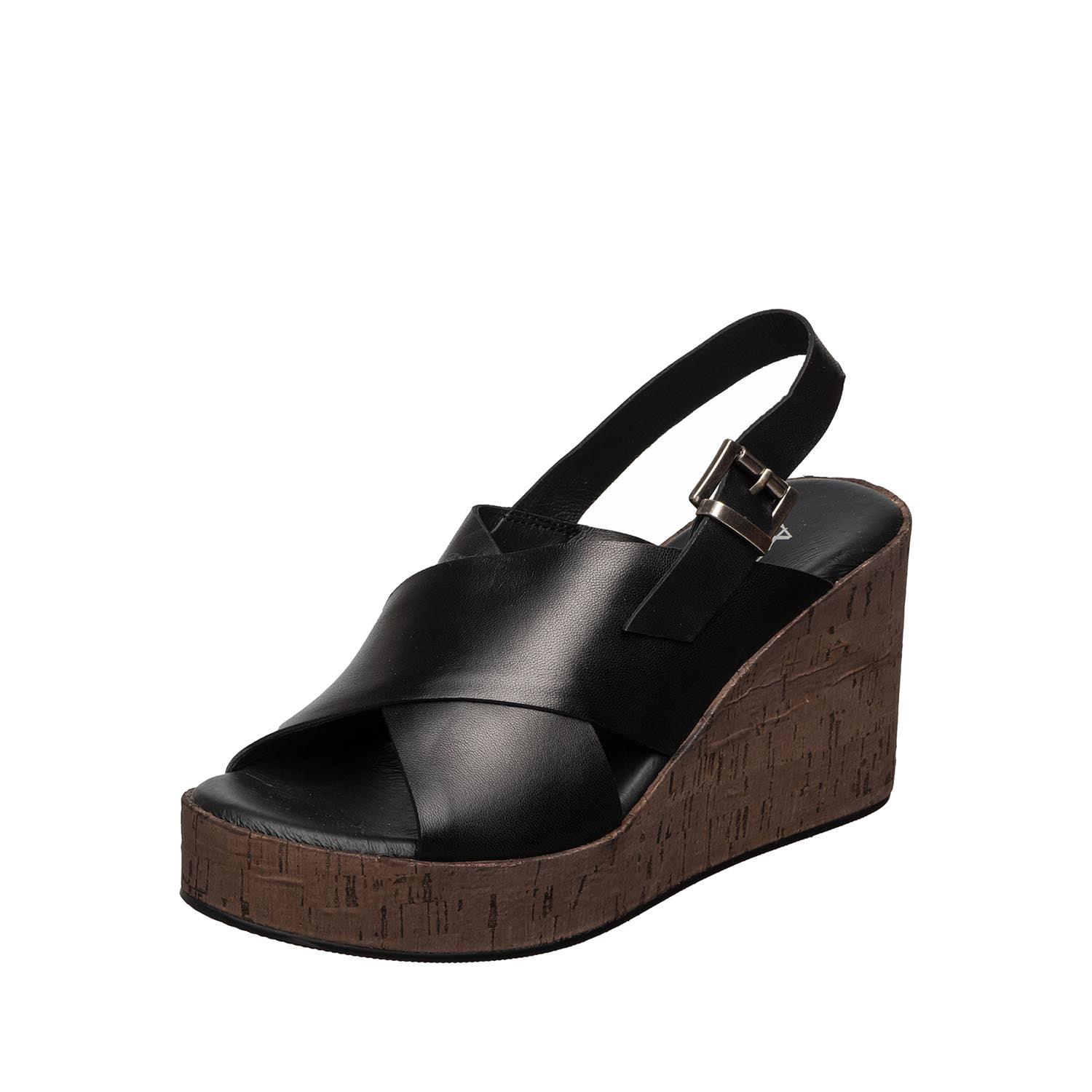
Cork Wedge Sandal, 4-Inch Platform
The most architecturally supportive silhouette in the Antelope collection. A 4-inch cork-wrapped platform sits over a latex-cushioned leather footbed, with a torsionally rigid sole that redistributes weight across the forefoot. A textbook answer for high-arch women and anyone on their feet all day.
$199
Shop H34 Aly
Featured Styles in This Guide



In This Guide
What Arch Support Shoes Actually Are
Arch support shoes women wear daily share a contoured, cushioned footbed that matches the natural curve of the midfoot. That definition covers the whole category: arch support sandals women wear through summer, arch support booties for transitional weather, arch support wedges for events, and sculpted-heel mules for office days. The structural blueprint is identical whether the silhouette is open or closed, flat or heeled.
The technical heart of any supportive shoe is the footbed, the inside surface your foot actually rests on. In a generic flat shoe, the footbed is padded fabric over a rigid sole. In shoes with arch support for women, the footbed has three defined zones: a shallow heel cup, a contoured arch-support rise under the midfoot, and a cushioned forefoot pad. On a handcrafted leather clog or wedge sandal, all three are built into a single latex-cushioned leather layer that molds to the foot within a few wears.
Arch support does two things. First, womens arch support shoes distribute body weight across the entire foot instead of concentrating it at the heel and ball. Second, they limit how far your arch can collapse inward during a step, a motion called pronation, which is the single biggest cause of plantar fasciitis and midfoot pain. According to American Podiatric Medical Association guidance, a qualifying shoe has a firm heel counter you cannot easily bend, a midsole that does not twist when wrung, and a removable or contoured insole.
Featured Style
★★★★★
Flatform Sandal, Strappy Leather
A soft flatform sandal on a latex-cushioned insole with breathable leather. A textbook arch support sandal silhouette that still reads polished enough for dresses and wide-leg trousers.
$109
Shop B41 Clara
The Three Foot Arch Types, Explained
Most women's feet fall into one of three arch types, and each type needs a different amount of support. Identifying yours is the single most useful thing you can do before buying any supportive shoe. It turns a generic search into a targeted one.
Low arch (flat foot, overpronator)
A low-arch foot makes nearly full contact with the ground. If you take a wet footprint, you see most of the sole filled in, with only a small notch at the instep. According to the American Academy of Orthopaedic Surgeons, roughly 20 to 30% of adults have a low or fallen arch. These feet tend to roll inward during a step, an overpronation motion that stresses the arch and the inside of the ankle. Priorities: firm arch-support rise, structured heel counter, and a sole that resists twisting.
Neutral arch (medium)
A neutral footprint shows the ball, the heel, and about half the midfoot connected by a band. Roughly half of adults have this arch type. Neutral feet distribute weight evenly and have the widest range of comfortable shoe options, but they still benefit from a contoured footbed during long days. Priorities: moderate arch contour, cushioned insole, a heel cup for stability.
High arch (supinator, underpronator)
A high-arch footprint shows just the ball and the heel, with a very narrow or missing band between them. About 20% of adults have high arches. These feet roll outward during a step, which concentrates impact under the heel and the ball of the foot. The common complaint is ball-of-foot pain, not arch pain. Priorities: cushioned forefoot, shock-absorbing midsole, moderate-to-firm arch fill, avoid ultra-thin soles.
The wet test, done right
To identify your own arch type at home: wet the bottom of your foot, step onto a piece of brown paper, step off, and look at the footprint. Full sole visible equals low. About half the midfoot visible equals neutral. Narrow or absent midfoot band equals high. It takes thirty seconds and is the most reliable non-medical arch assessment you can do.
| Arch type | Wet-test print | Common issue | Priority support | Antelope pick |
|---|---|---|---|---|
| Low / Flat | Full sole visible | Overpronation, arch pain | Firm arch fill, structured heel | M33 Meli, P53 Jack |
| Neutral | About 50% of midfoot connected | Occasional end-of-day fatigue | Contoured insole, cushion | B41 Clara, O33 Warren |
| High | Narrow or no midfoot band | Ball-of-foot pain, supination | Cushioned forefoot, shock absorption | H34 Aly, H70 Kat |
Featured Style
★★★★★
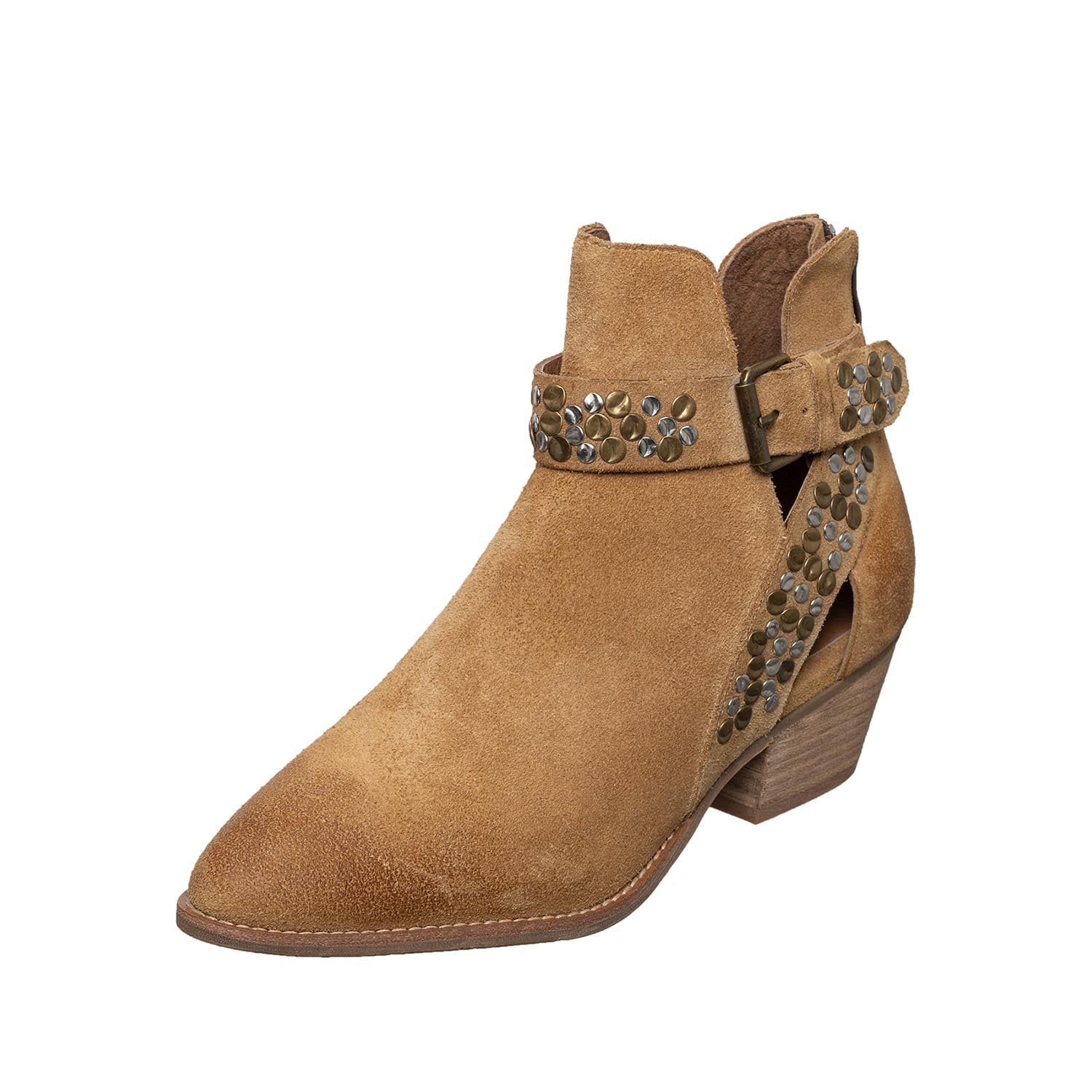
Suede Ankle Bootie, Cushioned Footbed
A distressed suede ankle bootie on a latex-cushioned leather insole. A transitional-season arch support bootie tuned for low and neutral arches, with a structured heel counter that keeps the foot anchored.
$119
Shop M33 Meli
What to Look for in Arch Support Shoes
Once you know your arch type, you can evaluate any pair of shoes with arch support for women in roughly thirty seconds. The Cleveland Clinic recommends checking four specific structural features before buying. The same four checks a podiatrist runs in the fitting room.
A firm heel counter
The heel counter is the back of the shoe that cups the heel. Press it between your thumb and finger. If it folds easily, the shoe will not hold the heel in place, and your foot slides during every step. A good arch support shoe has a heel counter you can barely compress. All Antelope closed-back styles use a structured leather heel counter that softens with wear but never collapses.
Torsional rigidity
Twist the shoe as if wringing out a towel. A supportive shoe resists the twist; a flimsy shoe folds in half. Some twist is normal (rigid shoes are uncomfortable), but a dress shoe or sandal that bends like paper cannot protect the midfoot. Cork-platform wedges like the H34 Aly score particularly high here because the cork wedge itself is almost twist-proof.
A contoured insole
Lift the insole or look at it on the product page. A real arch-support insole has visible contour: a raised arch bump, a shallow heel cup, a slight cushion pad at the forefoot. A truly flat piece of foam glued inside the shoe does not qualify. Antelope uses a latex-cushioned leather footbed pre-molded with arch and heel geometry.
A 10 to 20 mm heel-to-toe drop
Heel drop is the height difference between the heel and the forefoot. Fully flat shoes (0 mm drop) are fine for some neutral arches but punishing for high arches. A 10 to 20 mm drop (low block heel or platform wedge) is the sweet spot for most women's feet because it slightly preloads the forefoot and relieves pressure under the heel. Avoid stilettos with drops over 30 mm if arch pain is your concern.
Featured Style
★★★★★
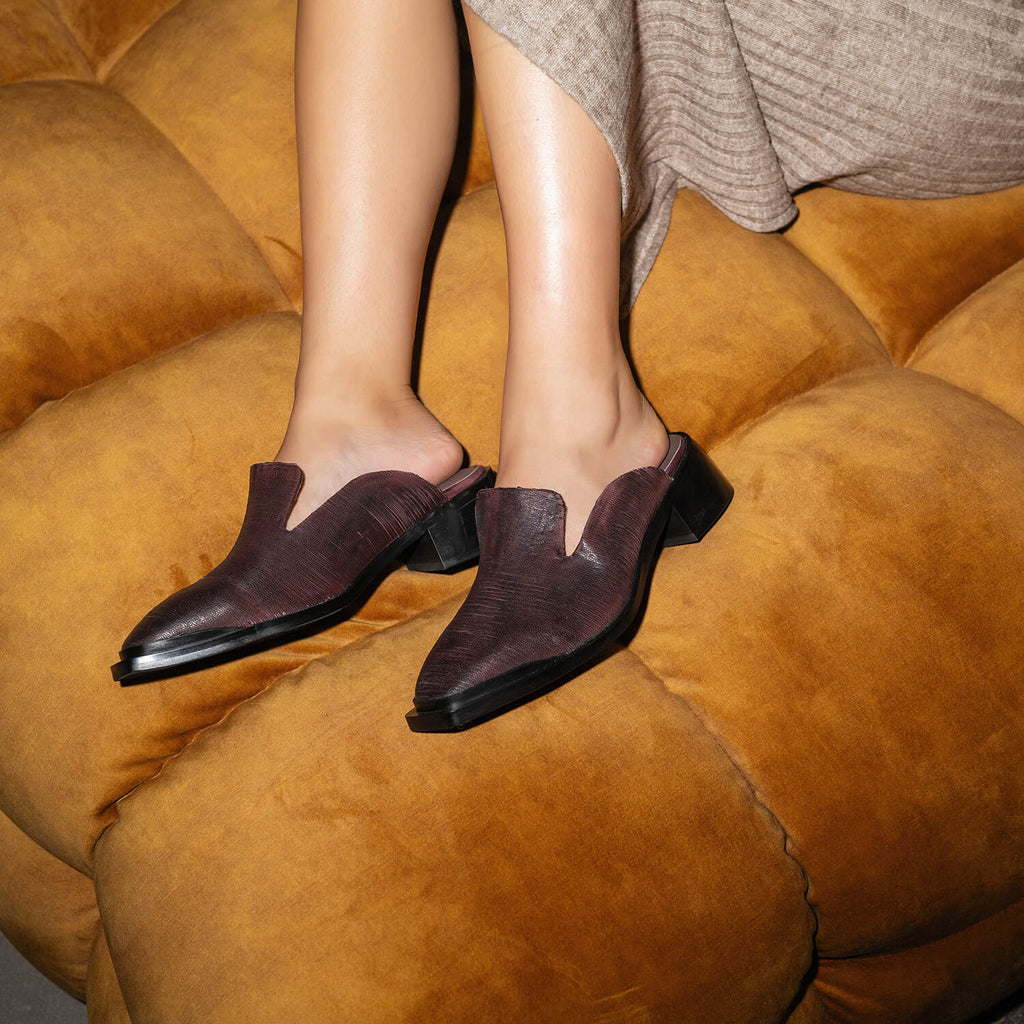
Sculpted Heel Mule, 2-Inch
A 2-inch sculpted-heel mule with a latex-cushioned leather footbed and a structured heel counter. Office-appropriate arch support for neutral and medium arches on long desk days.
$99
Shop O33 Warren
Arch Support Shoes by Silhouette
Arch support is a structural feature, not a silhouette. The same supportive architecture (contoured footbed, firm heel counter, moderate heel drop) can be built into almost any style of women's shoe. Here is how to find it in each of the four silhouettes most women's wardrobes rotate through.
Arch support sandals women actually wear
The arch support sandals women love share a structured footbed you can see when you look inside the sandal: a raised arch zone and a shallow heel cup. Cork-wedge and flatform arch support sandals score particularly well because the platform itself is torsionally rigid. Avoid flat thong sandals and flip-flops, which offer essentially no support and are associated with higher rates of plantar fasciitis according to Mayo Clinic guidance on foot health.
Arch support booties and ankle boots
A closed ankle bootie is one of the most forgiving arch support silhouettes because the upper itself cups the foot. The best pairs use leather uppers over stiff synthetics because leather molds. A 2 to 3-inch block or sculpted heel is more supportive than a truly flat boot because it redistributes weight forward off the heel. Suede and nubuck also adjust to individual foot shapes faster than smooth leather.
Arch support mules and clogs
A well-made clog or mule on a rigid sole with a latex-cushioned footbed can deliver excellent arch support, especially for workplace wear. The open back is not a downside for most wearers; the closed toe and supportive sole do the work. Look for a visible arch contour on the footbed and a heel that is at least 1.5 inches tall.
Arch support wedges and heels
Heels and arch support are not opposites. Wedges, platforms, and block-heel mules can all deliver genuine support because the rigid sole distributes weight across the foot. A 2 to 4-inch wedge with a latex-cushioned leather footbed is often more comfortable than a flat shoe for a full day on your feet. For events, women's arch support footwear in metallic or polished leather like the H70 Kat reads elevated enough while still protecting the midfoot.
$99
Starting Price
3
Arch Types Covered
Free
US Shipping Over $80
Featured Style
★★★★★
Designer Heel Bootie, Cushioned Insole
A designer heel bootie with a latex-cushioned insole coated in breathable leather. Arch support in a silhouette with enough personality to carry a knit dress or a tailored trouser.
$119
Shop P53 Jack
Plantar Fasciitis, Heel Pain and Arch Support
Plantar fasciitis is the most common cause of heel pain in adults, affecting about 10% of people at some point, according to the National Library of Medicine StatPearls review on plantar fasciitis. It is an inflammation of the plantar fascia, the thick ligament-like band running from the heel bone to the base of the toes. The pain is usually sharpest first thing in the morning.
Supportive shoes help plantar fasciitis in two ways. The contoured footbed limits how much the plantar fascia stretches during each step by preventing the arch from collapsing inward. The cushioned insole absorbs impact at the heel, reducing inflammation at the fascia's attachment point on the heel bone. Shoes with arch support for women experiencing plantar fasciitis should pair a structured heel cup with a contoured midfoot zone.
For plantar fasciitis specifically, Harvard Health recommends: a supportive shoe with firm arch support and a cushioned heel, avoiding barefoot walking on hard surfaces, and stretching the calf and plantar fascia daily. The shoe choice is the single most controllable variable in that list. Barefoot in flat flip-flops all summer almost guarantees a flare; a cork-wedge sandal or cushioned leather bootie can make the symptom recede.
What to avoid with plantar fasciitis
Thin-soled flats, unsupportive flip-flops, brand-new stilettos, and any shoe where the heel sinks below the level of the forefoot (negative heel drop). Those four categories cover the vast majority of flare triggers.
Featured Style
★★★★★
High-Heel Wedge, Ankle Strap
A high-heel wedge with ankle strap over a latex-cushioned leather insole. The wedge silhouette distributes weight more evenly than a stiletto, which makes it one of the most plantar-fasciitis-friendly heels in the collection.
$119
Shop H70 Kat
Fit and Break-In Guide
A supportive shoe that does not fit right will not support you. Three fit dimensions matter most for arch support shoes: length, width, and instep.
Length
Leave about a half-inch of space between the longest toe and the end of the shoe, roughly a thumb's width. Antelope shoes run true to US sizing. If you are a half size, size down to the nearest whole size, because leather stretches slightly on length during the first week of wear.
Width
Shoes built on a fuller last accommodate wider feet better than narrow-cut pumps. Full-grain leather uppers soften across the vamp within three to seven wears, adding another 15 to 20% of effective width. For wider than D feet, prefer strap or buckle styles that adjust (H70 Kat or H34 Aly) over fully enclosed constructions.
Instep
Instep is the vertical height of the top of the foot. A high instep plus a closed vamp equals pressure. For high-instep feet, slingback and open-vamp sandals are far more comfortable than closed-over-the-top pumps.
Break-in for supportive shoes
Supportive shoes with pre-molded arch contours take three to seven wears to feel right. The footbed compresses slightly under the ball of the foot, the arch cup softens into your specific arch shape, and the heel counter loosens from the back of the heel. Wear them for shorter stretches at first (two to three hours) and avoid pairing brand-new supportive shoes with a full day on your feet. Muscles that have not worked against a supported arch in years need a week to recalibrate.
Find Your Perfect Arch-Support Shoe
Answer three quick questions and we will match you to the pair that fits your arches, your day, and your style.
Question 1 of 3
What is your arch type?
The Editor's Collection: Six Arch Support Shoes
Each of the six shoes below is handcrafted from premium leather with a latex-cushioned footbed, a structured heel counter, and a contoured arch zone. They cover every arch type and every season, from summer flatforms to winter booties.
H34 Aly, the cork-wedge platform sandal
A 4-inch cork-wrapped platform wedge with latex-cushioned leather footbed and thin ankle straps. Built for high arches that need shock absorption across the forefoot and for anyone on their feet all day in warm weather.
B41 Clara, the flatform strappy sandal
A soft flatform sandal with a latex-cushioned insole and breathable leather. The flattest-looking shoe in the collection that still qualifies as real arch support, ideal for neutral arches and dresses.
O33 Warren, the sculpted-heel mule
A 2-inch sculpted-heel mule with a structured leather footbed and enough heel counter to keep the foot anchored during an office day. The most office-ready silhouette here.
M33 Meli, the distressed suede bootie
A distressed suede ankle bootie on a latex-cushioned leather insole. The suede molds faster than smooth leather, which makes it a natural pick for low and neutral arches and for wider feet.
P53 Jack, the designer heel bootie
A heeled designer bootie on a latex-cushioned insole coated in breathable leather. The most trend-forward silhouette here, with a personality that carries a knit dress or a tailored trouser.
H70 Kat, the high-heel ankle-strap wedge
A 3-inch wedge with ankle strap over a latex-cushioned leather insole. An events-ready silhouette that still qualifies as women's arch support footwear because the wedge keeps weight evenly distributed.
Frequently Asked Questions
What are the best arch support shoes for women?
The best arch support shoes for women combine four structural features: a firm heel counter you cannot easily bend, a torsionally rigid midsole, a contoured cushioned insole with a visible arch bump and heel cup, and a 10 to 20 mm heel drop. According to American Podiatric Medical Association shoe guidance, a leather upper that molds to the foot is preferable to a stiff synthetic one. For silhouettes, cork-wedge sandals, flatform sandals, leather ankle booties, and sculpted-heel mules all deliver real arch support when built on a cushioned leather footbed. Antelope's collection covers all four silhouettes from $99.
How do I know which arch support shoes I need?
Do the wet test: wet the bottom of your foot and step onto a piece of brown paper or cardboard. According to the American Academy of Orthopaedic Surgeons, a full footprint indicates a low or flat arch (roughly 25% of adults), a footprint with about half the midfoot visible indicates a neutral arch (about 55%), and a footprint with only the heel and ball connected by a narrow band indicates a high arch (about 20%). Low arches need firm arch fill, neutral arches need moderate contour, and high arches need forefoot cushioning above all.
Are arch support shoes good for plantar fasciitis?
Yes, and they are one of the most effective non-medical interventions for plantar fasciitis, a condition that affects about 10% of adults at some point. According to Harvard Health, a supportive shoe with a firm arch and cushioned heel can reduce morning plantar fasciitis pain substantially within two to four weeks when combined with daily calf stretching. Look for shoes with a 10 to 20 mm heel drop, firm heel counter, and contoured insole. Avoid flat thong sandals, flip-flops, and barefoot walking on hard surfaces during a flare.
Can heels have arch support?
Yes. Heel and arch support are not mutually exclusive. Wedges, platforms, and block-heel mules can all deliver genuine arch support because the rigid sole distributes weight across the foot. A 2 to 3-inch wedge with a latex-cushioned leather footbed is often more comfortable than a truly flat shoe for a full day on your feet. Avoid stilettos, which concentrate body weight on a small forefoot area and offer no meaningful arch support regardless of insole quality.
How long do arch support shoes take to break in?
Full-grain leather arch support shoes take three to seven wears to break in. The latex-cushioned footbed compresses slightly under the ball of the foot, the arch cup softens into your specific arch shape, and the leather upper stretches 15 to 20% across the vamp within the first month. Wear them for two to three hour stretches for the first few days. If you are coming from flat, unsupportive shoes, expect your calves and arches to feel faintly tired during the first week. Muscles that have not worked against structured support in years are recalibrating.
What is the difference between insoles and arch support shoes?
Insoles are an added layer you insert into any shoe to provide cushioning or arch contour. Arch support shoes have that contour built into the shoe itself as part of the footbed. A well-built arch support shoe is more comfortable straight out of the box than a flat shoe with an aftermarket insole, because the insole conforms to whatever shoe you put it in, including a bad one. According to APMA guidance, custom orthotics should always be paired with a shoe that has a removable insole and enough internal volume to accommodate them.
Are arch support shoes covered by insurance or FSA?
Over-the-counter arch support shoes are not usually covered by health insurance, but they are often eligible for FSA (Flexible Spending Account) or HSA (Health Savings Account) reimbursement when prescribed by a medical provider for a diagnosed foot condition such as plantar fasciitis, flat feet, or plantar heel pain, per IRS Publication 502 guidance on medical expense eligibility. Custom orthotics prescribed by a podiatrist are more commonly covered by insurance, with reimbursement rates that vary by plan. Keep your diagnosis letter and the shoe receipt together if submitting for reimbursement.
Can I use custom orthotics with arch support shoes?
Yes, but the shoe needs to have enough internal volume and a removable insole. If your shoe already has a built-in arch support footbed, remove the original insole before inserting an orthotic. Otherwise the two support layers stack and the arch sits too high. Most Antelope closed-back styles (the M33 Meli ankle bootie, the P53 Jack bootie, the H70 Kat wedge) have enough internal volume to accommodate a standard thin orthotic. Sandals and mules typically do not accommodate orthotics because the upper is not tall enough to hold the foot in place over the extra insole thickness.
Explore the Collection
Find Your Supportive Pair
Six silhouettes, one shared philosophy: latex-cushioned leather footbeds, structured heel counters, and real arch contour. Explore Antelope's women's collections and find the supportive pair that matches your arch type.
Further Reading
Editorial Note
This guide is for informational purposes only and is not a substitute for professional medical advice. If you are managing a diagnosed foot condition, consult a licensed podiatrist for individual recommendations. External links to APMA, AAOS, Cleveland Clinic, Harvard Health, Mayo Clinic, and the National Library of Medicine are provided for reference; Antelope Shoes is not affiliated with these organizations.
