

There are no items in your cart


Closed Toe Mules for Women: How to Choose the Right Pair
Fall Collection
Closed toe mules that stay on
Eleven new handcrafted styles, ranked by how firmly each one holds your foot, from a flat slip-on to a buckled wedge.
In short
A mule is any shoe with an open back. Closed toe mules cover the toes, which is what turns a summer shoe into one you can wear from September onwards, with or without a sock.
The only real question is how much the shoe holds you. A flat slip-on relies on the shape of the vamp alone. A slingback adds a strap behind the heel. A buckled wedge lets you set that strap to your own foot. Pick by how much walking you plan to do, not by heel height.
What this guide covers
- 01What makes a shoe a mule, and what closed toe adds
- 02The hold scale: slip-on, slingback, strap
- 03Flat mules, and when a flat is the right call
- 04Low heel and clog-soled mules
- 05Platform mules and how they change the walk
- 06Wedges with a slingback or a buckled strap
- 07Why mules slip off, and what actually fixes it
- 08Styling closed toe mules through the season
- 09All eleven compared at a glance
- 10Questions people ask before buying
Mules have one famous problem. They fall off. Every woman who has ever gripped with her toes going down a staircase knows exactly what that feels like, and it is the single reason a beautiful pair ends up worn twice and then left alone.
The fix is not a smaller size, which is the usual advice and the usual mistake. It is choosing a mule whose construction does the holding for you. This guide sorts eleven new handcrafted styles along exactly that axis, from a flat that relies on nothing but the shape of the vamp to a wedge that buckles behind the heel. Prices run from $89 to $199, and everything described below is visible in each style's own photographs.
The short answer: for a full day on your feet, choose a style with a strap. For an office where you are mostly seated, a platform slip-on is fine. Flats are the most comfortable and the least secure, which makes them perfect for short distances and poor for stairs.
What makes a shoe a mule, and what closed toe adds
A mule is defined by one thing only: the back is open. The heel of your foot is not enclosed. Everything else, the toe shape, the heel height, the sole, is free to vary, which is why the word covers everything from a flat slipper to a towering platform.
Closing the toe changes the shoe's season more than its function. An open-toe mule is a summer shoe. Once the toe is covered you can wear it with bare feet in September, with a sock in November, and under a trouser all year. That is the entire commercial case for closed toe mules, and it is a good one.
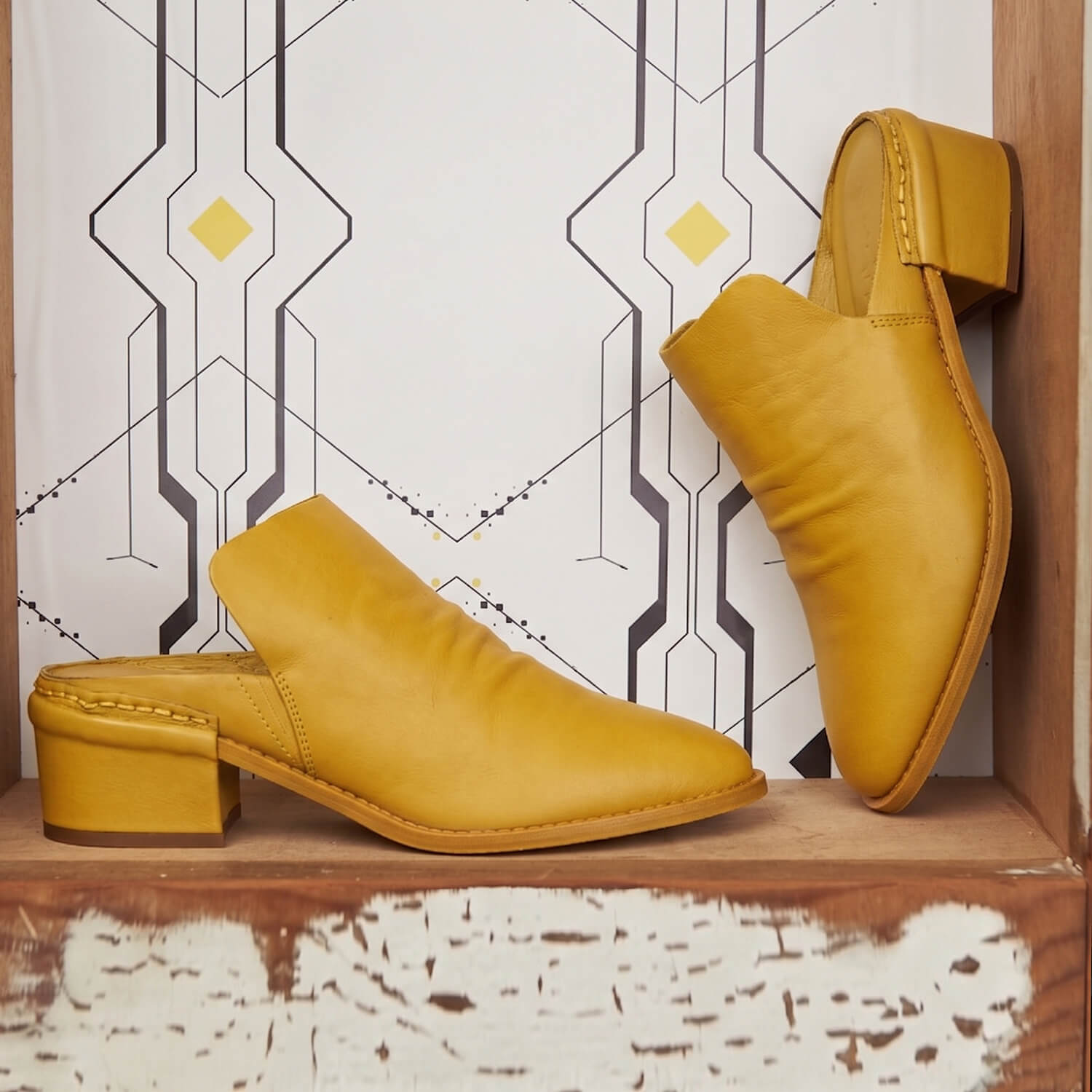
There is a second, quieter advantage. A closed toe hides a great deal. Feet that are between sizes, toes that are not photogenic, a pedicure that has grown out, none of it shows. For many women that is worth more than the extra month of wear.
11
new closed toe styles
3
levels of hold
$89
entry price
The hold scale: slip-on, slingback, strap
Every style in this collection sits at one of three points on a single scale, and knowing which point you need saves you from every other decision.
Level one, the pure slip-on. Nothing holds the foot except the shape of the vamp and the friction of the footbed. This is the classic mule and the most comfortable to put on. The X60 Mimi, J11 Anni, O40 Sadie, X70 Merit, U65 Tatum, Q81 Piper and U07 Jada all sit here.
Level two, the slingback. A strap behind the heel stops the shoe dropping away as you lift your foot. It transforms how far you can walk without changing how the shoe looks from the front. The Q40 Drea and Q42 Drea use one.
Level three, an adjustable strap. Now the hold is set to your foot rather than left to chance. The U39 Tess uses a buckled slingback behind the heel; the U37 True holds from above with a wide crossover strap across the instep, which also stops the foot sliding forward on a downhill.
People almost always buy at level one and then wish they had bought at level two. If you are choosing your first pair of closed toe mules and you intend to actually walk in them, start at the slingback.
Flat mules, and when a flat is the right call
Two styles here are properly flat, and they are very different objects.
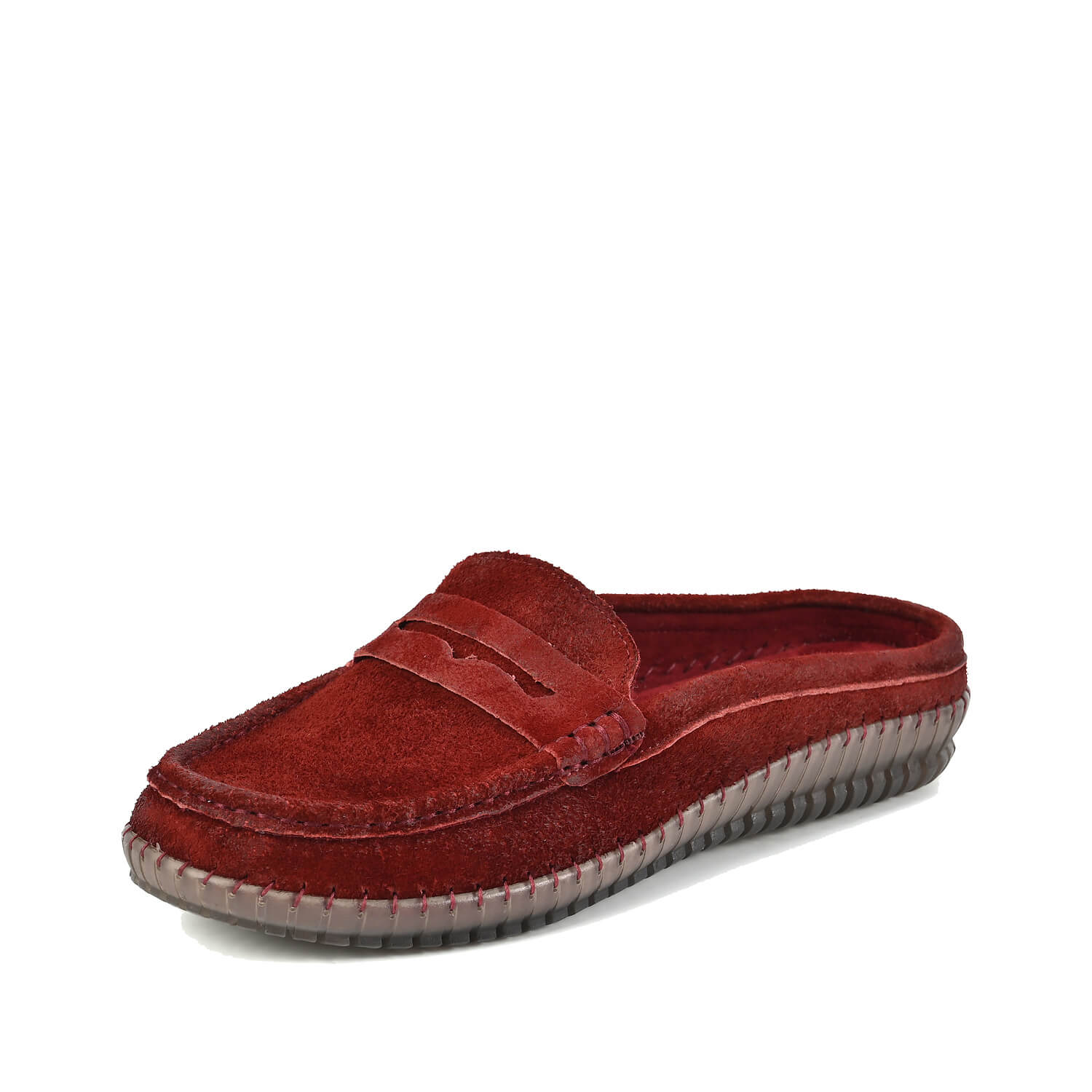
The X60 Mimi at $89 is a suede loafer mule: closed toe, open back, a penny-loafer keeper strap across the vamp and a thin treaded rubber sole. It comes in six colours, which is unusual at this price, and it is the most walkable shoe in the collection precisely because there is no height to manage. The tread is the detail worth noticing, because a flat mule on a smooth sole is a genuinely slippery object.
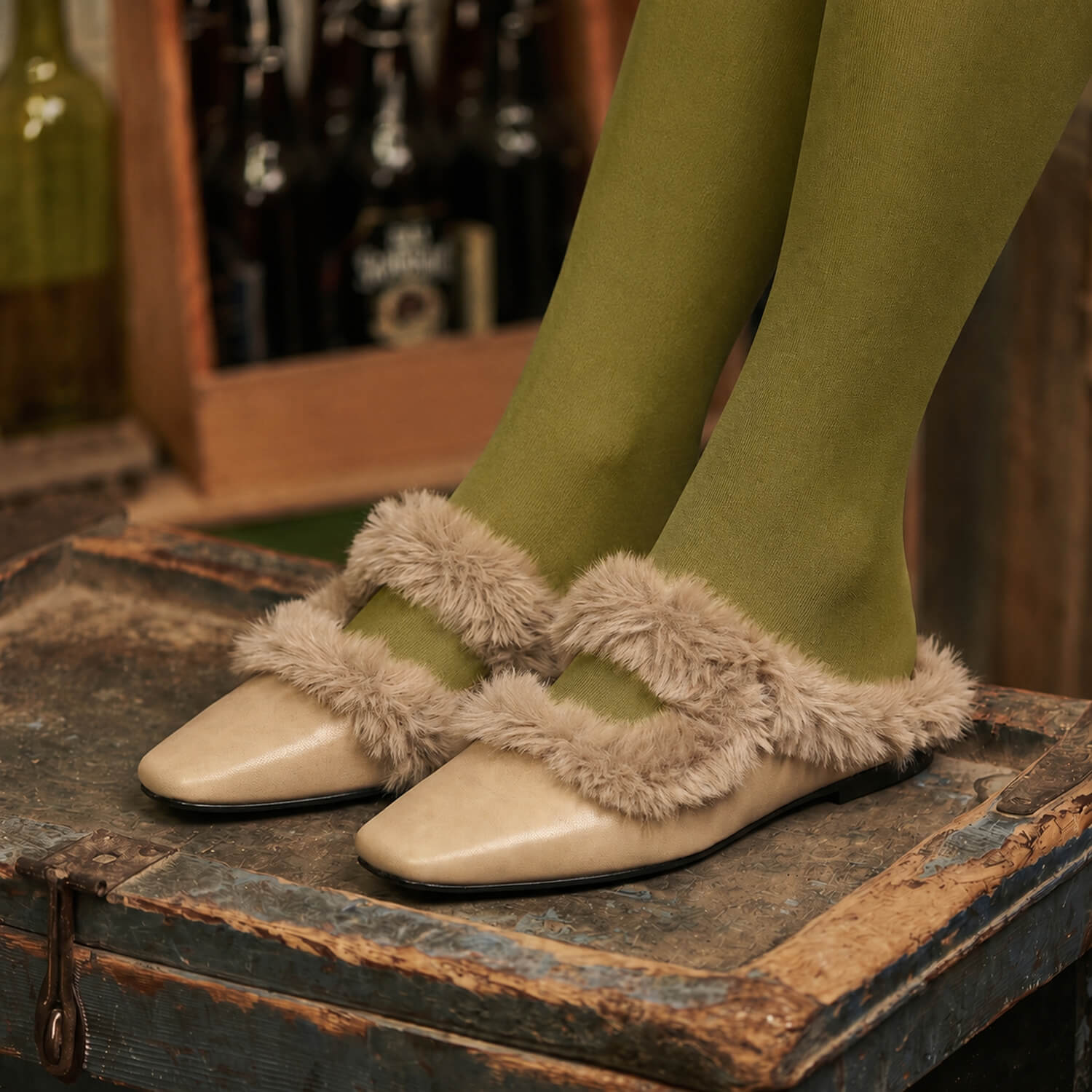
The J11 Anni at $169 goes the other way. A squared closed toe, an open back, almost no heel at all, and two bands of fur running across the vamp. The lining is leather rather than fur, so it reads as a proper shoe rather than a slipper, and it is the one you put on with thick tights and a long coat.
Low heel and clog-soled mules
Between flat and platform sits a small group that adds height without asking anything of you.
The O40 Sadie at $179 is the elegant one: a closed pointed toe, a softly folded vamp with a stitched detail running along the side seam, and a low block heel. In daffodil it is a statement; in make up it disappears under a trouser.
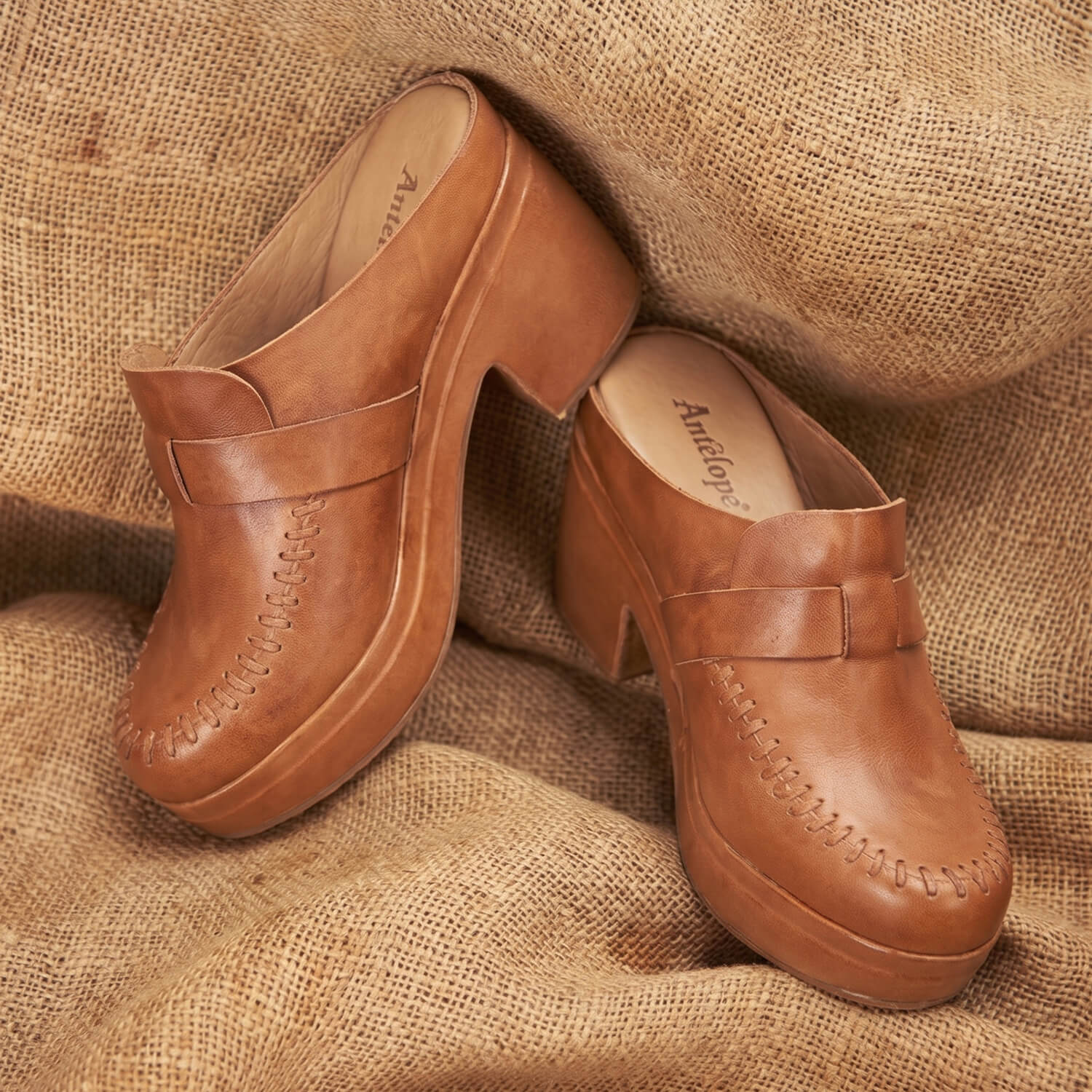
The X70 Merit at $99 is the workhorse: a rounded closed toe, a centre seam topstitched down the vamp, a moccasin stitch around the toe, and a cream wedge sole with a treaded edge. It is the cheapest way into the clog silhouette in this collection.
X60 Mimi
$89
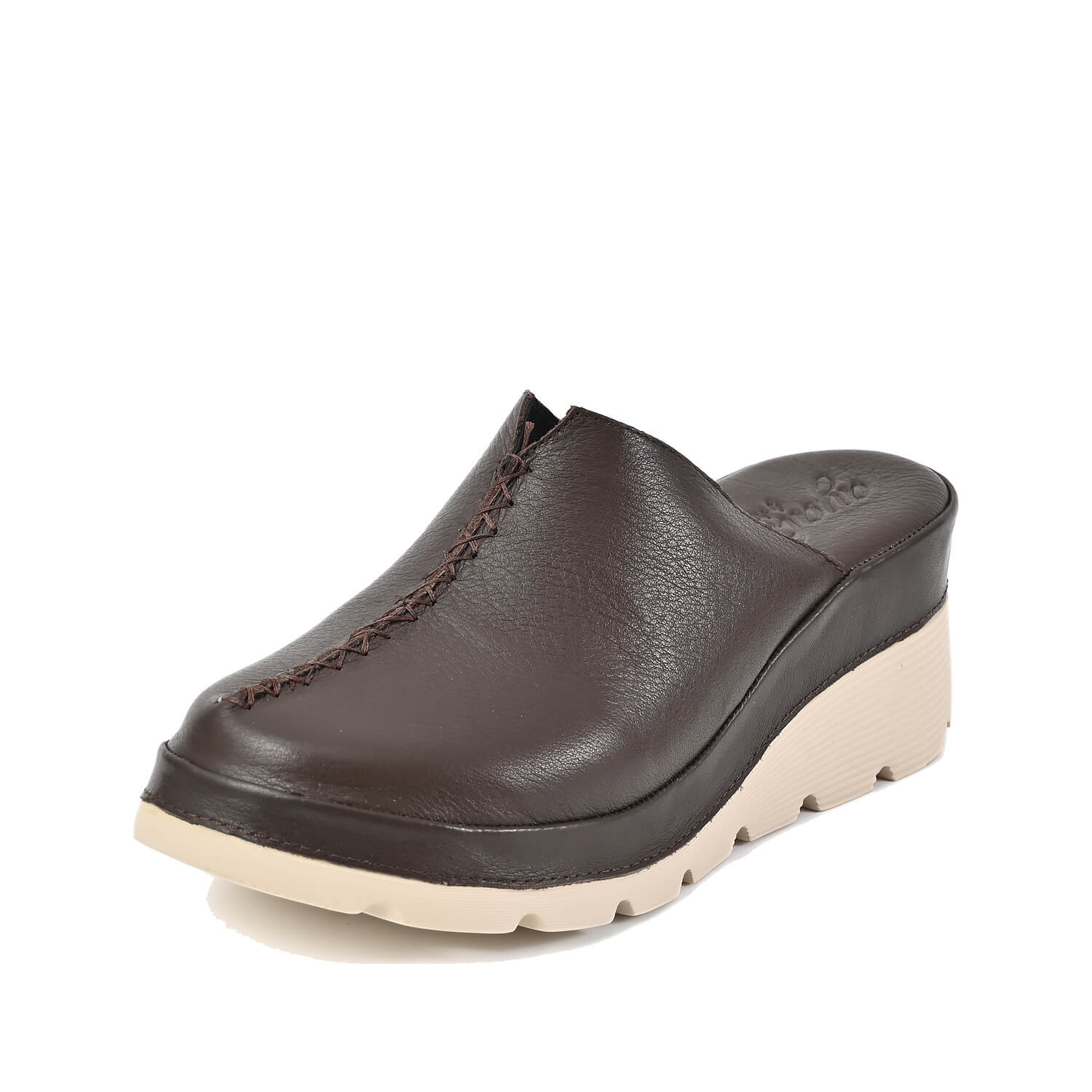
X70 Merit
$99
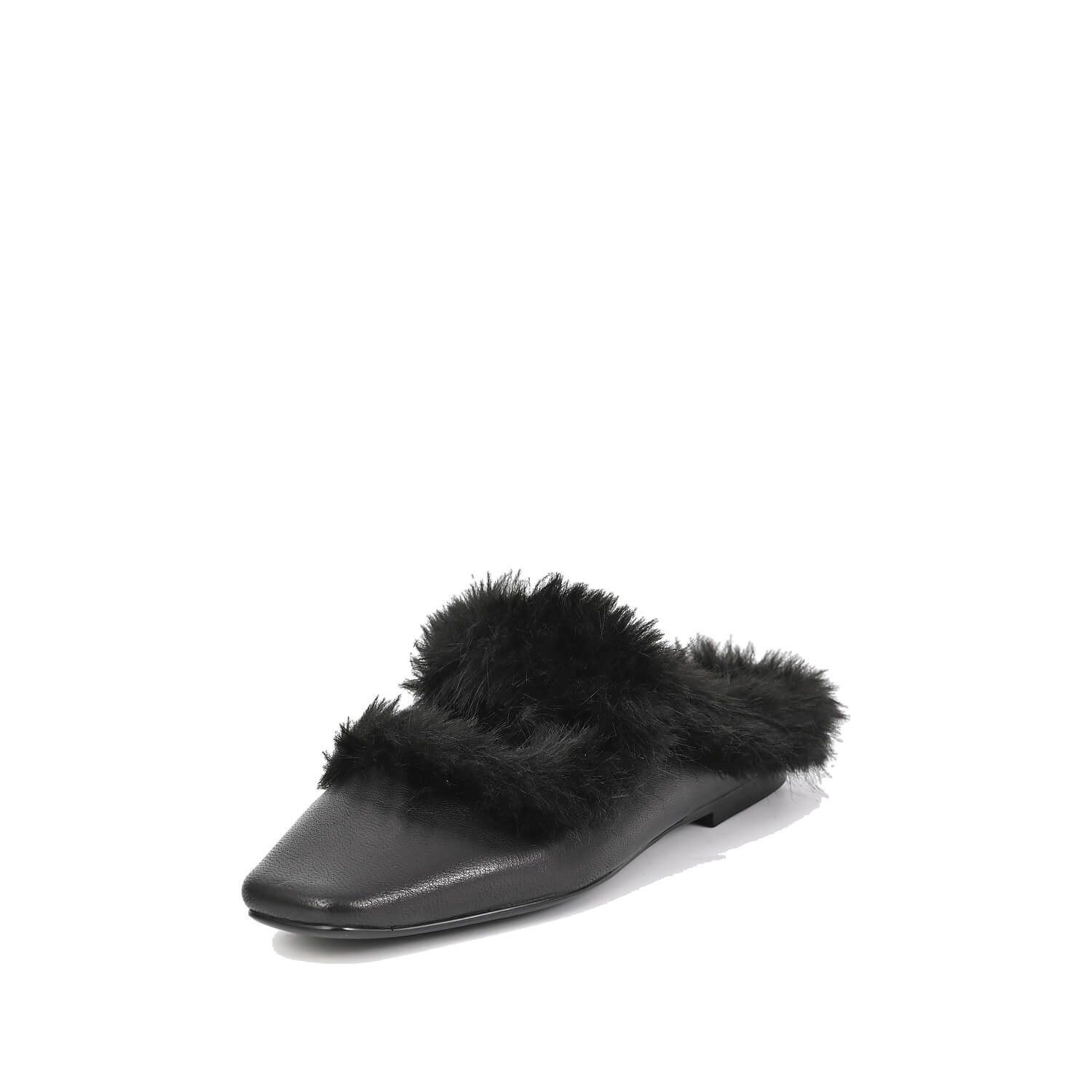
J11 Anni
$169
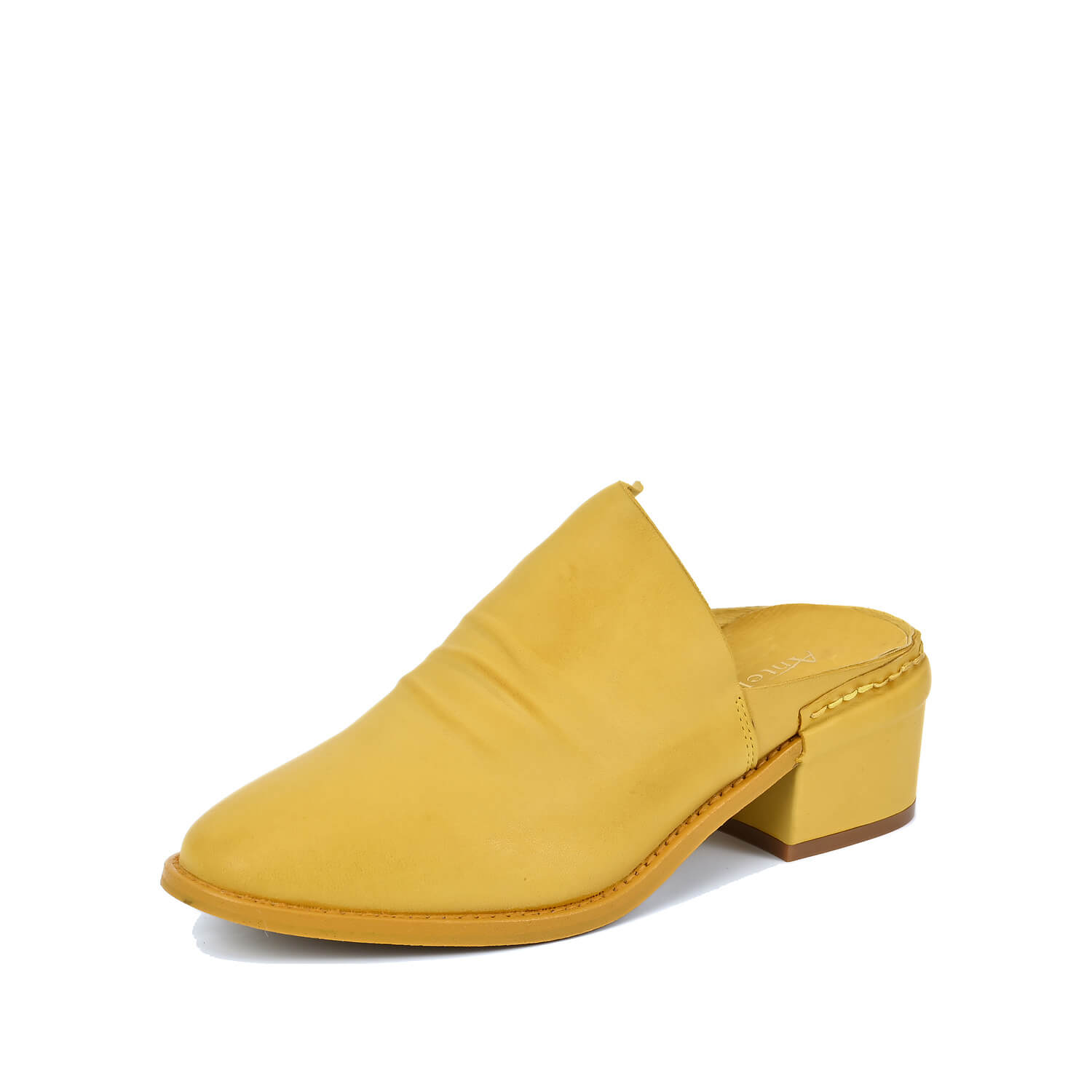
O40 Sadie
$179
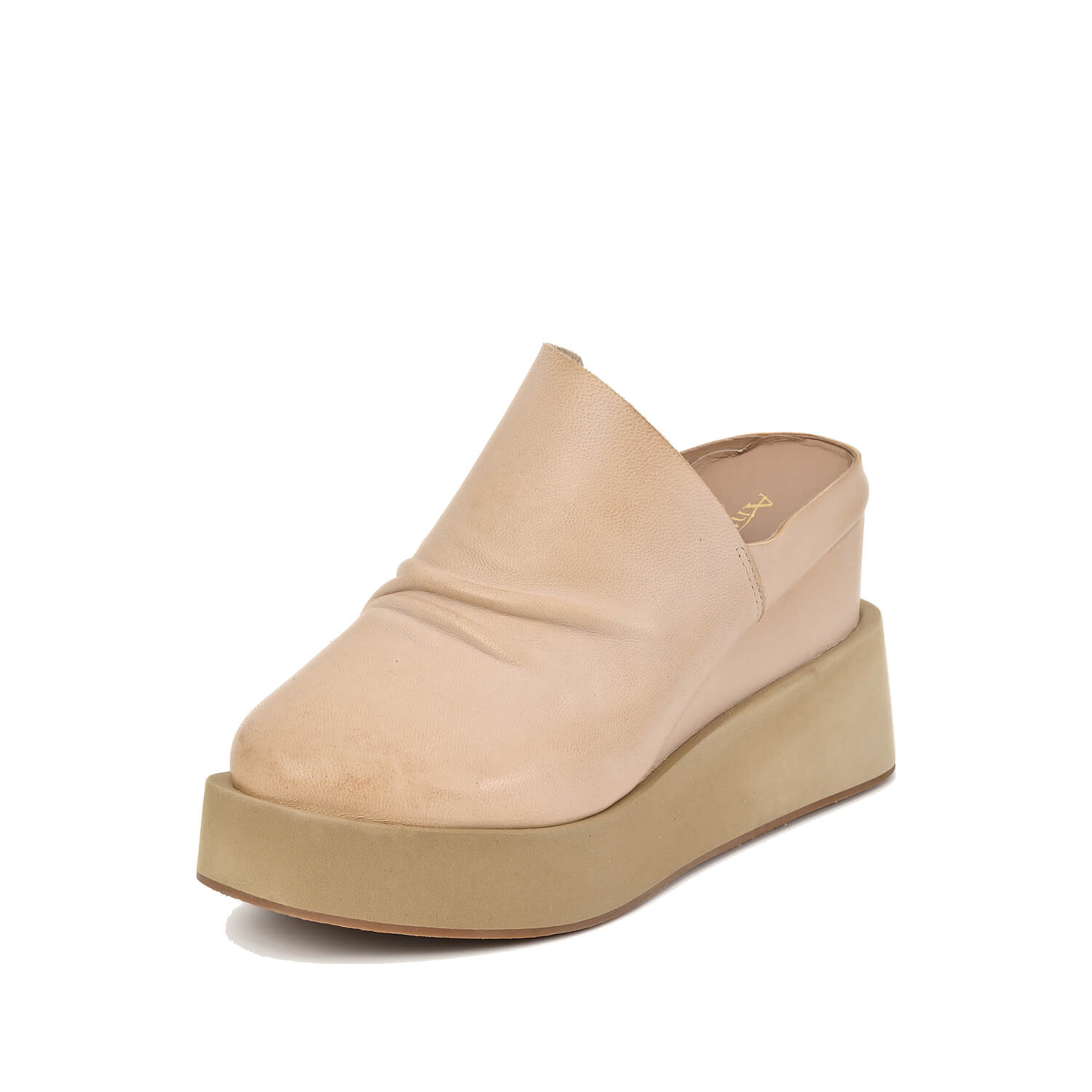
U65 Tatum
$189
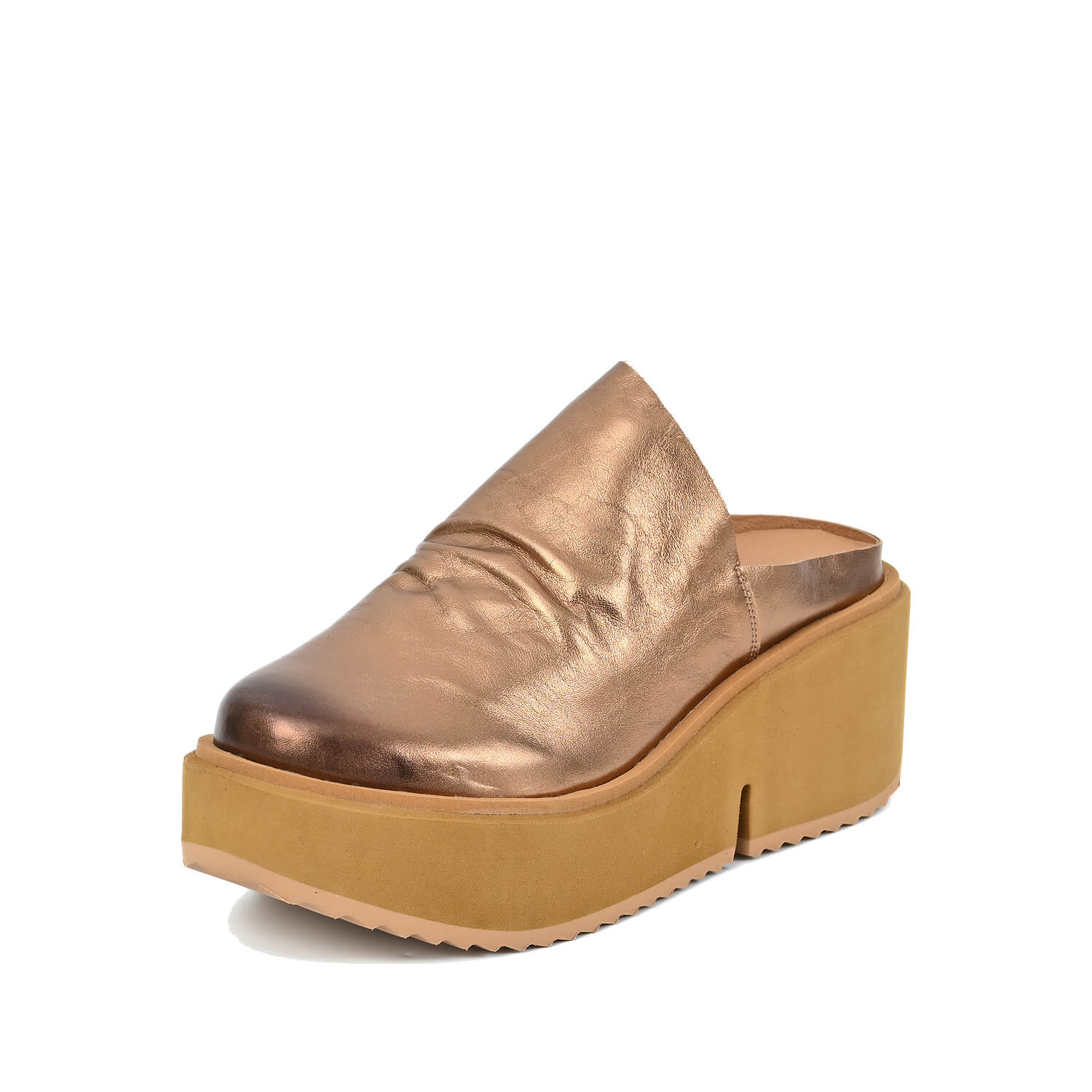
Q81 Piper
$189
Want the clog sole without the height?
The low-soled styles sit alongside the platforms in the same collection.
Browse heeled clog mulesPlatform mules and how they change the walk
A platform mule is not simply a taller mule. Because the sole is raised under the whole foot rather than only under the heel, your foot is tipped forward far less than the total height suggests, which is why a platform can feel steadier than a modest heel.
The trade is that the sole is stiffer, so your foot flexes less as you step. That is comfortable standing and neutral walking, and it is the reason platform mules suit a day of being on your feet in one place better than a day of covering distance.
Three styles here use it. The U65 Tatum at $189 has a gathered, ruched vamp on a thick solid wedge in a paler tone than the upper. The Q81 Piper at $189 is the same idea in a bronze metallic with a notched sole. The U07 Jada at $199 is the most traditional clog of the three, with a keeper strap across the vamp, a moccasin whipstitch, and a row of nailhead studs set around the edge of the platform.
See the sole in motion
A platform is the hardest thing in footwear to judge from a photograph, because a still image flattens the depth of the sole completely. Fifteen seconds of the shoe turning tells you more than any single frame, so here is one of the wedge styles filmed in the studio.
U39 Tess in taupe suede, showing the buckled slingback.
Wedges with a slingback or a buckled strap
This is the group that solves the falling-off problem, and it contains the four styles most people should be looking at.
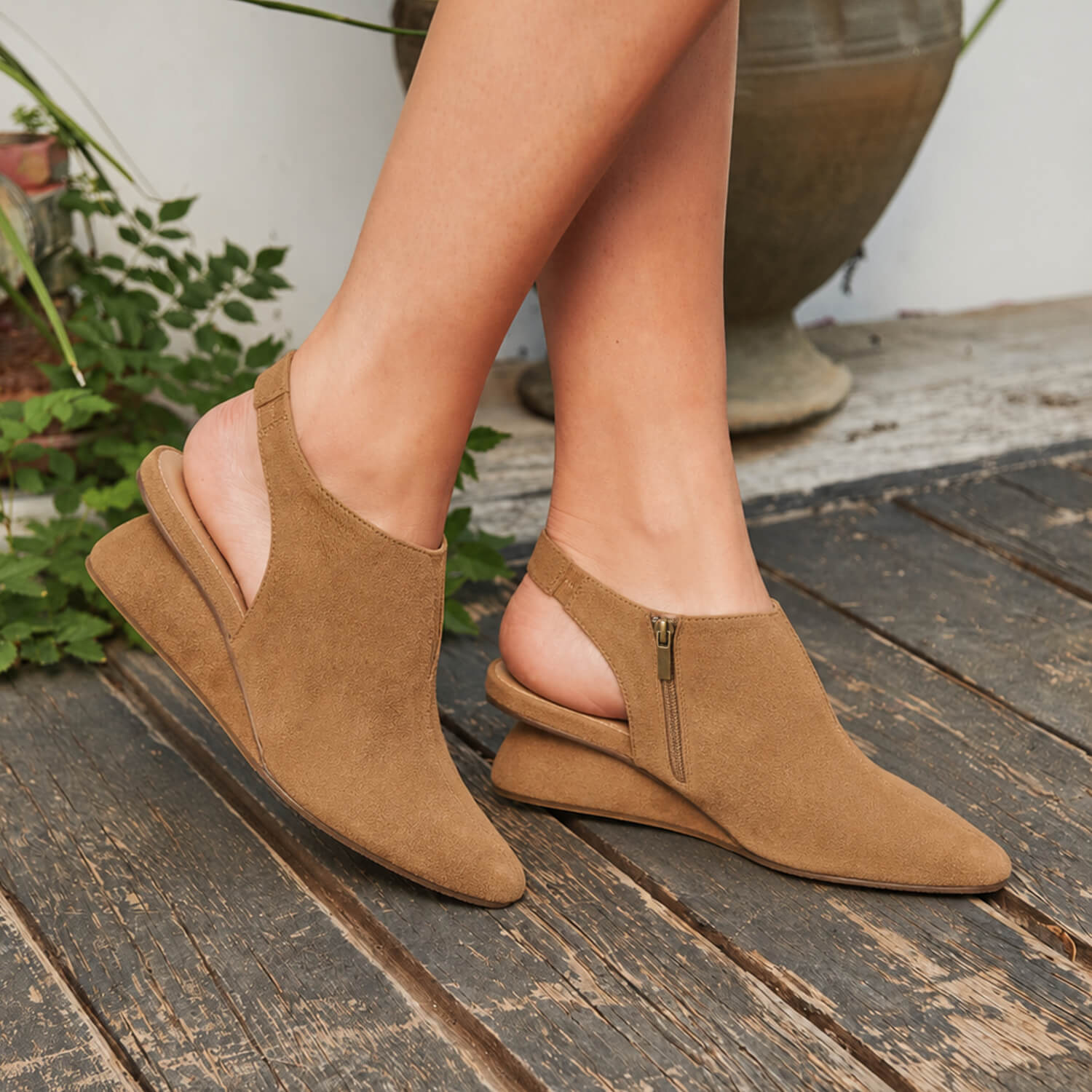
The Q40 Drea in chocolate leather and the Q42 Drea in black suede, both $199, are the same shoe in two materials: a closed pointed toe, a slingback strap behind the heel, an open cut-out at the side, a side zip, and a low sculpted wedge that is nearly flat at the front. The zip is the detail that matters here, because a slingback you cannot open is a slingback you fight with.
The U39 Tess at $199 is the most secure shoe in the collection: a closed toe on a tall solid wedge, with a buckled slingback strap behind the heel. A buckle means the fit adjusts rather than being fixed, which a fixed strap cannot do.
The U37 True at $199 takes a different route: a wide crossover strap over the instep, a large open cut-out at the side, a zip at the back and a tall wedge with a platform front. It holds from above rather than from behind, which suits a narrow heel better. Both it and the U39 sit on a wedge sole, which spreads weight along the whole length of the shoe rather than concentrating it under a heel.
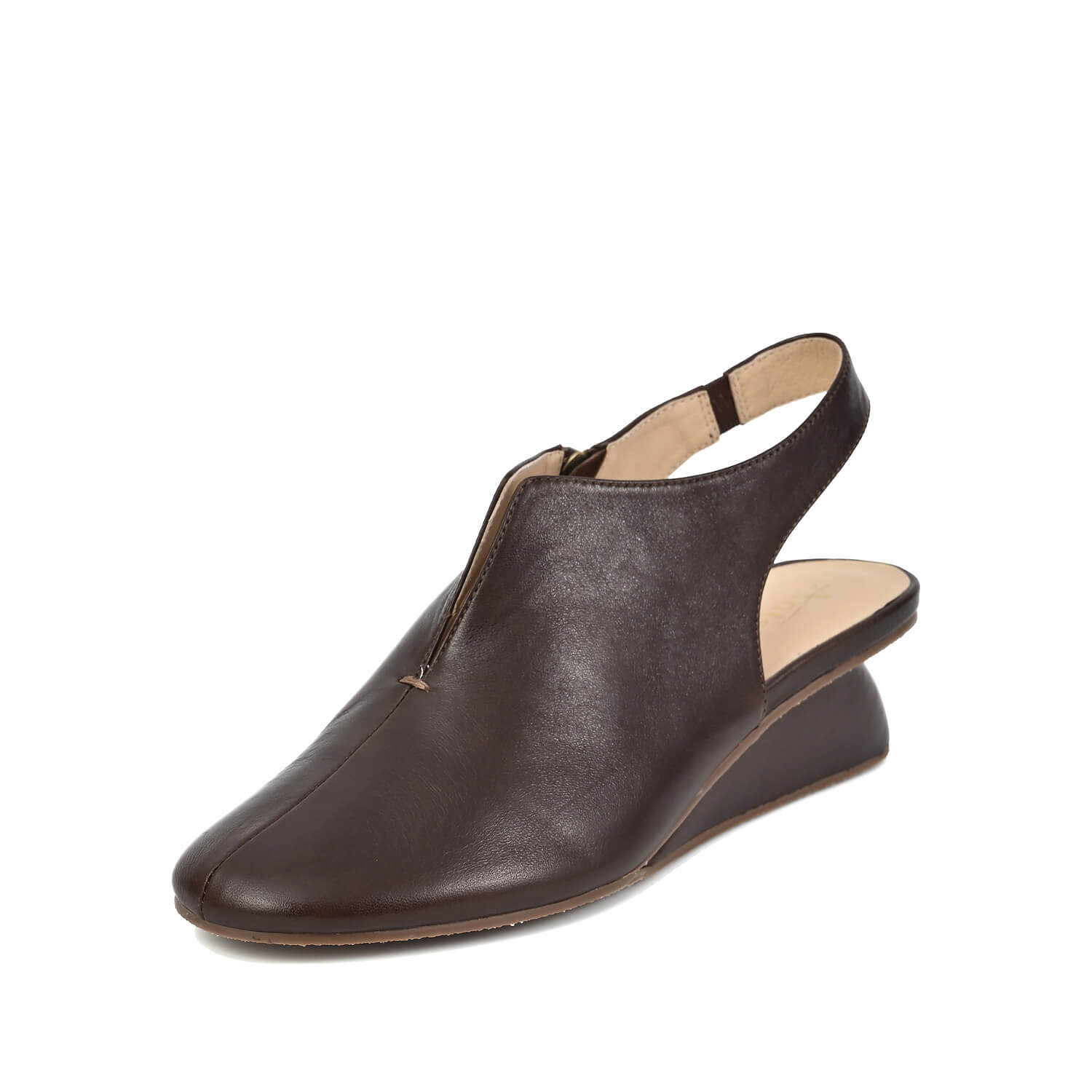
Q40 Drea
$199
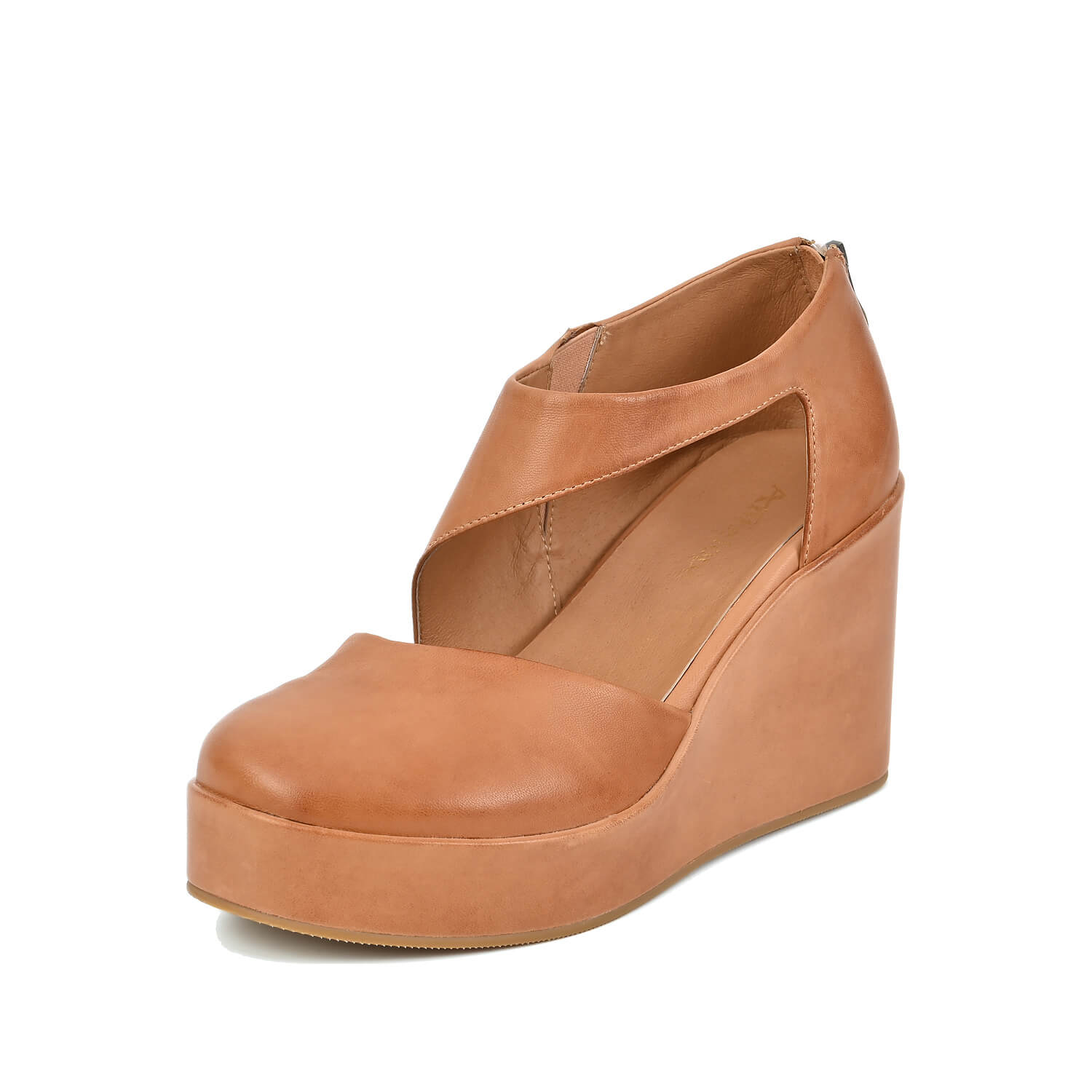
U37 True
$199
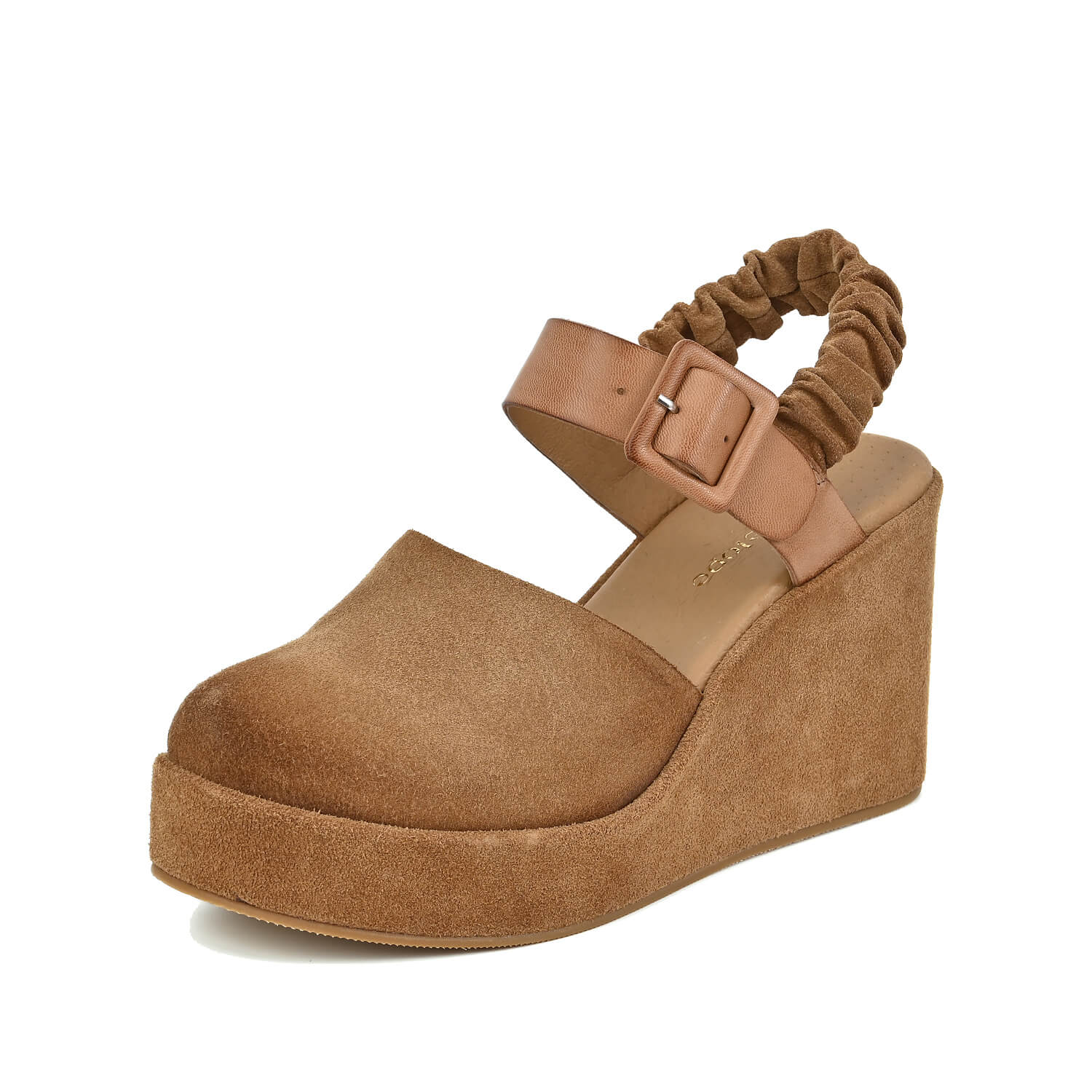
U39 Tess
$199
Need a pair that stays put?
The slingback and buckled styles are the ones to look at first.
See leather mulesWhy mules slip off, and what actually fixes it
Three things cause a mule to slip, and only one of them is size.
The shoe is too long. This is the real culprit most of the time. In a closed shoe a little extra length is invisible; in a mule it means the vamp sits too far forward and stops gripping the ball of your foot. If your mule slides but your closed shoes in the same size fit, you likely need a half size down in this style specifically.
The footbed is slick. A smooth leather footbed with a bare foot on it in warm weather has almost no friction. A thin suede insert solves it and costs very little.
The construction asks too much. Some feet simply cannot hold a backless shoe, particularly narrow heels and high arches, and no amount of sizing down fixes that. This is where the slingback and buckled styles stop being a preference and become the answer.
Guidance from the American Podiatric Medical Association on healthy feet is worth reading alongside this: be fitted late in the day when your feet are largest, and replace footwear as it wears rather than waiting for it to fail. A mule whose footbed has compressed will slip long before it looks worn out.
Styling closed toe mules through the season
The advantage of a covered toe is that it takes a sock, and that single fact stretches the shoe across three seasons.
Bare, in early autumn
Cropped trousers and a mule with a visible ankle is the cleanest version of this shoe. A pointed toe such as the O40 Sadie or Q40 Drea lengthens the line; a rounded toe such as the U65 Tatum reads softer and more casual.
With socks, in winter
This is where the platform styles come into their own, because the raised sole keeps the sock off the pavement. A ribbed sock in a colour close to the shoe extends the leg; a contrasting sock deliberately shortens it, which is a choice rather than a mistake. The J11 Anni with its two fur bands is built for exactly this.
Under a trouser
A wide-leg trouser that covers the vamp turns any mule into a mystery, and the open back only reveals itself when you walk. Here the flat X60 Mimi and the low O40 Sadie work best, because a tall platform under a long hem tends to catch.
Which pair is right for you
Open the description that matches your situation. Each one names specific styles rather than a category.
I want to actually walk in them
Buy a strap. The U39 Tess at $199 has a buckled slingback behind the heel, and the buckle lets you adjust it. If you prefer a lower shoe, the Q42 Drea at $199 gives you the slingback on a near-flat wedge.
Browse heeled clog mulesI am at a desk most of the day
A slip-on platform is ideal, because you are standing and sitting rather than covering distance. The U65 Tatum at $189 or the Q81 Piper at $189.
See leather mulesI want something flat I can wear every day
The X60 Mimi at $89, in six colours, on a thin treaded sole. The tread matters more than it sounds: a flat mule on a smooth sole is genuinely slippery.
See leather mulesI want the clog look
The U07 Jada at $199 is the full version, with a keeper strap, a whipstitched upper and nailhead studs around the platform. The X70 Merit at $99 is the low-cost route in.
See what is newMy mules always slip off at the heel
Stop trying to fix it with sizing and buy the construction instead. The U37 True at $199 holds from above with a crossover strap, which suits a narrow heel; the Q40 Drea at $199 holds from behind.
Browse heeled clog mulesAll eleven compared at a glance
This table is the fastest way to narrow eleven closed toe mules down to two. Every entry lists only what is visible in that style's own photographs.
| Style | Hold | Sole | Price |
|---|---|---|---|
| X60 Mimi | Slip-on | Flat, treaded rubber | $89 |
| X70 Merit | Slip-on | Cream wedge, treaded edge | $99 |
| J11 Anni | Slip-on | Flat | $169 |
| O40 Sadie | Slip-on | Low block heel | $179 |
| U65 Tatum | Slip-on | Solid wedge platform | $189 |
| Q81 Piper | Slip-on | Wedge platform, notched | $189 |
| U07 Jada | Slip-on | Platform + block heel | $199 |
| Q40 Drea | Slingback | Low sculpted wedge | $199 |
| Q42 Drea | Slingback | Low sculpted wedge | $199 |
| U37 True | Crossover strap | Tall wedge, platform front | $199 |
| U39 Tess | Buckled slingback | Tall solid wedge | $199 |
Questions people ask before buying
What is the difference between a mule and a clog?
Every clog is a mule, but not every mule is a clog. Mule describes the open back. Clog describes a particular construction: a thick, rigid sole, often with a wooden look, and frequently a row of nailhead studs around the edge. The U07 Jada is a clog in that traditional sense; the O40 Sadie is a mule but not a clog.
Should I size down in mules?
Sometimes, and it is worth understanding why. In a closed shoe a little extra length is invisible. In a mule it pushes the vamp forward so it no longer grips the ball of the foot, and the shoe slides. If your closed shoes fit in your usual size but mules slip, a half size down in this style is often the fix. Do not size down if the shoe is already snug across the vamp, because that pain does not go away.
Can you wear closed toe mules with socks?
Yes, and that is most of the point of a covered toe. A sock also adds friction inside the shoe, so a pair that slides on a bare foot often behaves perfectly with a fine sock. A ribbed sock close to the colour of the shoe extends the leg line; a contrasting sock shortens it, which is a legitimate choice rather than an accident.
Which style stays on best?
The U39 Tess, because its slingback strap buckles, so the hold is set to your foot rather than fixed. After that, the U37 True with its crossover strap over the instep, then the Q40 and Q42 Drea with a fixed slingback. The pure slip-on styles rely entirely on the vamp shape and the friction of the footbed.
Are platform mules comfortable to walk in?
They are comfortable to stand in and neutral to walk in. Because the sole is raised under the whole foot, you are tipped forward far less than the height suggests, but the sole is also stiffer so your foot flexes less with each step. For a day in one place they are excellent; for a day of covering distance a lower, more flexible sole is easier.
Do mules work in winter?
Closed toe styles do, worn with a sock. What limits them is not cold but wet, because the open back lets water in from behind. A raised sole helps, which is why the platform styles carry further into the season than the flats. The J11 Anni with its two fur bands is the most obviously winter-leaning shoe here.
What is a slingback, exactly?
A strap that passes behind the heel while the back of the shoe itself stays open. It stops the shoe dropping away as you lift your foot, without enclosing the heel. The Q40 Drea and Q42 Drea both have one, each with a side zip so you can open the shoe to get in rather than forcing your foot past the strap.
How do I stop the footbed feeling slippery?
A smooth leather footbed against a bare foot in warm weather has very little friction, which reads as the shoe being too big when it is not. A thin suede insert fixes it for a few pounds. A fine sock does the same thing for free. Neither helps if the shoe is genuinely too long, which is a different problem.
Are suede mules practical?
Suede is finished on the flesh side of the hide, which raises the nap and makes it mark more readily in wet weather than smooth leather. Marks lift with a brush once dry, in one direction. Protect before the first wear and never use leather conditioner on it. The X60 Mimi, Q42 Drea and U39 Tess are the suede styles here.
What if the fit is wrong when they arrive?
Returns are accepted within 30 days and the first exchange is free, which is exactly how you settle a half-size question in a style that is sensitive to length. Shipping within the United States is free on orders over $80 and $10 below that.
Eleven styles. One that stays on.
Every pair of closed toe mules here ships free over $80, with 30 day returns and a free first exchange.
Keep reading
Written by
The Antelope Shoes team
We have been designing and handcrafting women's leather footwear for more than two decades. Every style in this guide is one we make ourselves, and every detail described here is one you can see for yourself in that style's own photographs.
