

There are no items in your cart


Designer Ankle Boots for Women: The Complete Buying Guide
Fall Collection
Designer ankle boots, decoded
Fourteen new handcrafted styles, sorted by the two things that actually decide whether you wear them: how the boot closes, and what the heel is standing on.
In short
Designer ankle boots are made in small runs by a shoemaker rather than a mass factory. Once you set price aside, the pairs still differ in three visible ways: where the zip sits, what shape the topline is cut into, and whether the heel stands on a slim sole or a platform.
Choose the closure first, because it decides fit. Choose the sole second, because it decides how long you can stay in them. Colour is the only part you can safely leave until last.
What this guide covers
- 01What makes a boot a designer ankle boot
- 02The three families in this collection
- 03Where the zip sits, and why it changes the fit
- 04The topline: V notch, elastic panel or plain
- 05Heel shape and what it stands on
- 06Suede, smooth leather and metallic finishes
- 07Fourteen new ankle boots, style by style
- 08Styling ankle boots with what you own
- 09Caring for leather and suede boots
- 10Questions people ask before buying
Most women do not need more boots. They need the right boot, and that is hard because ankle boots all photograph the same. A single flat product shot hides the two features that decide whether a pair leaves the cupboard twice a week or twice a year: how it opens to let your foot in, and what the heel is standing on.
So this guide is organised around those, not around colour. Fourteen new styles, every one handcrafted in small runs, from $99 to $239. Everything described below is something you can see for yourself in the product photographs, which is the only honest way to write about a shoe you have not yet tried on.
The short answer: if you want one pair that covers most of your week, take a plain-topline boot with a side zip on a slim stacked heel. If you already own that, your second pair should change the silhouette rather than the colour, which in practice means a platform or a wedge.
What makes a boot a designer ankle boot
The phrase gets used loosely, so it is worth naming what actually changes. Small-batch production shows up in details that a mass line skips because they cost minutes per pair, and those details are visible if you know where to look.
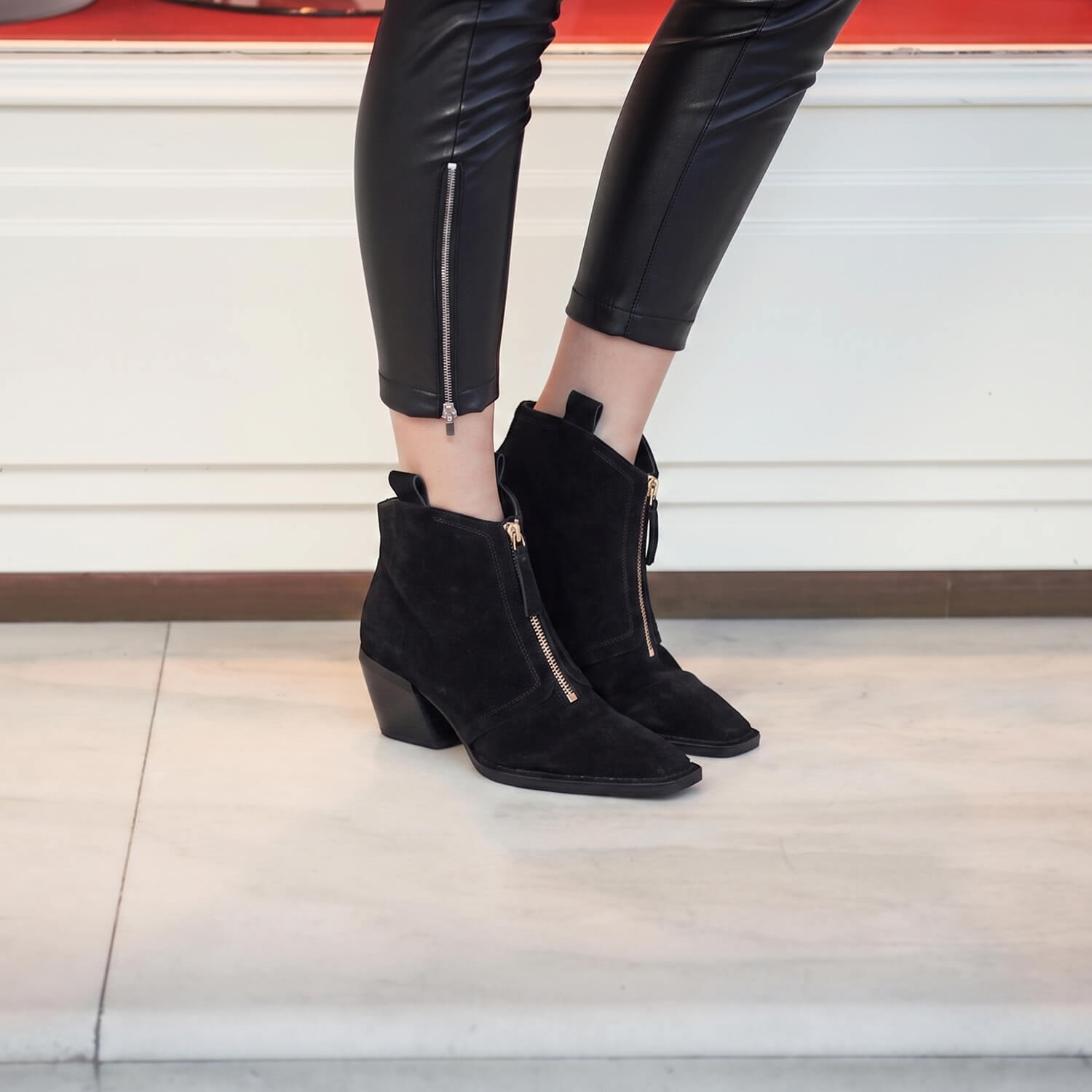
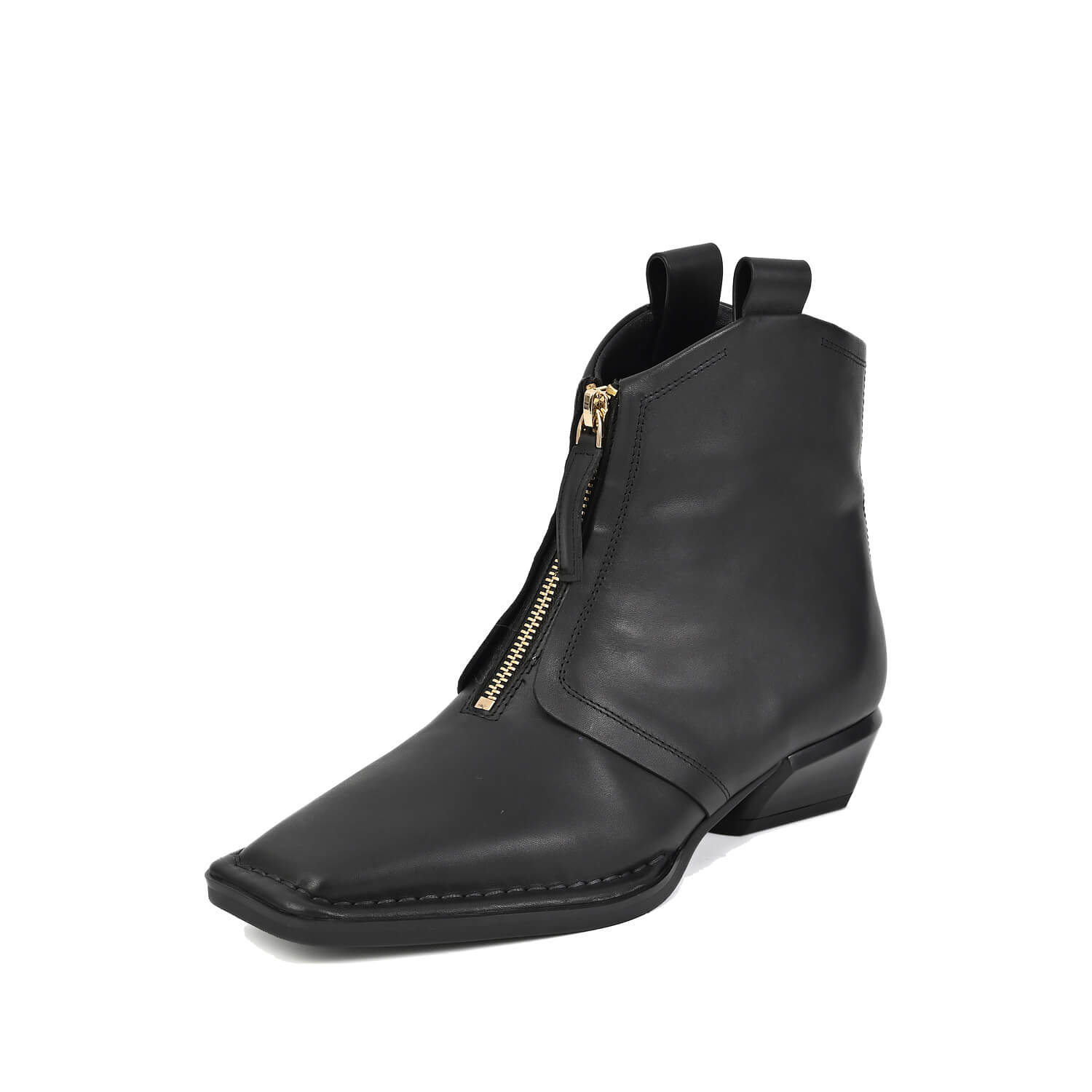
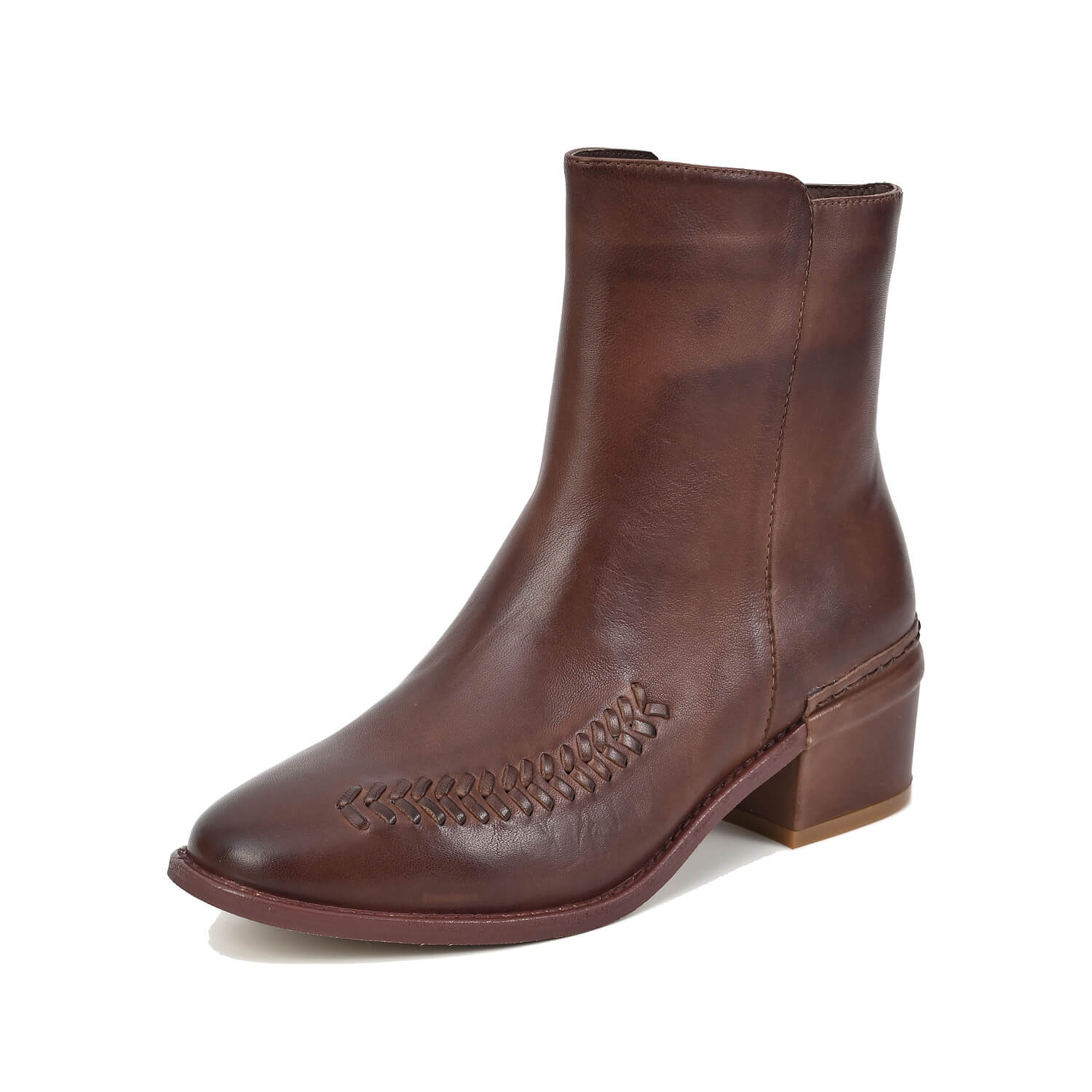
Look at the seams first. On the O51 Selene there is a braided stitch worked along the vamp, and on the U07 clog family a moccasin whipstitch runs around the toe. Neither adds function; both take a hand. Then look at where the fastening is placed. A boot designed around a photograph puts the zip where it is invisible. A boot designed around a foot puts it where it opens the shoe widest, which is not always the flattering side.
Handcrafted is not automatically more comfortable, and it is worth being honest about that. What it reliably buys is consistency between the left and right shoe, finishing that survives being worn rather than being photographed, and a sole unit built to be walked down instead of replaced. Those are unglamorous advantages that only announce themselves in month four.
14
new ankle styles
3
design families
$99
entry price
The three families in this collection
Lay the fourteen out and they fall into three groups. Almost every question people ask about designer ankle boots is really a question about which family a pair belongs in.
The western family
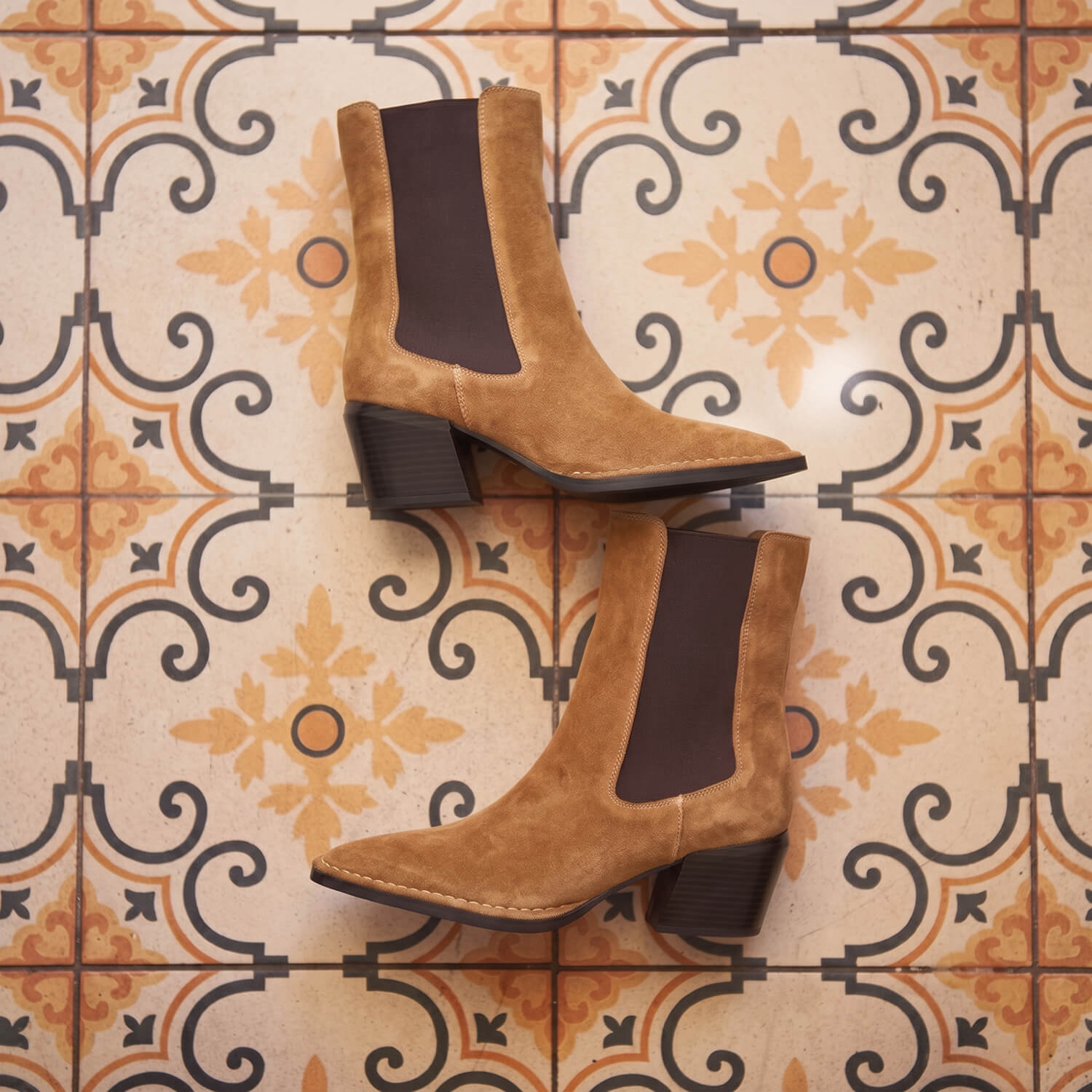
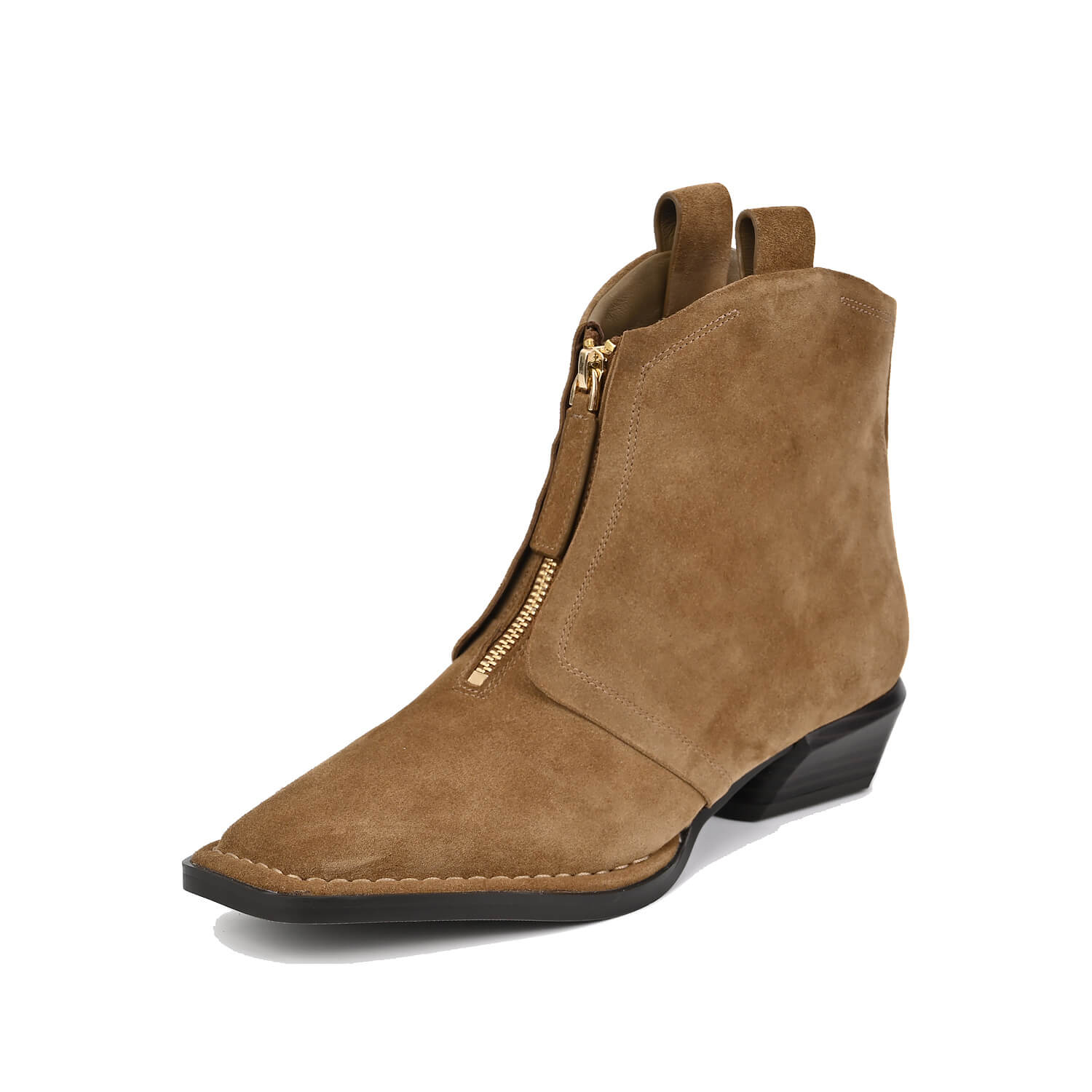
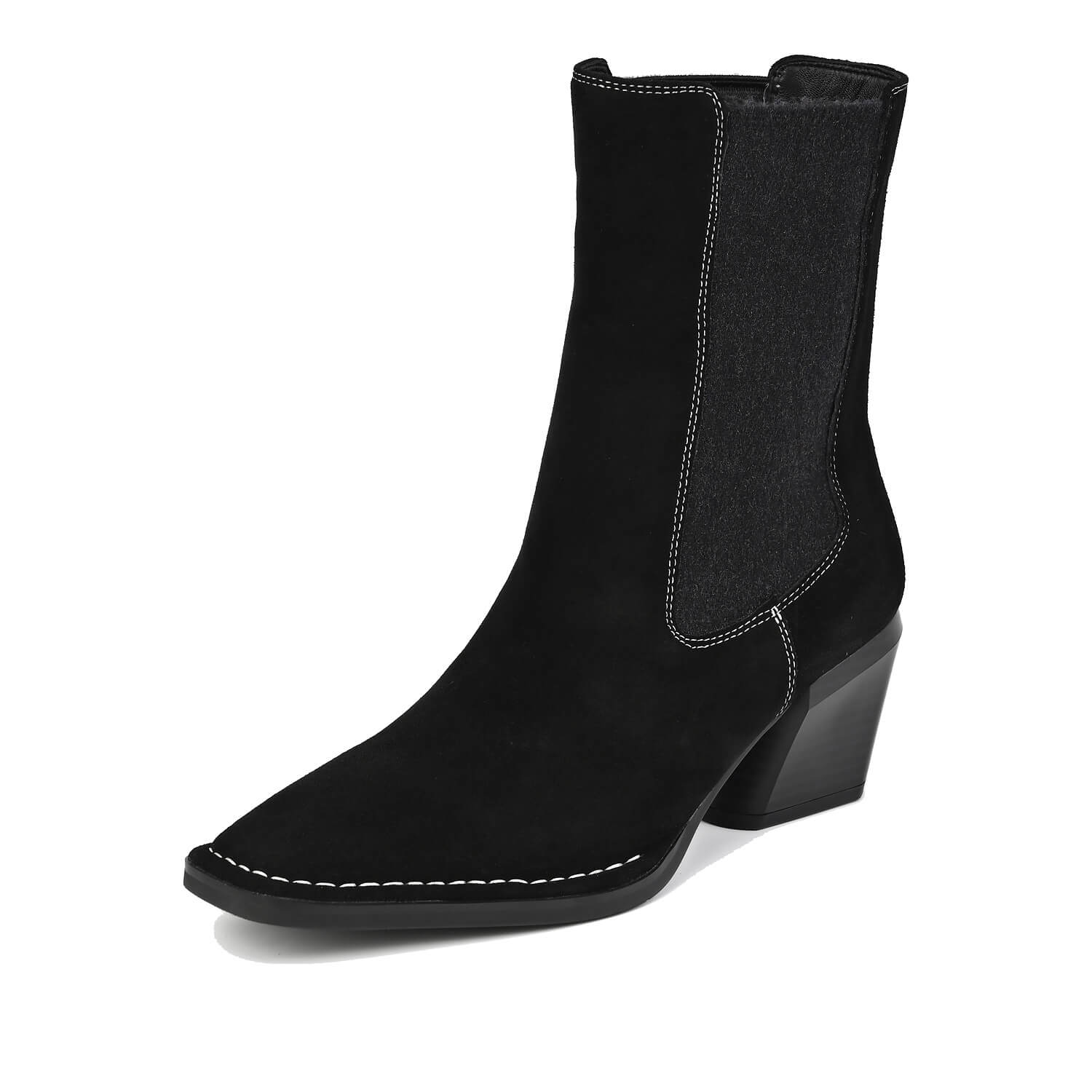
Pointed toe, low stacked heel, pull loops at the back and a zip down the centre front. The L67 Char in black leather and the L68 Char in mocha suede are the same boot in two materials, both $219. The O60 Jordan in black suede is the same idea on a taller stacked heel, $239, and the O65 Jane takes the pointed toe up into a taller shaft with elastic panels instead of a zip, also $239.
The V-notch family
A clean rounded toe, a zip moved to the back or the inner side, and a deep V cut into the front of the topline so the shaft opens as you walk. This is the most distinctive group here. The Q50 Easten at $209, the P23 Gretchen at $209 and the M70 Gabrielle at $209 all share it.
The platform family
The upper barely matters here; the sole is the design. The U08 Josie at $209, the Q83 Prue at $199 and the U38 Thalia at $209 all put the whole foot on a raised unit rather than tipping it forward.
Where the zip sits, and why it changes the fit
Closure is the decision most people skip and then regret, and the useful news is that it is visible in every product photograph. There are four arrangements across this collection.
A front zip runs down the centre of the vamp and opens the boot across the widest part of the foot. If your instep is high or your feet swell through the day, this is the most generous option there is. The L67 Char, L68 Char and O60 Jordan all use one, each with a pull tab and a pair of loops at the back to haul against.
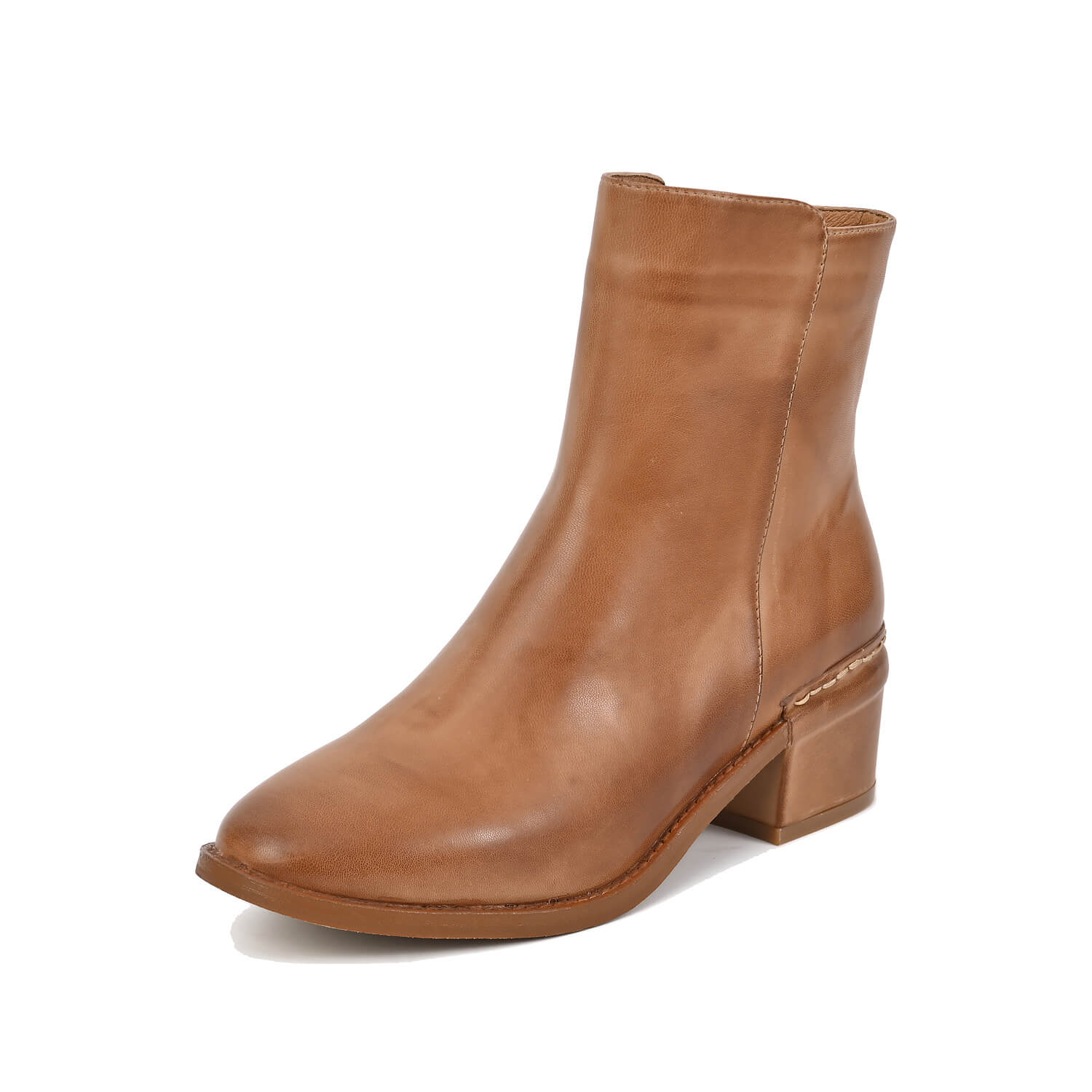
A side zip keeps the front of the boot unbroken, which reads cleaner and is easier to reach one-handed. The O50 Sonja at $199, the O51 Selene at $229, the U08 Josie and the Q83 Prue all put it there.
A back zip leaves both sides of the boot clean and is the choice when the front of the shaft is already doing something, which is exactly the case in the V-notch family. The Q50 Easten, P23 Gretchen, M70 Gabrielle and U38 Thalia are all fastened from behind.
An elastic panel is the Chelsea answer: no fastening at all, with ribbed stretch panels at the sides letting the foot through and then holding it. The style takes its name from the Victorian ankle boot popularised in London, and the history of the Chelsea boot explains why it has outlived nearly every other silhouette. The O65 Jane is the version here.
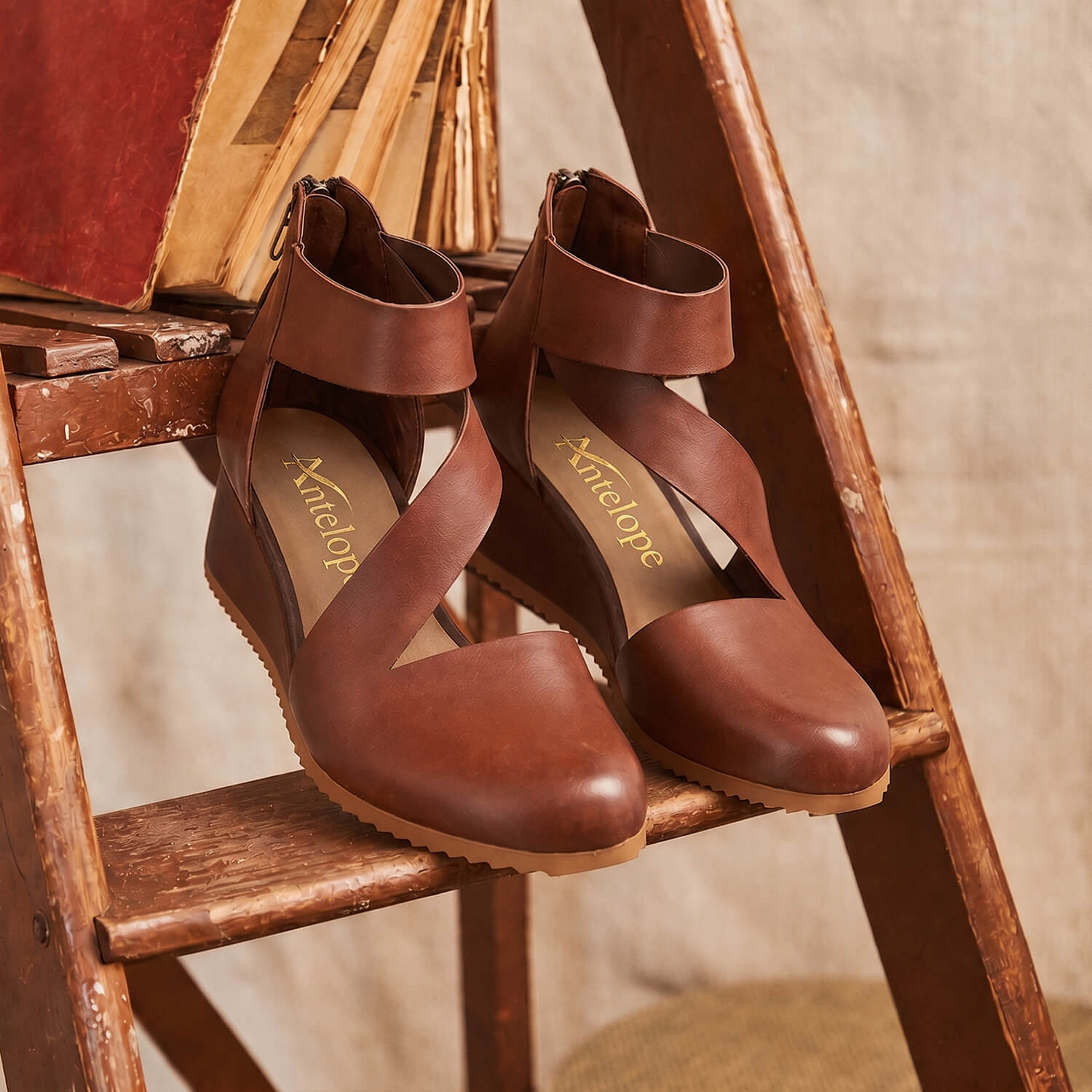
There is a fifth arrangement that belongs to one style alone. The M81 Ravi Flex, $179, is cut away at both sides, with crossover straps over the instep and a wide band around the ankle, fastened by a zip at the back. It keeps a closed toe and a boot's ankle line while leaving the sides open, which makes it the one style here that carries into warm weather.
The topline: V notch, elastic panel or plain
The topline is the edge of the shaft where the boot meets your leg, and it is the detail that decides whether a pair looks cropped and heavy or long and clean. Three treatments appear across these fourteen.
The V notch is a deep slit cut into the front of the shaft. It does two things: it lets the boot flex forward as your ankle bends instead of digging in, and visually it breaks the hard horizontal line that makes an ankle boot shorten the leg. The Q50 Easten, P23 Gretchen, M70 Gabrielle and U38 Thalia all use it, and on the U38 it is cut deepest of all.
The elastic panel lowers the sides while keeping the front and back high, which is why the O65 Jane can carry a much taller shaft without looking blocky.
The plain topline is a simple unbroken edge, as on the O50 Sonja and O51 Selene. It is the quietest option and the one that sits most comfortably under a trouser hem.
Know the shape you want?
Every style below shows the closure and the sole in the photographs, so you can compare before you commit.
Browse taupe ankle bootiesHeel shape and what it stands on
Height gets all the attention and shape does most of the work. A heel is easier or harder to stand in depending on how much of it meets the ground and how far your foot is tipped forward, and those are two separate questions. Designer ankle boots tend to answer them together, because a small maker builds the heel and the sole as one unit rather than dropping a stock heel onto a stock sole.
A review of research on high-heeled footwear published in the International Journal of Environmental Research and Public Health found that raising the heel shifts load forward onto the forefoot and increases muscular effort in the lower leg, and that the effect grows as height increases. That is the argument for a platform rather than for a flat.
Slim stacked heels
A layered stacked heel with a small footprint, as on the L67 Char, L68 Char, O50 Sonja and O51 Selene. It reads elegant and slips under a trouser without bulk. The trade is stability on soft ground and cobbles.
Chunky and sculpted heels
A wider column that puts more rubber on the road. The Q50 Easten uses a chunky stacked block, the M70 Gabrielle a block finished in a marbled wood effect, and the P23 Gretchen a sculpted block heel in a lighter tone than its upper. All three of these sit on a thickened sole rather than a thin one, so the foot is tipped less than the heel height alone suggests.
Platforms and wedges
This is where the maths changes. A platform raises the front of the foot as well as the back, so the angle you actually stand at is the difference between the two rather than the full height. The Q83 Prue sits on a thick tan wedge platform with a grooved sole; the U08 Josie pairs a chunky block heel with a thick platform underfoot; the U38 Thalia goes furthest, with a tall sculpted wedge that fills the whole space between heel and toe.
See the platform in motion
Still photography flattens a platform sole badly. Fifteen seconds of the boot turning tells you more about the proportion than any single image, so here is the Q83 Prue filmed in the studio.
Q83 Prue, black suede on a tan wedge platform.
A wedge sole takes the same principle further and fills the gap completely, spreading your weight along the whole length of the sole. If you have ever felt a slim heel sink into grass or catch in a grate, that is the fix.
Prefer the platform silhouette?
The same sole runs through the clog and mule styles arriving this season.
See platform clogs with a back strapSuede, smooth leather and metallic finishes
Material changes how formal a boot reads and how it ages, and the three used here behave very differently.
Suede is leather finished on the flesh side rather than the grain side, which is what raises the nap. It reads softer and less formal, holds colour with real depth, and marks more readily in wet weather. The L68 Char, O60 Jordan, O65 Jane, Q83 Prue and X02 Penny are the suede styles.
Smooth leather is the majority of the range and it is where the hand finishing shows. On the O51 Selene the colour sits unevenly across the vamp on purpose and deepens along the crease lines; on the M70 Gabrielle the same treatment is carried onto the heel, which is finished in a marbled wood effect rather than painted flat.
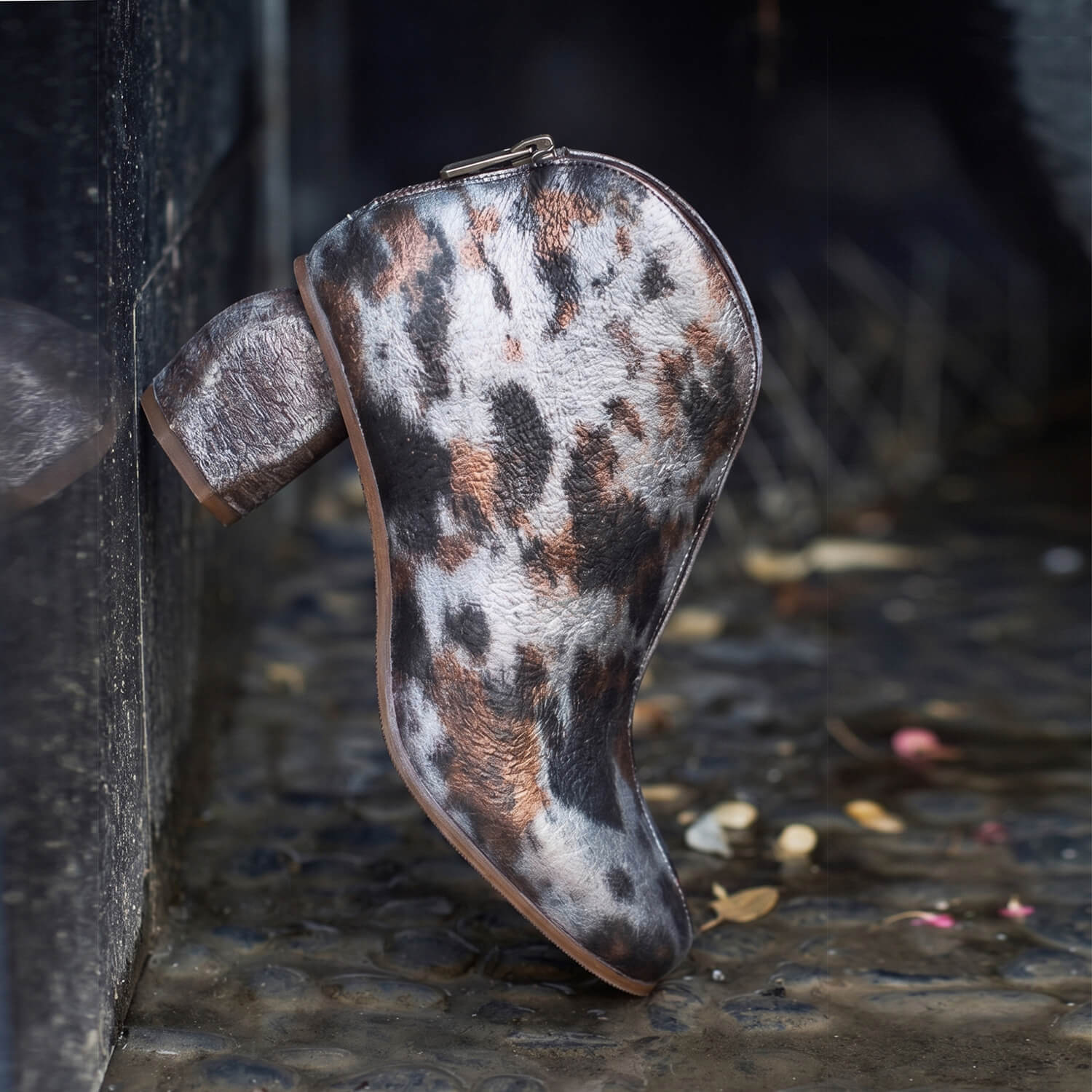
Then there is the metallic, which is a category of its own. The P23 Gretchen carries a mottled, speckled finish that shifts with the light in its Light Gold and Black-and-Coffee shades; the Taupe is the quiet one of the three. Metallics photograph loudly and wear surprisingly quietly, which is the opposite of what most people expect.
Fourteen new ankle boots, style by style
Here is the full set of designer ankle boots in this collection. Prices are current at the time of writing and every pair is handcrafted.
L67 Char
$219
L68 Char
$219
O50 Sonja
$199
O51 Selene
$229

O60 Jordan
$239
O65 Jane
$239
The O65 Jane is worth a note before you order. It carries the pointed toe and stacked heel of the western group, but its shaft rises noticeably higher than the rest of this collection, so it sits above the ankle rather than at it. That is a feature if you want the boot to be seen with a midi hem, and worth knowing if you were expecting something cropped.
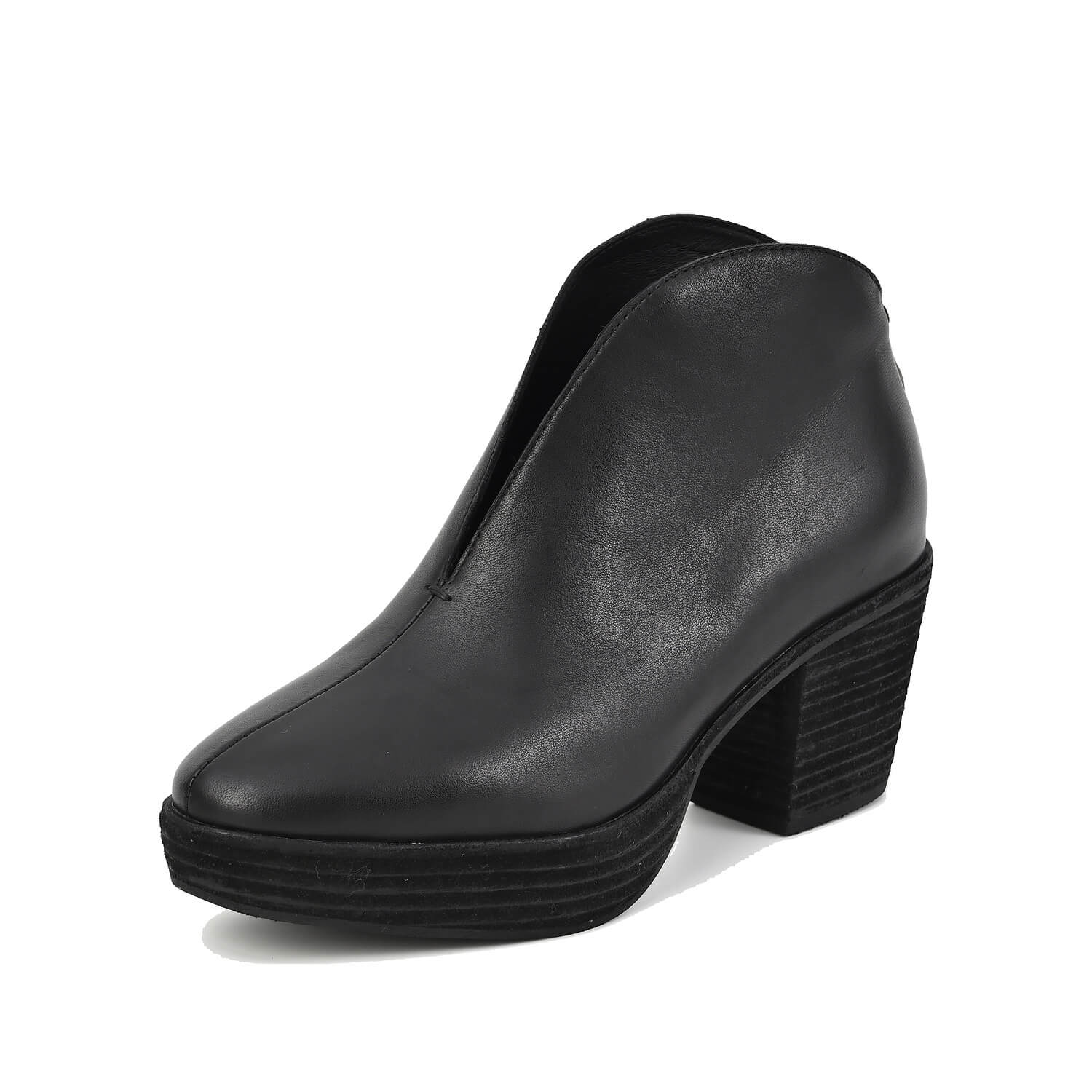
Q50 Easten
$209
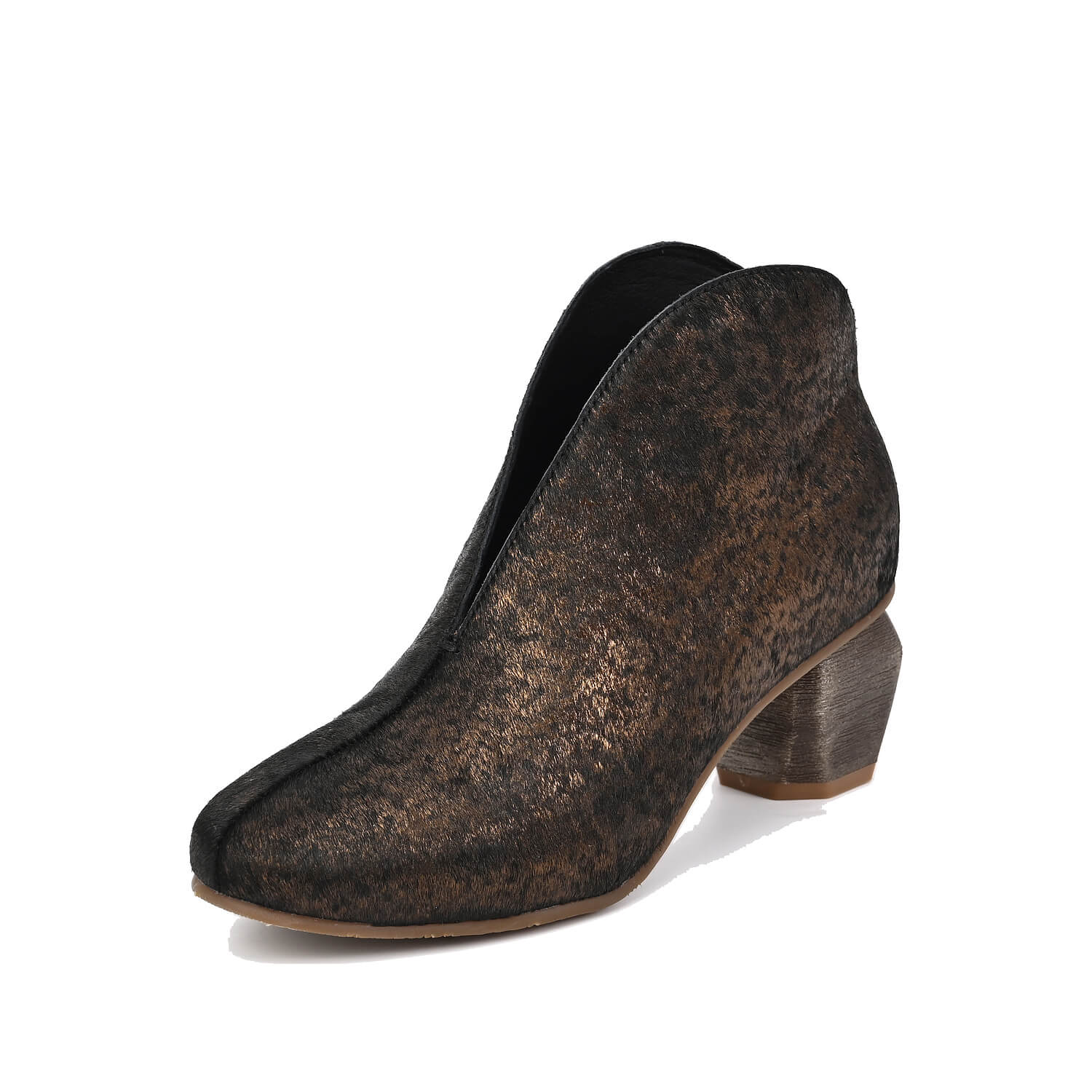
P23 Gretchen
$209
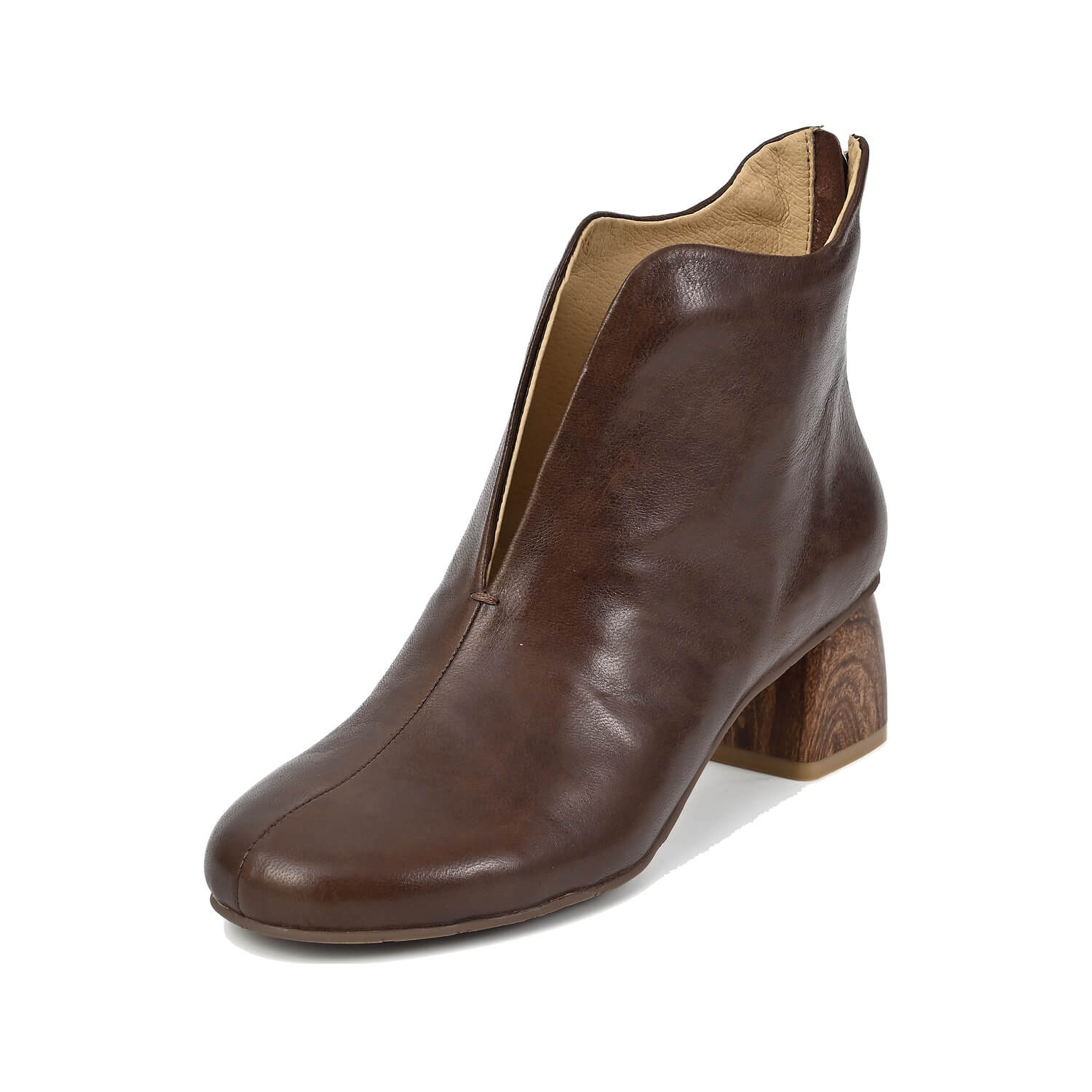
M70 Gabrielle
$209
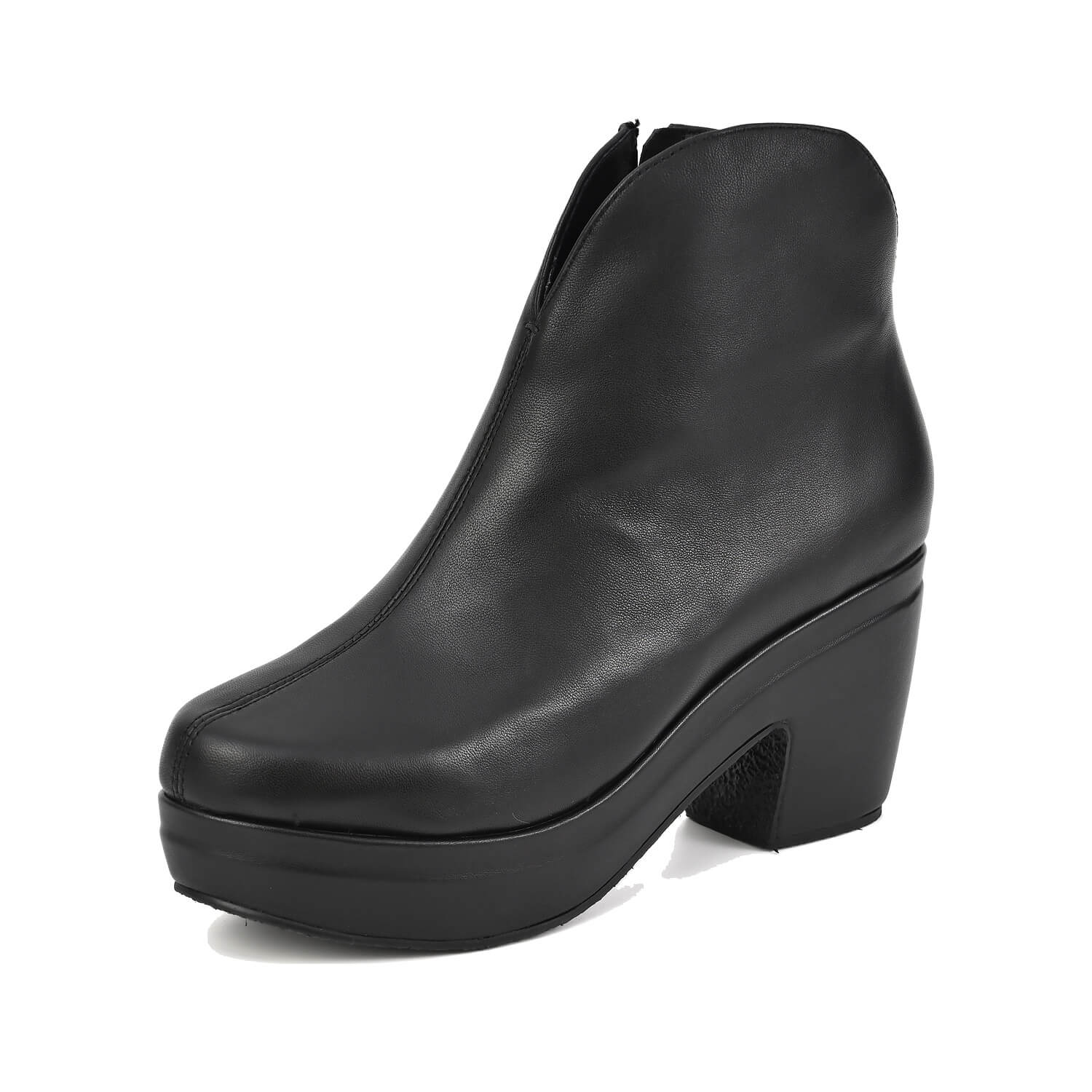
U08 Josie
$209
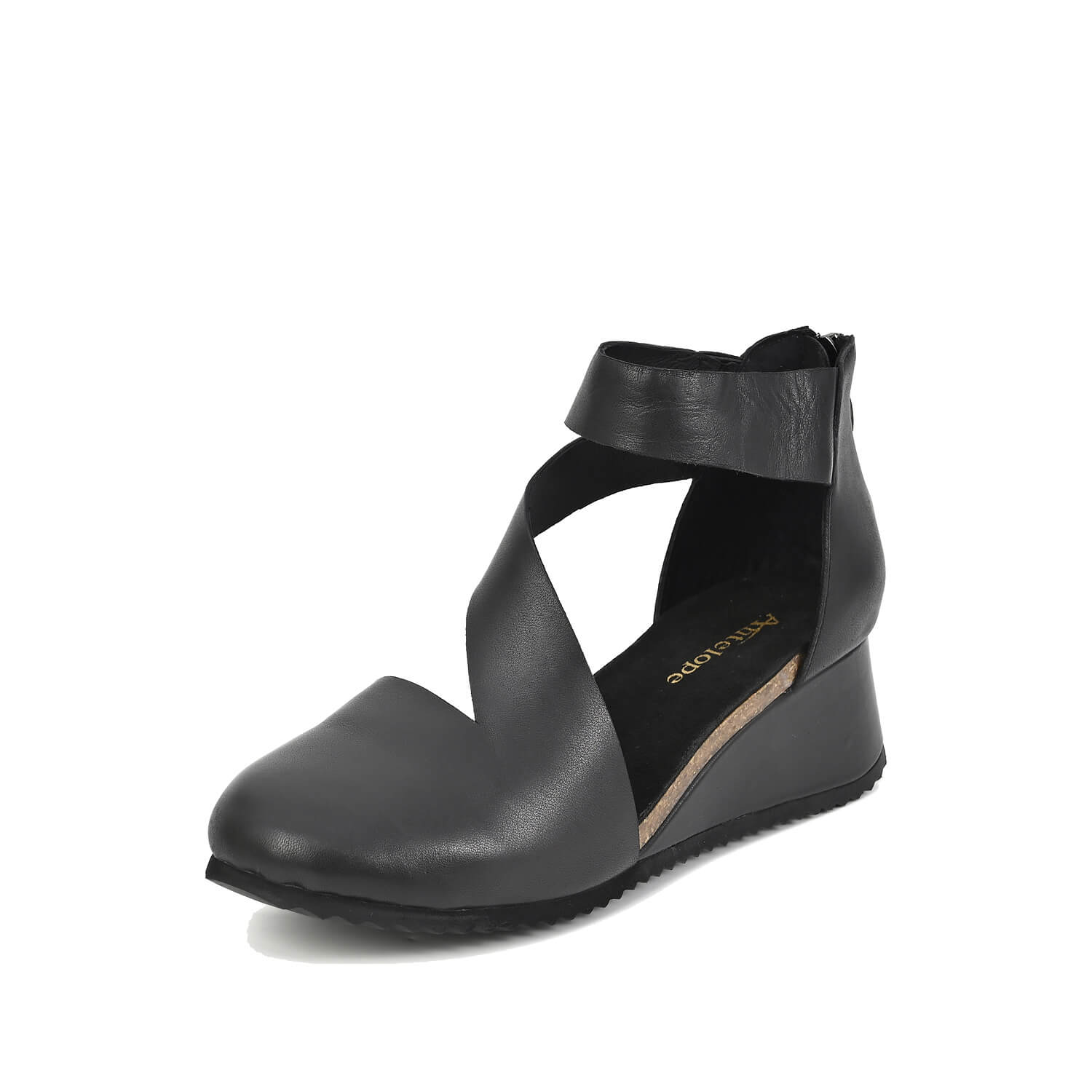
M81 Ravi Flex
$179
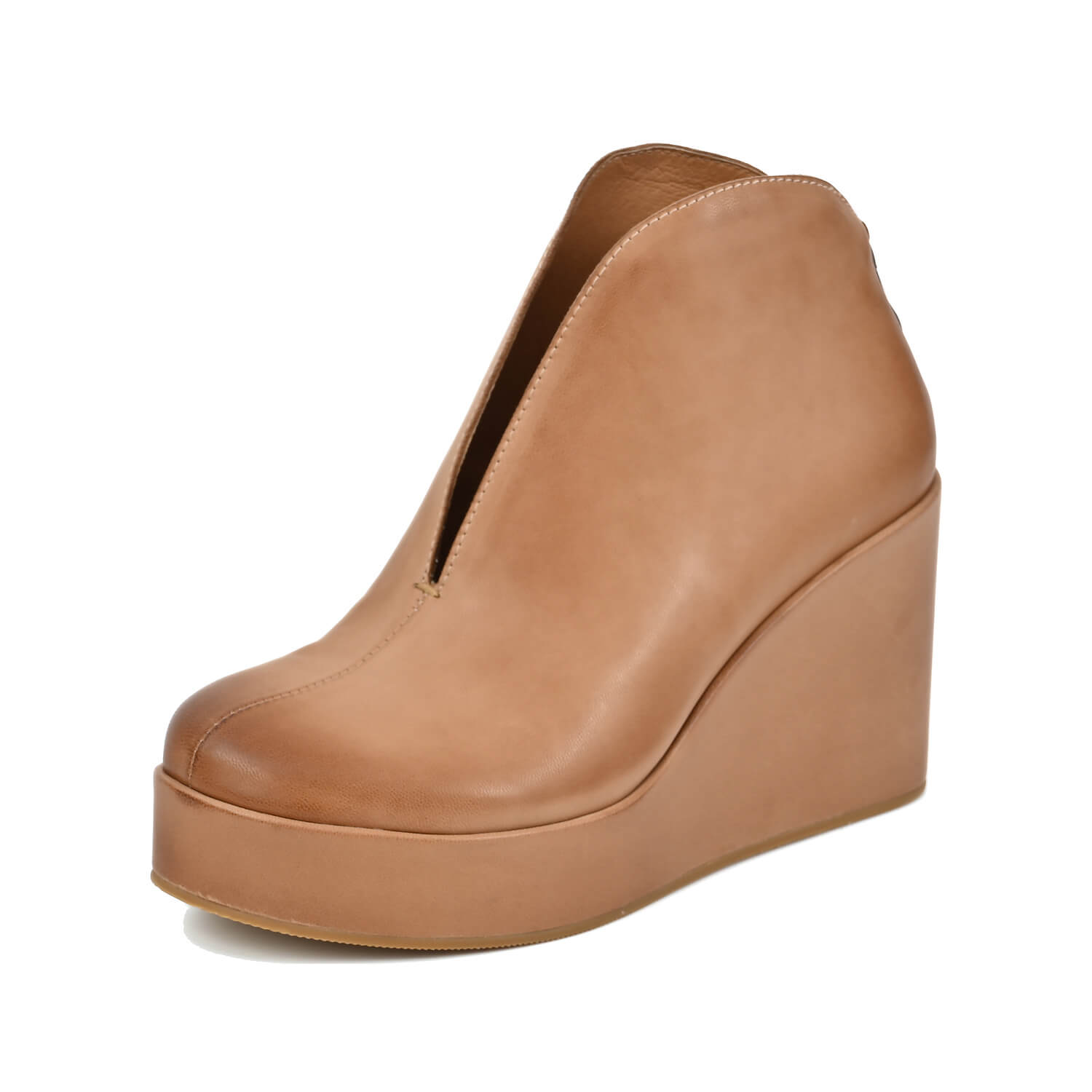
U38 Thalia
$209
Two styles close the collection and neither is trying to be the others. The X02 Penny at $99 is a low suede bootie with a thick shearling collar rolled at the top and a fur tassel tie at the front, on a flat contrast sole. It is the pair you keep by the door rather than the pair you plan an outfit around, and at that price it does not need to be anything else. The Q83 Prue at $199 is the platform in suede, with a prominent side zip and a grooved wedge sole.
Styling ankle boots with what you own
The styling question that comes up most is what to wear at the top, not the bottom, and the answer depends entirely on where the boot ends on your leg. Designer ankle boots vary more in shaft height than a mass-produced range does, so it is worth checking that against your hem rather than assuming.
With denim
A straight or slim jean that sits at or just below the top of the boot is the safest pairing, because it hides the transition altogether. A cropped jean does the opposite and shows it on purpose, which works when the boot has something worth looking at, such as the crossover straps on the M81 Ravi Flex or the sculpted block heel on the P23 Gretchen.
With dresses and skirts
Ankle boots under a midi hem is the easiest combination in this collection, and it is where the taller shaft of the O65 Jane earns its keep. With a shorter hem the proportion flips, and a platform such as the U08 Josie balances the leg better than a slim heel because it gives the whole silhouette a base.
With tailoring
A trouser that breaks on the boot rather than above it reads more considered. Here a plain topline wins, which points to the O50 Sonja or the O51 Selene over anything with visible hardware at the front.
Caring for leather and suede boots
Care differs sharply between the two materials, and treating suede like smooth leather is the most common way a good pair is ruined in its first season.
Suede should be brushed dry, in one direction, with a suede brush. Water marks lift with a light steam and a brush once the boot is fully dry. Never put leather conditioner on suede; it flattens the nap permanently. The same applies to nubuck, which looks similar but is sanded on the grain side instead of the flesh side.
Smooth leather wants the opposite: a soft cloth, an occasional neutral cream, and time to dry away from a radiator. Because the colour is worked by hand, a scuff usually blends into the finish rather than sitting on top of it, and a light buff will often take it out entirely.
Both benefit from being stored upright rather than folded, and from a rest day between wears so the inside can dry. Cared for this way, designer ankle boots outlast several seasons of the cheaper pairs they replace, which is most of the argument for buying them in the first place.
Which pair is right for you
Open the description that matches your situation. Each one names specific styles rather than a category.
I want one pair that works for most of my week
Take a plain topline and a slim stacked heel: the O50 Sonja in taupe at $199 or the O51 Selene in deep coffee at $229. Both use a side zip, so nothing interrupts the front of the boot under a trouser hem.
Shop leather ankle bootsMy instep is high and boots always feel tight
Choose a front zip, which opens the boot across the widest part of the foot instead of at the side. The L67 Char in black leather or the L68 Char in mocha suede, both $219.
See taupe ankle bootiesI want height but I have to stand in them
Go up on a platform rather than a heel. The U08 Josie at $209 or the Q83 Prue at $199. Both raise the whole foot instead of tipping it forward.
See what is newI already own black boots and want something different
Change the silhouette rather than the colour. The P23 Gretchen in its mottled metallic finish at $209, or the U38 Thalia with its deep V cut and sculpted wedge at $209.
Browse the bootiesI want something warm to keep by the door
The X02 Penny at $99: a low suede bootie with a thick shearling collar and a fur tassel tie at the front, on a flat contrast sole.
Shop leather ankle bootsComparing the fourteen at a glance
The table below is the shortest version of this guide, and the fastest way to narrow fourteen designer ankle boots down to two or three. Every entry lists only what is visible in that style's own photographs.
| Style | Closure | Defining detail | Price |
|---|---|---|---|
| L67 Char | Front zip | Pointed toe, low stacked heel | $219 |
| L68 Char | Front zip | Suede, pointed toe | $219 |
| O50 Sonja | Side zip | Plain topline, stacked heel | $199 |
| O51 Selene | Side zip | Braided vamp stitch | $229 |
| O60 Jordan | Front zip | Suede, taller stacked heel | $239 |
| O65 Jane | Elastic side panels | Taller shaft, pointed toe | $239 |
| Q50 Easten | Back zip | V notch, chunky stacked heel | $209 |
| P23 Gretchen | Back zip | Mottled metallic, sculpted block heel | $209 |
| M70 Gabrielle | Back zip | Marbled wood-effect heel | $209 |
| M81 Ravi Flex | Back zip | Crossover straps, open sides | $179 |
| U08 Josie | Side zip | Platform under a block heel | $209 |
| U38 Thalia | Back zip | Deep V cut, sculpted wedge | $209 |
| Q83 Prue | Side zip | Suede on a wedge platform | $199 |
| X02 Penny | Pull on | Shearling collar, fur tassel tie | $99 |
Questions people ask before buying
What counts as a designer ankle boot?
In practice it means a boot made in small runs by a shoemaker rather than mass-produced, with the colour finished and the shoe assembled by hand. The visible signs are hand-worked details that add no function, such as the braided vamp stitch on the O51 Selene, a colour that sits unevenly on purpose, and left and right shoes that match closely. It describes how the boot is made, not a price bracket.
Which heel is easiest to stay in all day?
Shape matters more than height. A wide heel column on a thickened sole, as on the Q50 Easten or M70 Gabrielle, puts more surface on the ground and tips the foot less than a slim stacked heel of the same height. Research on high-heeled footwear shows the load on the forefoot rises as heel height increases, so if you are standing for long stretches, look for width underfoot rather than a lower heel alone.
Are platform boots more comfortable than heels?
Often, for a specific reason. A platform lifts the front of the foot as well as the back, so the angle you actually stand at is the difference between the two rather than the full height. The Q83 Prue and U08 Josie both work this way, and the U38 Thalia goes further with a wedge that fills the whole space between heel and toe.
Which closure is best if boots pinch across my foot?
A front zip, because it opens the boot across the widest part of the foot rather than at the side. The L67 Char, L68 Char and O60 Jordan all use one, each with a pull tab and loops at the back. If you would rather have no fastening at all, the elastic side panels on the O65 Jane stretch to let the foot through and then hold it.
What is the V notch at the front of some boots for?
Two things. Functionally it lets the shaft open as your ankle bends forward instead of pressing into it. Visually it breaks the hard horizontal line across the front of the leg, which is what makes a cropped boot look shortening. The Q50 Easten, P23 Gretchen, M70 Gabrielle and U38 Thalia all use it, cut deepest on the U38.
Do suede boots survive winter?
They do, with different care. Suede is finished on the flesh side of the hide, so it takes water marks more readily than smooth leather, but those lift with a brush once the boot is dry. Protect before the first wear, brush in one direction, and never use leather conditioner on suede. The L68 Char, O60 Jordan, O65 Jane, Q83 Prue and X02 Penny are the suede styles here.
How should ankle boots fit at the heel?
Snugly, without gripping. A very small amount of heel lift as you walk is normal in a new boot and settles as the sole flexes. Persistent slipping usually means the boot is too long rather than too wide. Guidance from the American Podiatric Medical Association recommends being fitted late in the day, when the foot is at its largest, and replacing footwear as it wears rather than waiting for it to fail.
What is the difference between an ankle boot and a bootie?
The words are used interchangeably in most shops. Where a distinction is drawn, a bootie tends to be the shorter of the two, ending at or just below the ankle bone, while an ankle boot may rise slightly above it. Both are shown together here because the styling rules are the same. The one style that sits clearly higher is the O65 Jane.
Do I need to break these in?
A short break-in is normal for small-batch leather, and the honest advice is to do it indoors. Two or three evenings around the house with thick socks does more than a week of resenting them on the pavement. Suede softens faster than smooth leather. If a pair still hurts in one specific spot after that, it is a fit problem rather than a break-in problem, and worth exchanging rather than persevering with.
What if the fit is wrong when they arrive?
Returns are accepted within 30 days and the first exchange is free, which is the practical way to settle a half-size question. Shipping within the United States is free on orders over $80 and $10 below that.
Fourteen styles. One pair that fits.
Every pair of designer ankle boots here ships free over $80, with 30 day returns and a free first exchange, so getting the size right costs you nothing.
Keep reading
Written by
The Antelope Shoes team
We have been designing and handcrafting women's leather footwear for more than two decades. Every style in this guide is one we make ourselves, and every detail described here is one you can see for yourself in that style's own photographs.
